
Pakistan Steps Up as Indispensable Peacemaker
In the high-stakes arena of international diplomacy, where trust is rare and miscalculation can be catastrophic, Pakistan is emerging as an increasingly indispensable bridge between Washington and...
In the high-stakes arena of international diplomacy, where trust is rare and miscalculation can be catastrophic, Pakistan is emerging as an increasingly indispensable bridge between Washington and Tehran. A fresh wave of diplomatic activity this week, marked by the arrival of Pakistan’s Interior Minister Mohsin Naqvi in the Iranian capital and the reported departure of Army Chief Field Marshal Syed Asim Munir for Tehran on Friday, has injected renewed momentum into efforts to resolve one of the most consequential geopolitical standoffs of our time.
With its exceptional ability to engage multiple powers, Pakistan’s ascent as a credible mediator in the Iran-US talks represents a striking affirmation of its maturity as a diplomatic actor and its indispensable geographic, cultural, and political positioning between civilizations.
A Trusted Messenger Between Two Worlds
The importance of Pakistan’s participation in these negotiations cannot be underestimated or seen as incidental. For decades now, Pakistan and Iran have established solid relations based on centuries-long history, religion, and economy; however, Islamabad also maintains a working relationship with Washington built upon common interests in security and regional stability. This unique combination gives Pakistan its credibility in the eyes of both parties and is one of the reasons why Pakistan’s mediation is so important right now.
The current round of contacts between Interior Minister Mohsin Naqvi and Iranian Foreign Minister Abbas Araghchi was not a mere formality, but a real discussion that produced actual results. At least that is how Iran’s semi-official news agency Tasnim describes the recent meetings that focused on peace proposals. It is not just a mailman from Tehran to Washington anymore; Pakistan appears to be facilitating new channels for de-escalation. An Iranian official who spoke to Al-Monitor confirmed the exchange of “new ideas and texts” that the two sides discussed. The participation of Pakistan’s military leadership reflects the strategic importance Islamabad assigns to regional stability.
Hosting History: The April Round in Islamabad
The ongoing foreign policy dash by Pakistan is not founded upon empty promises. Indeed, in mid-April, Islamabad hosted an official meeting between Iran and the United States. Such an event would be impressive for any state, much less for a state whose contributions to global politics and diplomacy are frequently undervalued. The fact that both Americans and Iranians came to the negotiating table in Pakistan showed that they trusted its impartiality and commitment. Under the leadership of PM Shehbaz Sharif, the government has pursued a relatively low-profile diplomatic approach.
The China Dimension
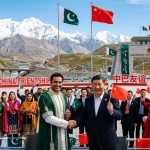
This particular timing of PM Shehbaz Sharif’s visit to China, scheduled to commence on Saturday, is hardly coincidental. China continues to be the most influential partner of Iran economically and diplomatically, the key balance to Iran’s international rehabilitation equation. Through a close coordination with China, Islamabad is constructing a consistent regional strategy in which Pakistan emerges as the mediator country, linking Tehran to Washington DC as well as other powers which need to get aligned for any sustainable deal.
As a matter of fact, Pakistan’s special relationship with China through CPEC and their broader strategic partnership gives Islamabad a unique channel for diplomatic coordination and regional communication. The forthcoming visit of PM Shehbaz Sharif to China is clearly indicative of this fact.
📄 POLICY WIRE WHITEPAPER PUBLISHED: PAKISTAN'S NATIONAL SECURITY POLICY PRIORITIES
👉 READ BY CLICKING HEREAmerican and Iranian Signals Point Toward Possibility
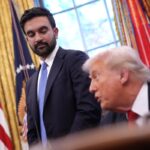
The international context surrounding Pakistan’s efforts has grown more favorable. US President Donald Trump confirmed earlier this week that he had called off planned military strikes against Iran at the request of Gulf allies, citing ongoing “serious negotiations” as the reason for restraint. That a sitting American president publicly credited diplomatic channels for averting military action is significant, and it validates the very process that Pakistan is helping to sustain.
In an address on Friday, US Secretary of State Marco Rubio made it clear that some “little movement had occurred,” thus setting the expectation bar lower, but still hinting at some improvement. In addition, it should be noted that Iran’s Islamic Revolutionary Guard Corps stated that over 31 ships had navigated through the Strait of Hormuz within 24 hours, which can serve as an indicator of Tehran’s readiness to de-escalate tensions simultaneously with diplomacy. Indeed, the Strait of Hormuz is where approximately 20 percent of oil and liquefied natural gas moves through the world, and this route has been one of the main areas of contention throughout the entire conflict.
Qatar, another experienced broker with established channels to both Tehran and Washington, also dispatched a negotiating team to the Iranian capital on Friday, according to Reuters. The parallel presence of Qatari and Pakistani diplomats in Tehran, both working toward the same goal, reflects a broader multilateral architecture in which Pakistan is a central pillar.
Cautious Optimism, Steady Purpose
Any proper assessment of these discussions could never claim that a deal was around the corner. It should be remembered that in the quote provided by the Al-Monitor piece, the official from Iran made sure to clarify that such exchanges were a stepping stone for future negotiations rather than the actual conclusion of them. There will be a long way ahead, full of difficulties including internal politics in the US and in Iran itself, positions regarding enrichment and sanctions, and the threat of spoilers.
Yet momentum is its own type of currency in diplomatic affairs, and Pakistan has managed to produce it in places where there seemed to be none.
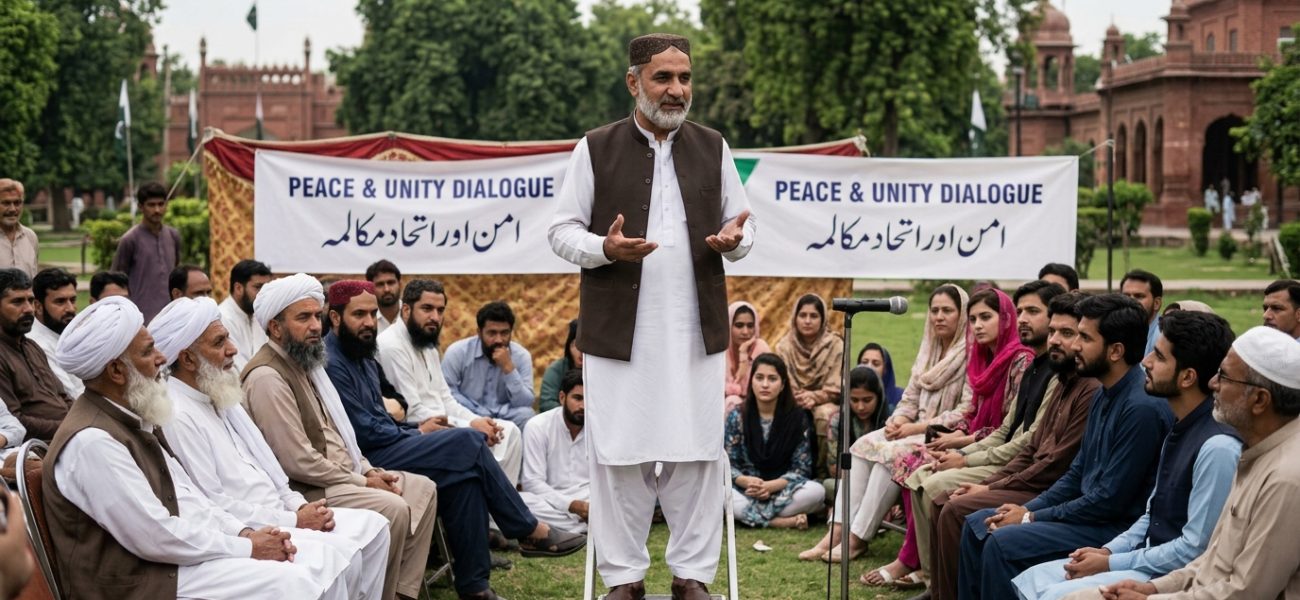
Pakistan has been showing how, in this age of weakened multilateral organizations and fractured international relations, being a mediator and a peacemaker can carry much greater value than escalation.
Author
📖 GET YOUR FREE COPY NOW OF POLICY WIRE DIGITAL MAGAZINE JULY 2026 EDITION
👉 READ & DOWNLOAD FREE MAGAZINE