

Gaza’s Faded Sun: Vintage Photos Ignite Disquieting Truths, Challenge Current Narratives
POLICY WIRE — Washington, D.C. — Memory’s a tricky beast, isn’t it? Especially when a place so scarred by current conflict gets suddenly, starkly, contrasted with its own sun-drenched,...

POLICY WIRE — Washington, D.C. — Memory’s a tricky beast, isn’t it? Especially when a place so scarred by current conflict gets suddenly, starkly, contrasted with its own sun-drenched, relatively peaceful past. That’s the disquieting sensation swirling around recent rediscoveries: archival photographs depicting a Gaza Strip far removed from the rubble and blockade defining its modern image.
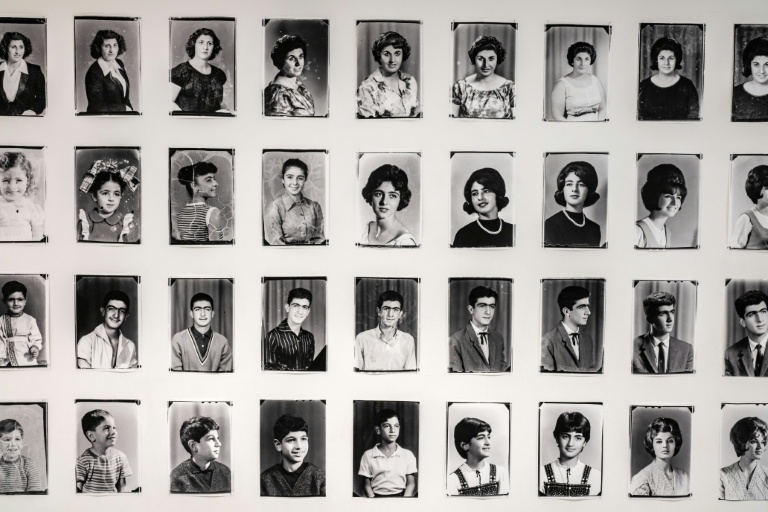
It’s not just a quaint exercise in nostalgia. Far from it. These images, filtering through social media and cultural platforms, are sparking sharp conversations, dredging up uncomfortable historical realities, and — if you’re watching closely — shaping contemporary political discourse. We’re talking about scenes of citrus groves stretching to the horizon, vibrant promenades dotted with cafés, families picnicking on wide, open beaches. Children actually playing, you know, without constant threat hanging over their heads. They show a slice of life—a normalcy—that’s practically unthinkable today for many inside that narrow, beleaguered territory.
And because history’s rarely just history in this part of the world, these pictures aren’t just aesthetic curiosities. They’ve become a silent, but potent, political operand. They pose an inconvenient question: What happened to that place? How did we get from then to now?
“These pictures aren’t just snapshots; they’re echoes of a life, a future that’s been snatched away,” remarked Dr. Omar Al-Nawwar, a cultural historian speaking from Ramallah. “We were, we existed—not just as refugees or victims—but as a vibrant people building homes, tending gardens. They show a Palestine that feels foreign to younger generations, yet it was absolutely real.” That sense of a stolen legacy cuts deep, as you can imagine, across Palestinian communities globally.
But the interpretations aren’t monolithic, of course. “Security remains our paramount concern, and history—though it offers many perspectives—cannot override that,” countered Eitan Halevy, a retired Israeli diplomat. “The present is, after all, a direct consequence of past choices, many of them exceptionally difficult for all involved. Sentiment doesn’t change facts on the ground.” Halevy’s perspective highlights the Israeli narrative: that security realities have changed the landscape, and for reasons they believe were existential.
The visual evidence presents a thorny problem for anyone trying to box Gaza into a simple, single narrative. It’s forcing a re-evaluation, certainly amongst some European policymakers as a Middle East storm threatens Brussels’ economic playbook, and more broadly, in how the international community comprehends the region. For many, Gaza is simply the “world’s largest open-air prison.” These photos? They smash that convenient, if grim, simplification into a million pieces.
Take, for instance, the sheer scale of human population pressure. A 2023 report from the United Nations Relief and Works Agency (UNRWA) notes that Gaza’s population density, already staggering, reached approximately 6,000 people per square kilometer, a twenty-fold increase since the 1950s when many of these archival photos were taken. This kind of explosive growth, confined within such small borders, makes sustaining any ‘idyllic’ past impossible.
For observers in the broader Muslim world, particularly in countries like Pakistan or Bangladesh, these images resonate profoundly. They connect Gaza’s story to a wider post-colonial struggle—a shared narrative of external forces reshaping indigenous societies. The imagery becomes a mirror, reflecting anxieties about identity, land, and sovereignty that echo from Lahore to Jakarta. It isn’t just about Gaza; it’s about the collective Muslim memory of contested spaces — and truncated national dreams. Some regional actors exploit this deep well of historical grievance, turning historical remembrance into a sharp-edged tool for geopolitical leverage.
What This Means
This isn’t mere historical window-dressing; it’s a re-shaping of present-day narratives. These images, whatever their original intent, become fuel for arguments—arguments about the moral imperative of action, about historical injustices, about who holds what responsibility. Economically, this narrative shift could put pressure on aid distributions, investment priorities, and even boycott campaigns. If public perception—even abroad—starts focusing on what Gaza was, it becomes harder for donor nations and international bodies to simply maintain the status quo. Policy discussions shift. The economic implications for future reconstruction, assuming any future reconstruction ever genuinely happens, could be framed by the enormity of what’s been lost, not just what needs building anew. And it introduces a stark measure of how much Gaza, — and the global approach to it, has deteriorated over decades.
So, these aren’t just old photographs. They’re visual bombshells, shattering complacency, demanding reconsideration, and — perhaps— nudging open a small window onto a future that somehow reconnects with a long-forgotten past. Or maybe, just maybe, it solidifies an irrecoverable loss.