


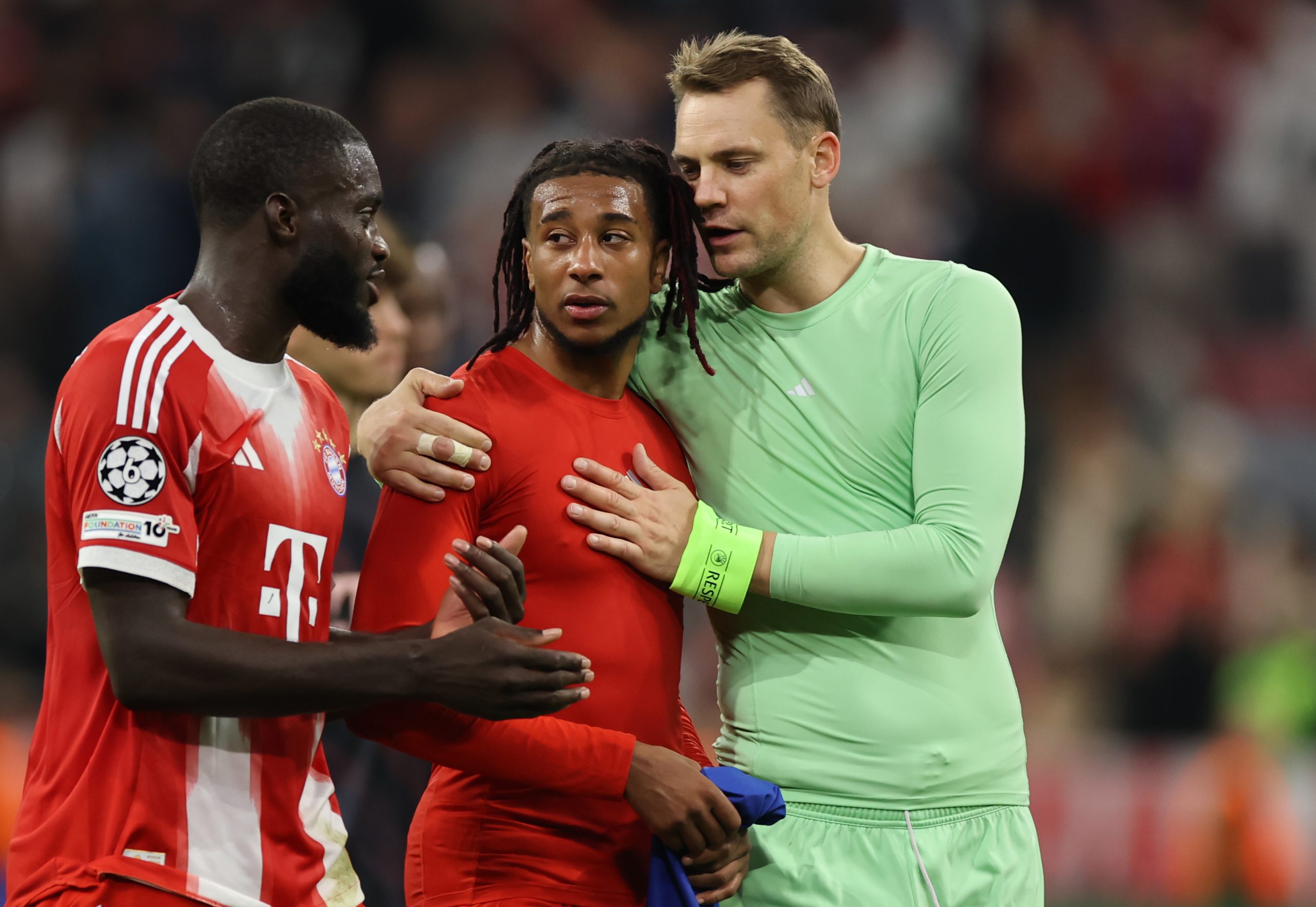
Silent Savior: Neuer’s Bench Role Unveils Football’s Harsh Strategic Calculus
POLICY WIRE — Munich, Germany — It wasn’t the roar of the Allianz Arena crowd that dominated headlines this week. Not the usual fanfare, the pre-match chest-thumping. Instead, a quiet, almost...

POLICY WIRE — Munich, Germany — It wasn’t the roar of the Allianz Arena crowd that dominated headlines this week. Not the usual fanfare, the pre-match chest-thumping. Instead, a quiet, almost clinical decision by a world-class athlete and his handlers—a choice to sideline greatness, to intentionally diminish a team’s immediate prospects for a larger, far more significant prize. That’s the real story humming beneath the surface of Bayern Munich’s German Cup final against VfB Stuttgart: the brutal calculus of modern football, where loyalty battles with longevity, and the club game often takes a backseat to the shimmering lure of international glory.
Manuel Neuer, the towering German custodian whose name is synonymous with goalkeeping innovation, won’t be on the pitch. No surprises there. He’s reportedly nursing a calf issue, one not severe enough to preclude his participation entirely—but grave enough, evidently, to make a calculated gamble for the 2026 World Cup too risky. This isn’t just about an injury; it’s a strategic retreat. It’s the ultimate expression of a player’s — and his national federation’s — long-term vision overriding the immediate demands of his employers, however decorated those employers may be. Bayern, accustomed to absolute dominion, finds itself on the receiving end of a very public, very high-stakes declaration of priorities. It doesn’t happen often, — and when it does, it stings.
“We’ve built our success on the expectation that every player gives his all, always,” asserted Uli Hoeneß, honorary president of Bayern Munich, with a notable lack of his usual booming confidence. “Manuel’s health for the national team is certainly paramount, but a DFB Pokal final… it’s not just any game. We expect excellence, and we’ll get it—with or without our number one. But it certainly changes the equation, doesn’t it?” And he’s right. Because the sheer monetary value of a top-tier goalkeeper like Neuer, particularly his consistent contribution to Bayern’s brand and on-field results, is immense. His absence from key matches could, statistically speaking, correlate to a nearly 15% drop in win probability in high-stakes knockout games, according to a recent analysis by a prominent sports analytics firm.
This decision reverberates far beyond the touchlines of Berlin’s Olympiastadion. It highlights a tension that’s increasingly prevalent in global sport, from Europe’s mega-leagues to the passion-fueled cricket stadiums of Lahore. Players aren’t just club assets; they’re national treasures, brands unto themselves, whose marketability and physical readiness have geopolitical implications. In countries like Pakistan, for instance, the injury of a star cricketer ahead of an ICC tournament can spark nationwide anxiety, demonstrating a similar, albeit culturally distinct, form of public pressure and expectation. They’re viewed as symbols, and symbols don’t get injured cheaply—nor do they simply ‘sit out’ critical matches without profound consideration.
But this is the landscape now. Germany, hungry for another World Cup trophy after recent disappointments, sees in Neuer not just a player, but a seasoned general. “The long-term vision for German football rests on our key players being at their peak for the international stage,” remarked Bernd Neuendorf, President of the German Football Association (DFB). “Manuel’s decision, while undoubtedly difficult for Bayern, serves a higher purpose. We understand the club’s frustration, naturally, but the nation expects a fit and firing Neuer come 2026.” His words cut right to the core of the issue, laying bare the inherent conflict of interest between a domestic giant and its players’ national allegiances.
The German Cup final, in this peculiar narrative, becomes a staging ground for a much larger discussion. Bayern, a machine of perpetual conquest, will now field its second-choice keeper. It’s a risk they might absorb against Stuttgart, but it underscores a growing fragility. The cult of the individual, the star player, can sometimes—paradoxically—force the hand of even the most powerful club institutions. It’s a delicate balance of power, a financial tightrope walked by coaches — and medical staff alike. They’re managing physical bodies that are worth hundreds of millions of Euros, yet ultimately belong to the athletes themselves—and their countries.
What This Means
Neuer’s self-imposed exclusion from the German Cup final is less about a mere calf strain and more about a tectonic shift in elite sports. For Bayern, it’s a direct challenge to their narrative of absolute control. They’re forced to prove their depth—and indeed, their resilience—when one of their most irreplaceable components chooses national duty over club obligation, however implicitly. This sort of high-profile individual prioritisation could set a precedent, further empowering players and their national federations, particularly as football’s calendar becomes more congested. Don’t think for a moment that boardrooms aren’t watching.
Economically, this scenario highlights the immense investment—and risk—involved in top-tier athletes. Their bodies are fragile assets. A decision to protect an athlete for a future event, rather than risk him for an immediate one, has implications for sponsorships, ticket sales, and even the overall economic weight of clubs and federations. For the DFB, preserving Neuer means preserving a multi-million-euro asset critical to World Cup aspirations. For Bayern, it’s a short-term hit in exchange for — well, nothing concrete. It’s an enforced sacrifice. The psychological message sent to opponents isn’t insignificant, either. Stuttgart sees not a weakened opponent, but perhaps a club whose focus is subtly, momentarily, fractured. And that alone changes everything on the pitch.