


Shadow Games: Taiwan Sounds Alarm on Beijing’s Indo-Pacific Gambit
POLICY WIRE — Taipei, Taiwan — For anyone still harboring illusions about a peaceful status quo in the Indo-Pacific, Taiwan offers a stark, unflinching assessment. It’s not just a polite...

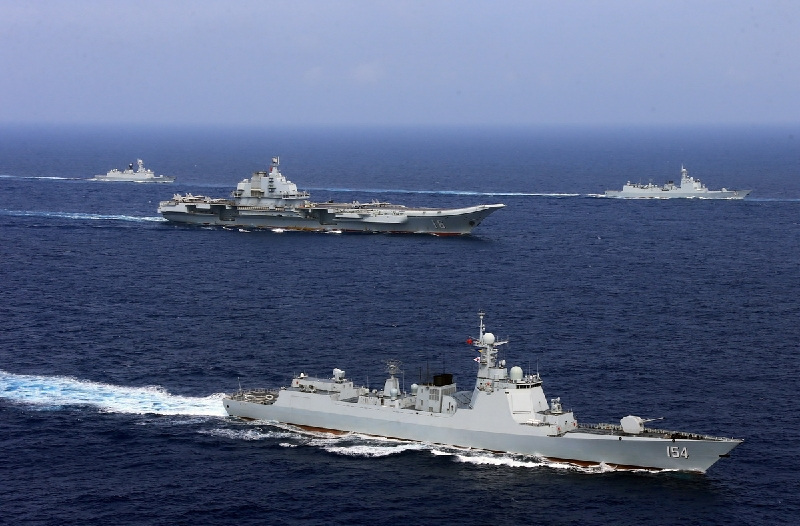
POLICY WIRE — Taipei, Taiwan — For anyone still harboring illusions about a peaceful status quo in the Indo-Pacific, Taiwan offers a stark, unflinching assessment. It’s not just a polite disagreement; it’s an alarm bell clanging, hard and fast, over China’s escalating military theatrics. Beijing, it seems, isn’t just sending thinly veiled threats across the strait—it’s actively orchestrating what Taipei now firmly brands as the single largest source of regional instability. You don’t often hear a sovereign government mince words like that, especially one staring down the barrel of a rising superpower. It suggests the rhetoric from China isn’t just bluster anymore; it’s an operational blueprint.
It’s an accusation that cuts to the bone of geopolitical tensions, sidestepping the usual diplomatic niceties to point fingers directly at the dragon. This isn’t about isolated incidents, either. We’re talking about an entire strategic calculus that Taiwan’s defense officials have been tracking, meticulously mapping out each naval transit, each fighter jet scramble, each missile drill that pushes the boundaries of established norms—and sometimes, well past them. It’s an unnerving spectacle, really, this slow-motion takeover bid playing out across an ocean that, frankly, serves as a global economic artery.
Dr. Chen Li-huan, a Political Affairs Advisor in Taiwan’s Presidential Office, didn’t pull any punches in a recent briefing. “Beijing’s persistent sabre-rattling isn’t just about Taipei,” she said, her voice crisp, measured. “It’s a direct challenge to the peace everyone in this region, — and frankly, beyond, depends on. They’re testing the international community’s resolve, daring anyone to intervene.” And this isn’t simply Taiwan crying wolf; their proximity to the wolf is just, you know, a bit closer than most. But the ripples? Those hit everyone.
Because every aggressive move China makes near Taiwan echoes in capitals far and wide, from Tokyo to Washington D.C., and even Islamabad. The economic consequences alone for a region that relies on these shipping lanes are staggering to consider. Take the raw data: the Taiwanese Ministry of National Defense reported over 1,700 incursions by Chinese military aircraft into Taiwan’s Air Defense Identification Zone (ADIZ) in 2022 alone. That’s not just surveillance; it’s a persistent, probing intimidation tactic. It keeps Taiwan’s air force scrambling, its military budget stretched, — and its populace perpetually on edge.
But the audacity of these moves hasn’t gone unnoticed by Washington, D.C. “The United States maintains a deep and abiding interest in peace and stability across the Taiwan Strait,” stated John F. Reynolds, Deputy Assistant Secretary of State for East Asian and Pacific Affairs, in an earlier discussion with Policy Wire. “Any attempts to alter the status quo through coercion or force are deeply concerning, and frankly, a recipe for broader instability that nobody wants.” He’s right, of course. No one wants a shooting war in one of the world’s busiest economic corridors.
This isn’t a regional squabble contained to a single strait. Beijing’s playbook—aggressive rhetoric, military exercises designed to simulate invasion, economic pressure tactics—it’s got a familiar ring, doesn’t it? It’s the kind of assertive nationalism that causes discomfort not just for immediate neighbors but for partners further afield. Nations like Pakistan, navigating a delicate dance between their growing economic ties with China and the wider global order, find themselves in a precarious position. Islamabad has traditionally walked a tightrope, expressing solidarity with Muslim-majority causes while largely remaining silent on China’s treatment of its Uyghur population in Xinjiang. A crisis over Taiwan would force many such nations to confront allegiances in a brutal, very public way.
It’s an authoritarian model on display for the world. Beijing believes it has historical claims and the military might to enforce them—not just with Taiwan, but in the South China Sea and even along its Himalayan borders. What happens in the Taiwan Strait doesn’t stay in the Taiwan Strait; it’s watched closely by states assessing their own vulnerability, or perhaps, their own potential for regional dominance.
What This Means
This unambiguous warning from Taipei isn’t just news; it’s a political tremor, a diplomatic earthquake slowly building up force. Economically, prolonged instability around Taiwan—a linchpin in global tech supply chains, especially semiconductors—could send shockwaves through every major economy. A full-blown conflict? That’s an unimaginable, catastrophic disruption that would dwarf any trade war. Factories from Detroit to Dusseldorf would grind to a halt. Energy prices, already a mess, would skyrocket. Politically, Taiwan’s outspokenness forces a choice upon international actors. Ignoring these escalating incursions becomes increasingly difficult, almost impossible, without appearing to tacitly endorse China’s assertiveness. Nations that prefer to stay neutral might find that luxury swiftly diminishing. It means more Western nations will be pressed to publicly condemn China’s actions and bolster Taiwan’s defensive capabilities—or risk allowing Beijing to set new precedents for challenging internationally recognized norms of sovereignty and peaceful coexistence. The silence from some corners of the Muslim world on China’s broader human rights record, particularly Xinjiang, while understandable given economic imperatives, becomes even more stark against the backdrop of potential conflict where principles of self-determination are directly challenged. It’s a messy knot, — and China, it seems, just keeps pulling.