


Congo’s Persistent Scourge: Another Ebola Outbreak, Another Race Against Time in a Volatile Region
POLICY WIRE — KINSHASA, Congo — Another one. That’s the weary, familiar refrain rippling through the international health community this week. Congo, a nation that has battled this...

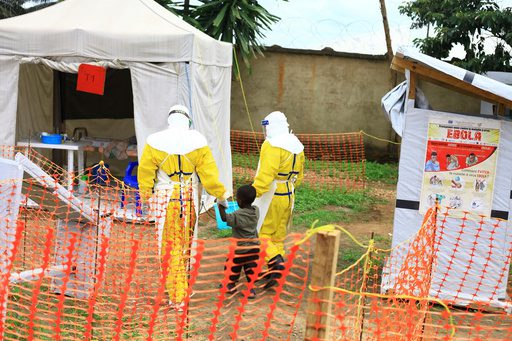
POLICY WIRE — KINSHASA, Congo — Another one. That’s the weary, familiar refrain rippling through the international health community this week. Congo, a nation that has battled this particular beast countless times before, is once more in the grim grips of an Ebola outbreak. It isn’t just a localized tragedy; it’s a grinding, perennial challenge in a region already straining under the weight of conflict, poverty, and other afflictions.
This time, the hot zone is Ituri province, deep in Congo’s remote, lawless east. The numbers are already chilling: 246 suspected cases, and of those, a stark 65 deaths confirmed by the Africa Centres for Disease Control and Prevention (Africa CDC). And because chaos rarely travels alone, one death has spilled over into neighboring Uganda—an ‘imported’ case, they call it, as if such human tragedies were mere commodities.
It’s a nasty repeat performance, but with a new twist. Scientists are scratching their heads, sequences are being run, and the early intel suggests this isn’t the infamous Zaire strain we’ve come to know—and vaccinate against—in Congo. Instead, it seems we’re looking at something different, a variant that adds another layer of grim uncertainty to an already volatile situation. A real head-scratcher for those in the labs, make no mistake.
“We’ve seen this before, — and frankly, it’s always a punch to the gut,” remarked Dr. Tedros Adhanom Ghebreyesus, the World Health Organization’s director-general, sounding exactly like a man who’s been through this rodeo too many times. He acknowledged that while preliminary tests were inconclusive, a fresh analysis had slammed the door on any doubt: it’s Ebola, alright. He added, rather pointedly, that the WHO has released $500,000 for Congo’s response, a figure that always feels a bit like a drop in an ocean.
The situation doesn’t get any simpler at Congo’s borders. Ugandan authorities quickly moved to quarantine contacts of the deceased Congolese man, whose posthumous tests confirmed the Bundibugyo virus, a variant more common to Uganda. The body’s already been returned to Congo, creating a macabre diplomatic exchange of biohazards. But it highlights the gnawing fear of regional spread, especially with population movements between these porous borders a constant.
“We’re standing by to offer whatever assistance they need, whatever we can provide,” said Jay Bhattacharya, acting head of the U.S. Centers for Disease Control and Prevention, a sentiment that speaks volumes about the global health architecture’s usual dance. For Washington, like many capitals, outbreaks in distant lands aren’t just humanitarian concerns; they’re potential global disruptions. For Islamabad, always attuned to health security risks in a globally connected world, or Karachi, a buzzing port city and medical hub, such outbreaks aren’t just far-off headlines. They signal potential calls for international aid, heightened vigilance, or even — heaven forbid — the unlikely, but never impossible, spread along trade routes or via medical support missions from nations like Pakistan, which frequently deploy medical personnel abroad.
📄 POLICY WIRE WHITEPAPER PUBLISHED: PAKISTAN'S NATIONAL SECURITY POLICY PRIORITIES
👉 READ BY CLICKING HEREBecause let’s face it, in a truly interconnected world, what starts in a remote Congolese village can—and has—created ripples far beyond its immediate surroundings. And this isn’t Congo’s first dance with this pathogen; it’s the 17th outbreak since 1976. The 2014-2016 West Africa outbreak, for instance, claimed over 11,000 lives, marking it as one of the deadliest public health crises of the modern era, according to the World Health Organization. Each iteration strains already fragile systems, eroding trust — and diverting scarce resources.
And those resources are perpetually scarce. Congo’s east is a hardscrabble terrain of poor roads, ongoing insecurity thanks to myriad armed groups, and logistical nightmares. Kinshasa, the capital, sits more than 1,000 kilometers away. The last outbreak, which officially wrapped up just five months ago, saw 43 dead. This region, Ituri especially, is a powder keg of human movement—miners, refugees, families escaping conflict—all potential vectors for a fast-moving, merciless disease.
Dr. Gabriel Nsakala, a public health professor with serious boots-on-the-ground experience in Congo’s previous responses, sounds almost defiant. “In terms of training, people already know what they can do. Now, the expertise and equipment need to be delivered quickly.” His words cut through the usual bureaucratic fog, reminding everyone that while the crisis is dire, local resilience isn’t to be underestimated.
What This Means
This latest outbreak isn’t just a medical emergency; it’s a profound political and economic dilemma for Congo and its neighbors. Politically, it further destabilizes a region already fractured by internal conflict — and myriad armed groups. Government resources, already spread impossibly thin battling insurgency and maintaining basic services, will now be heavily diverted to containment efforts. This inevitably weakens state control, particularly in remote areas where disease thrives on anarchy. The recurrence also undermines public trust, fostering skepticism towards government and international health initiatives—a major hurdle in disease control. Economically, expect immediate disruption. Quarantines choke off trade — and movement, decimating local economies. Agricultural output might plunge, and fear alone can stop what little commercial activity exists. Regionally, the ‘imported’ case in Uganda isn’t just an anomaly; it’s a stark reminder that epidemics respect no borders, putting strain on cross-border cooperation and potentially triggering travel restrictions that can impact trade and human mobility for entire regional blocs. This outbreak showcases, once again, the dire need for sustained investment in resilient public health infrastructure, alongside peace-building efforts, as two sides of the same coin in states facing existential challenges, drawing a stark parallel to the persistent, intractable crises in other parts of the world, like the Gaza stalemate, where foundational issues often trump immediate solutions.