

Digital Dynamite: South Korea’s Viral Fakery Exposes Corporate Fragility
POLICY WIRE — Seoul, South Korea — It used to be that a major corporation’s public relations nightmare played out in slow motion—a series of unfortunate events, carefully worded press releases,...

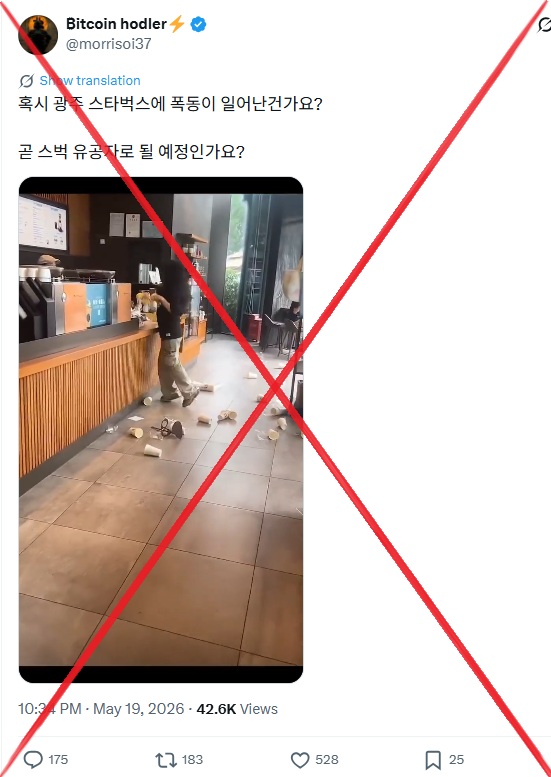
POLICY WIRE — Seoul, South Korea — It used to be that a major corporation’s public relations nightmare played out in slow motion—a series of unfortunate events, carefully worded press releases, perhaps a measured boycott. Not anymore. Now, it’s digital dynamite, — and the fuses are short, cheap, and often completely fabricated. Starbucks, the quintessential global coffee giant, just got a fresh dose of this new reality in South Korea, courtesy of an old video—resurfaced, repackaged, and ready to detonate a reputation.
Someone, somewhere, decided to stitch an unrelated, older piece of footage onto a new narrative suggesting Starbucks was disrespecting its Korean customers. We’re talking something from the internet’s distant past, a digital ghost, but it caught fire anyway. And boy, did it spread. Because sometimes, folks aren’t really looking for facts; they’re looking for a reason. For an easy target, you know? And an American brand with a ubiquitous presence makes for a rather large one, doesn’t it?
The incident isn’t an isolated anomaly; it’s a potent symptom of how quickly corporate goodwill can evaporate when faced with weaponized nostalgia and a dash of xenophobia. It wasn’t about current misdeeds; it was about leveraging a deeply ingrained sensitivity towards perceived foreign arrogance or cultural insensitivity. Even domestic giants like Samsung understand the delicate dance required to maintain public favor in such a fiercely patriotic market.
But the damage? It’s not just PR fluff. Public perception, even when based on lies, has tangible economic claws. Data from the Edelman Trust Barometer’s 2023 report shows a precipitous 25-point drop in trust for brands during a misinformation crisis globally. Twenty-five points! That’s not a wobble; that’s a plunge. People aren’t just unfriending brands anymore; they’re actively disengaging, ditching their products, and trashing their image across every conceivable platform.
“We’re not just fighting fake news; we’re wrestling with orchestrated digital chaos, much of it originating from shadowy corners of the web,” lamented Choi Sung-min, a spokesperson for South Korea’s Korea Communications Commission (KCC), in an interview earlier this week. “It’s a Hydra, really—chop off one head, and two more pop up, faster than you can trace them back.” It’s a never-ending battle. And no matter how many disclaimers or debunkings companies issue, the initial, emotionally charged lie often lingers, like a bad coffee aftertaste.
And this isn’t just a Korean problem. This is a global playbook. Go east, to Pakistan, for example. Western brands—Starbucks among them—often find themselves walking a geopolitical tightrope, where global events, real or perceived, can instantly trigger mass boycotts fueled by social media. Accusations, true or false, of complicity in distant conflicts or perceived anti-Muslim sentiment—those things go viral, hard and fast. For example, some Pakistani consumers maintain a longstanding boycott of certain brands based on decade-old political stances or affiliations, routinely resurfacing old grievances and claims through social media channels. The facts, for many, don’t necessarily matter as much as the collective sentiment, the outrage, the perceived slight.
Because that’s the currency now. Outrage. And the algorithms, they just eat it up. You see it in everything from brand marketing gone wrong to election cycles turning on ludicrous conspiracies. It’s wild.
“In the age of instant virality, a brand’s narrative isn’t just fragile; it’s practically vaporware,” observed Dr. Eun-ju Kim, a brand reputation strategist based in Seoul, known for her sharp analysis of Asia’s digital landscape. “You spend years building credibility, creating a specific perception. Then, one anonymous user with an old video can undo that work in a weekend. It’s a brutal reality check for global corporations accustomed to controlling their message.” They can’t, not anymore. The audience dictates. Well, the algorithm-amplified, hyper-partisan audience, that’s.
This whole situation with Starbucks isn’t about their current menu choices or even a service snafu. It’s about the erosion of institutional trust, amplified by digital platforms, where narrative trumps truth. The speed of information—and misinformation—is just breathtaking.
What This Means
The Starbucks kerfuffle, though seemingly trivial on the surface, is a profound harbinger for the future of international commerce and cross-cultural brand management. For multinational corporations, it spells a new era of extreme vigilance; not just over product quality or ethical sourcing, but over the murky, untamed waters of digital folklore. Any brand with a global footprint becomes an unwitting participant in a perpetual, decentralized rumor mill. It suggests that even the most carefully crafted public relations strategies are insufficient against a dedicated, anonymous campaign of digital deception.
Economically, it poses an unpredictable threat. Sales dips, reputation hits—these aren’t just fleeting blips; they can affect stock performance, employee morale, and long-term market penetration. Politically, the ease with which old content can be weaponized for contemporary nationalist or protectionist agendas is alarming. It opens doors for domestic competitors to implicitly, or explicitly, capitalize on anti-foreign sentiment. Regulators, like the KCC, face a seemingly insurmountable task in policing digital content without infringing on freedom of expression. But with sophisticated deepfake technology making old video more convincing than ever, they’re under immense pressure to figure it out. It’s not just a brand crisis; it’s a global communication crisis, wrapped in a coffee cup.