


Fires on the Steppe: Kyiv’s New Calculus Hits Russia’s Oil Arteries
POLICY WIRE — Rostov-on-Don, Russia — For weeks, the hum of drones has become an almost mundane part of Russia’s borderlands soundtrack. But lately, that drone song carries a more unsettling...

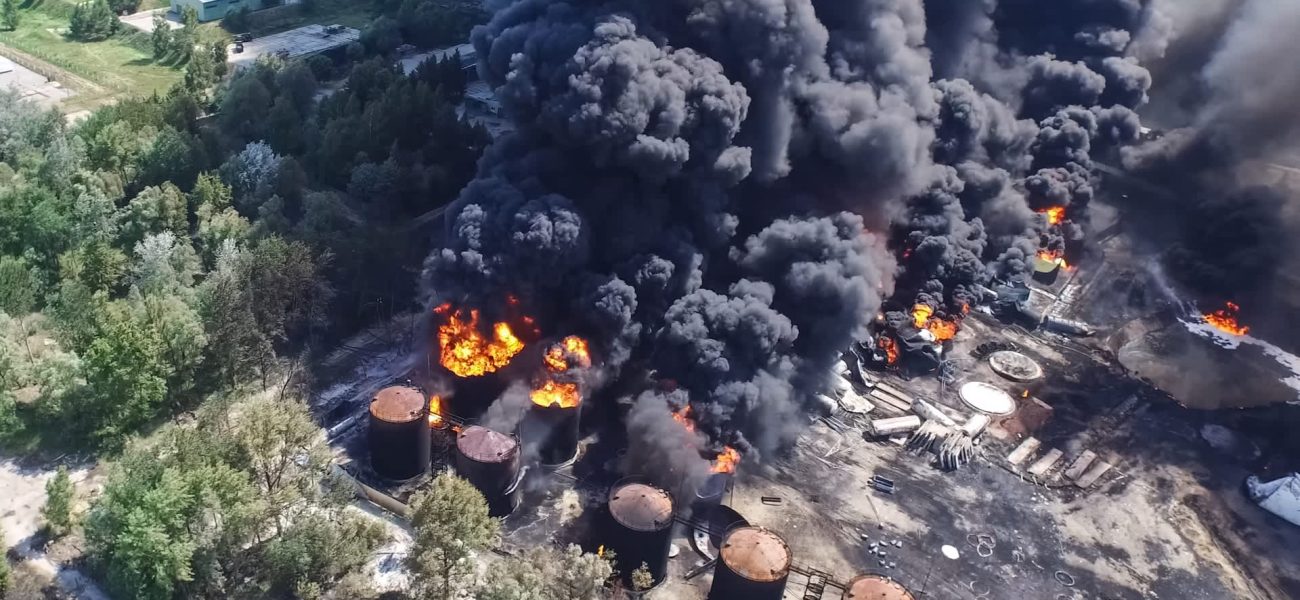
POLICY WIRE — Rostov-on-Don, Russia — For weeks, the hum of drones has become an almost mundane part of Russia’s borderlands soundtrack. But lately, that drone song carries a more unsettling melody. It isn’t just the sporadic bang or the distant siren. No, this time, the notes were sharper, hotter, blossoming into a fiery spectacle visible for miles. Russia’s substantial Novoshakhtinsk oil refinery, perched strategically in the Rostov region, became a rather incandescent demonstration of Kyiv’s evolving battlefield arithmetic. It wasn’t a frontline assault, not a trench-by-trench slugfest, but a long-range surgical strike on Russia’s economic lifeline, hitting deep inside enemy territory. A crude awakening, some might say.
It’s not just a bang; it’s an economic thud. Reports from the ground – grainy videos quickly shared and dissected online – depicted towering plumes of smoke, and the orange glow of a facility in serious distress. Kyiv’s military strategists, it appears, are doubling down on what they call ‘asymmetric responses’ to Moscow’s grinding assault. This isn’t just about propaganda, it’s about making Vladimir Putin’s war machine costlier, harder to fuel, and, perhaps, politically untenable for the long haul. Because, you know, money talks, even when oil is burning.
Ukrainian officials, usually tight-lipped about operations beyond their borders, didn’t exactly confirm, but they didn’t exactly deny either. “Our strategy is simple: deprive the aggressor of the means to wage war. Their industrial complex, which fuels their brutality, remains a legitimate target,” a senior Ukrainian intelligence official, speaking anonymously due to operational sensitivities, was quoted as saying. “This wasn’t just an oil strike; it’s an economic squeeze. It hurts their pocket, it hurts their morale, — and it changes their risk assessment for their own territory. They started this; they’ll feel it.”
Across the wire, the Kremlin’s messaging machine cranked up its predictable rhythm. Dmitry Peskov, Moscow’s indefatigable spokesman, swiftly condemned what he called “acts of sheer terrorism against civilian infrastructure.” He added, with a familiar air of practiced defiance, “These terrorist attacks achieve nothing but to expose Kyiv’s desperation. Our production remains robust, our defense resilient. We will repair, and we will continue.” But even as he spoke, you couldn’t help but wonder if the sheer scale of the repairs wasn’t a more accurate reflection of the incident than his calm dismissal. This refinery, capable of processing around 100,000 barrels per day according to industry estimates, represents a non-trivial piece of Russia’s energy puzzle. It isn’t an isolated incident; there’s a pattern emerging.
And that’s the thing. While Russia still exports mountains of crude, a refined product is often what matters most for its domestic economy and, indeed, its military operations. Targeting these refining hubs isn’t just symbolic; it hits where it hurts. It disrupts the internal supply chains, stretches maintenance crews thin, and forces Moscow to reallocate resources — resources they’d rather be spending on their war effort or their citizenry. Because frankly, those citizens probably aren’t thrilled when local gas prices tick up thanks to a Ukrainian drone.
For a country like Pakistan, thousands of miles away, what happens to a Russian refinery might seem like distant news. But think again. Pakistan, a net energy importer, feels the sharp end of any disruption in global oil supply or volatility. When Russia, a global energy giant, has its infrastructure attacked, even modestly, it sends ripples through commodity markets, contributing to global price uncertainty. Higher oil prices can directly translate to higher fuel costs at the pump, feeding into inflation and compounding existing economic challenges for average families in places like Lahore and Karachi. These aren’t abstract economics for them; it’s about putting food on the table, plain — and simple.
What This Means
These strikes aren’t winning the war on their own, don’t get that twisted. But they do signify a profound escalation in Kyiv’s strategic reach — and willingness to hit behind the front lines. Politically, they serve a few key purposes. First, they erode the perceived security of the Russian homeland, a potent psychological weapon for both domestic and international consumption. It’s hard to project strength when your vital infrastructure is spontaneously combusting hundreds of kilometers from the front. Second, they’re designed to constrain Russia’s capacity to prosecute its war, potentially impacting its logistics, transport, and overall economic stability. Russia’s total daily refined product output, previously hovering around 6.5 million barrels, according to data from the Joint Organisations Data Initiative (JODI), has faced repeated strain from these actions. Any dent in that matters. Third, they keep the conflict on the global agenda, a stark reminder to Western allies that Ukraine isn’t just passively defending itself, but actively fighting.
The economic implications, too, are significant. If sustained, such attacks could force Moscow to divert more crude oil to its export markets (often discounted, mind you), bypassing its damaged domestic refining capacity. This could further strain its budget, impacting its ability to fund the protracted conflict. And while Russia will find ways to adapt, patching up and moving on, each fiery incident chips away at its financial resilience. For global energy strategies, particularly among oil-rich states navigating volatile markets, Russia’s vulnerabilities become a new data point in the complex calculus of supply and demand.
The Novoshakhtinsk incident isn’t merely another news item; it’s a symptom. It’s the visible flame of a largely unseen battle, a campaign to apply maximum economic pressure where Russia thought itself immune. Ukraine has demonstrated an impressive capacity for innovation — and adaptation. But it also means this war, grim as it already is, finds new ways to hurt, new pressure points, dragging in unwilling participants through the volatile global marketplace. And you can bet your bottom dollar, it’s far from over.