


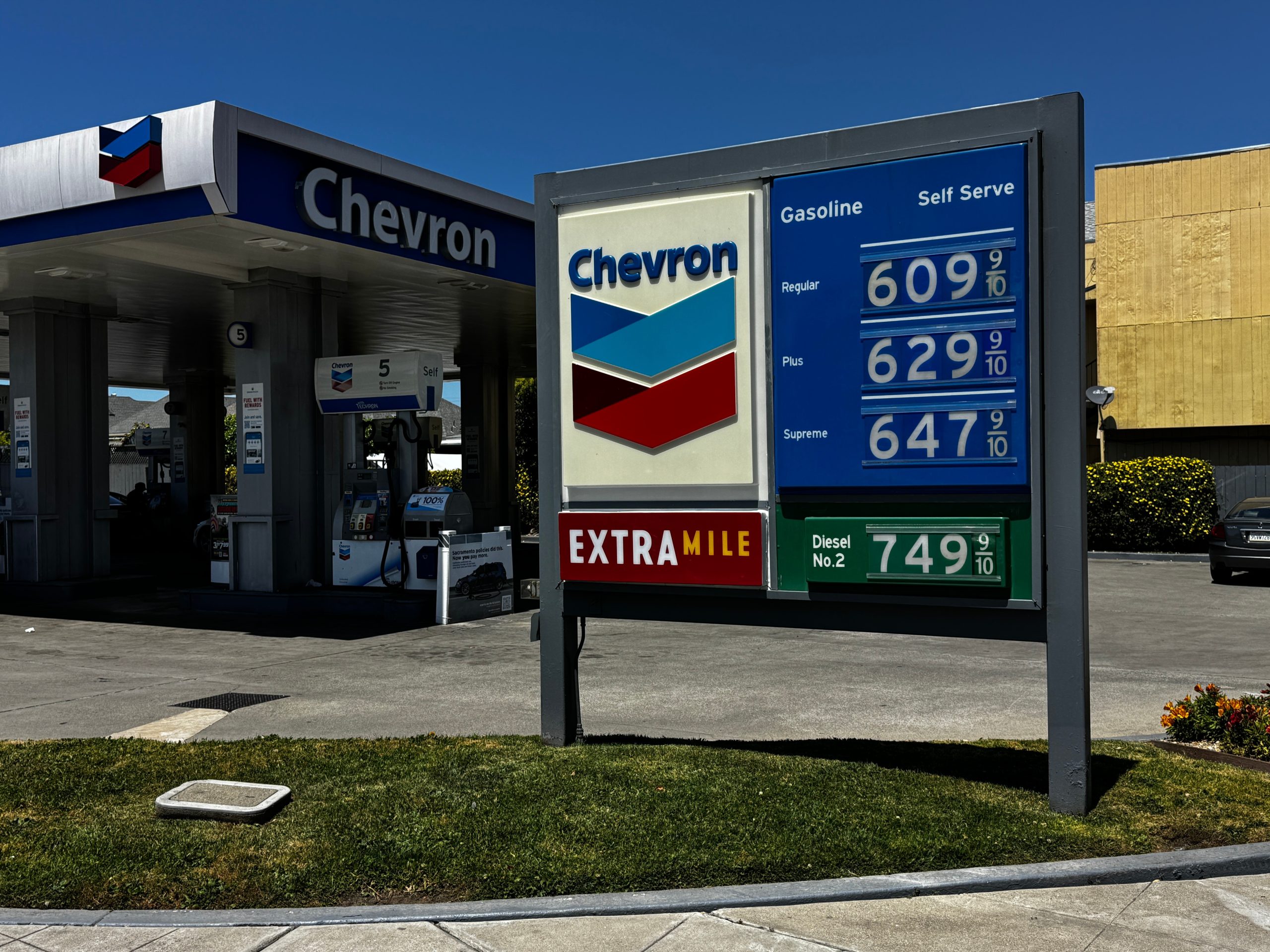
Fueling Discontent: Newsom Points Finger at Chevron, Sparking Holiday Gas Pump Grumbles
POLICY WIRE — Sacramento, USA — The family road trip, a time-honored—if often contentious—American tradition, hit a predictable snag this past holiday weekend for millions of Californians. It...

POLICY WIRE — Sacramento, USA — The family road trip, a time-honored—if often contentious—American tradition, hit a predictable snag this past holiday weekend for millions of Californians. It wasn’t flat tires or sibling squabbles, but the stark numbers flashing on gas station pumps. And amidst the sticker shock, Governor Gavin Newsom’s office offered a novel form of consumer advice: don’t just compare prices, avoid a brand.
It sounds almost absurd, doesn’t it? A state governor’s staff issuing a public service announcement (well, an implied one) to actively bypass a specific company’s petrol stations. But that’s exactly what went down. Californians, already staring down some of the steepest fuel costs in the nation, were subtly nudged away from Chevron — and its associated brands — if they wanted to keep more cash in their pockets for dubious roadside attractions.
Because let’s be real, California’s gas prices are less an anomaly — and more a chronic condition. For ages, drivers here have shelled out significantly more than their counterparts in, say, Oklahoma or Texas. The past weekend just twisted the knife a bit further. Data from the American Automobile Association (AAA) indicated that average gasoline prices in California routinely soar over $1.50 per gallon higher than the national average, making every road trip feel like a luxury indulgence. Newsom’s office essentially put Chevron on notice, framing their pricing strategy as nothing short of highway robbery during a time when folks are just trying to get from Point A to a vacation cabin without draining their kids’ college funds.
This isn’t Newsom’s first rodeo taking a swing at Big Oil. He’s carved out a reputation as a champion of the exasperated consumer, a governor not afraid to name names when he feels a corporation is overcharging. It’s smart politics, of course, positioning himself as the everyday hero fighting Goliaths in boardroom suits. But it also speaks to a genuine frustration simmering just beneath the surface of the Golden State’s glossy facade.
“We won’t stand by as massive corporations gouge our constituents just because it’s a long weekend,” Governor Newsom reportedly stated, his voice likely tinged with a blend of populist outrage and political expediency. “This isn’t about supply — and demand anymore; it’s about corporate greed, pure and simple. Californians deserve better than this kind of brazen exploitation.” And he’s right to point out the feeling many people have that these companies exploit moments like holiday weekends.
Naturally, Chevron wasn’t exactly sending thank-you notes. They’re in the business of making money, after all, not winning popularity contests with state houses. A spokesperson for the energy giant, who asked not to be named discussing internal strategy but whose position aligns with past company statements, would likely retort, “Our pricing reflects the market realities, operating costs, and complex regulatory environment unique to California. It’s simplistic, frankly, to attribute prices solely to corporate decisions while ignoring these broader economic factors.”
But that explanation often falls on deaf ears when a driver’s looking at $70 for a half-tank. The disconnect is cavernous. It begs a question, though: what exactly is the end game here? Beyond the public shaming, does the governor genuinely believe that issuing advisories will dramatically alter pricing structures or shift billions of consumer dollars away from one particular oil company?
This kind of public sparring isn’t just local California news; it reflects a broader global dance between governments eager to appear responsive to public angst and multinational corporations navigating intricate, volatile markets. Think of countries like Pakistan, for instance, where petrol price hikes can trigger nationwide protests and become immediate, existential crises for governing parties. Governments there—and across much of South Asia and the Muslim world—are often forced to choose between politically dangerous subsidy cuts and economically ruinous state budgets. In California, it’s a nuisance; elsewhere, it’s a recipe for destabilization.
The U.S., even with its oil production capacity, isn’t insulated from global ripples either. Geopolitical flashpoints — like the ongoing conflict in Ukraine — can send crude prices soaring worldwide, demonstrating the unspoken reckoning of global energy economics. But then again, some analysts wonder if those ripple effects are disproportionately felt at the California pump due to state-specific factors like taxes and environmental regulations, a convenient punching bag for either side depending on who’s talking.
What This Means
This kerfuffle is more than just about gas prices; it’s a high-visibility, low-risk political gambit for Governor Newsom. By singling out Chevron, he reinforces his progressive bona fides — and appears to stand up for the average Californian. It allows him to channel popular discontent without necessarily offering radical, long-term solutions to California’s fundamental energy costs, which are baked into its policy decisions. For Chevron, it’s a public relations headache, yes, but likely a temporary one that won’t fundamentally alter its market share or pricing strategies given the inelastic nature of fuel demand. The real implication lies in the erosion of trust between corporations and consumers, fueled by perceived profiteering on one side and what many see as convenient political posturing on the other. It doesn’t solve the price problem, but it sure makes for good copy.