

As New Mexico Bakes, Its Water Crisis Echoes Across a Fragile Planet
POLICY WIRE — SANTA FE, N.M. — The high desert always promised extremes, but this year, it’s delivering an extra dose of existential dread. Think parched earth, cracked riverbeds where water once...

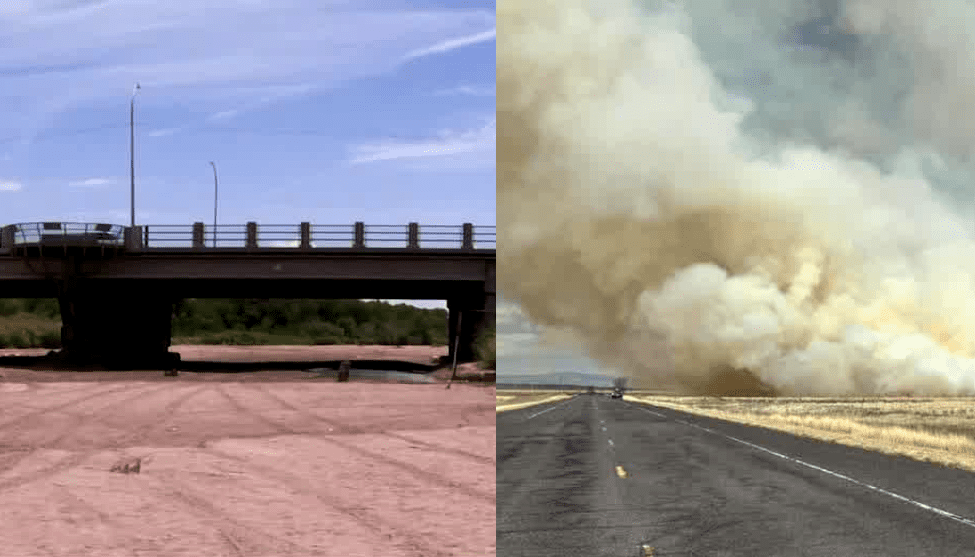
POLICY WIRE — SANTA FE, N.M. — The high desert always promised extremes, but this year, it’s delivering an extra dose of existential dread. Think parched earth, cracked riverbeds where water once flowed freely, and a persistent, dry wind that carries the scent of distant smoke. This isn’t just an exceptionally bad season in the Land of Enchantment (that’s New Mexico’s rather optimistic nickname, by the way); it’s a bellwether for a world quietly — or not so quietly— sliding into a new era of climate consequence.
It turns out that not even a state defined by its vast, arid beauty can escape the tightening grip of climate change. Governor Michelle Lujan Grisham, not one for subtlety when the stakes are high, pulled no punches this week. She slapped a statewide declaration of drought — and severe fire conditions onto the books. It wasn’t some casual announcement; it was a desperate plea wrapped in bureaucratic language, acknowledging record low snowpack (remember snow?), diminishing river flows, and springtime temperatures that have climbed right off the charts. The administration’s words, devoid of their usual political gloss, suggested that things were, shall we say, a bit dicey.
Because, really, when your state sees a full-on doubling of wildfires in a single year, you know you’re not just having a bad hair day. New Mexico’s emergency declaration follows a stark data point: 366 wildfires have already ripped through the state in the first four months of 2026, a brutal doubling of the number recorded for the same period just a year prior. (Governor’s Office, May 2026). And it isn’t like folks don’t know fire. They just haven’t known it quite like this.
“Look, we’re beyond talking points here; we’re talking about keeping communities from burning down and ensuring our people actually have water to drink,” Governor Grisham declared, her voice reportedly frayed during a recent press briefing. “This executive order isn’t some magic bullet, but it gives us a fighting chance—and believe me, we’re going to need every ounce of that.” Her directive aims to whip state agencies into a coordinated frenzy of resource distribution, information sharing, and—let’s be honest—crisis management for pretty much every corner of the state.
And it’s not just big government talking heads who are worried. Laura McCarthy, New Mexico’s State Forester, who’s seen more smoky horizons than most folks have had hot dinners, offered her own blunt assessment. “We’re fighting fires every day. Every single day. And it’s not letting up,” McCarthy stated, exasperated. “People have to get serious; you just can’t have campfires or do open burning right now. Clear that dry stuff away from your house, make a defensible space—it’s not complicated, but it’s absolutely necessary. We’re stretched thin enough as it’s.” It’s a basic call for communal survival, really, one that shouldn’t require an official edict but does, here we’re.
This isn’t some isolated regional anomaly, either. New Mexico’s predicament—its parched fields, its shrinking water sources, its landscape threatening to erupt—is merely one stark example of a larger, global environmental strain. You see similar, often far more catastrophic, scenarios unfolding across vast, dry landscapes from the American Southwest to the Indus River Basin in Pakistan. That massive waterway, the lifeblood for tens of millions across South Asia, relies heavily on glacial melt, a source growing ever more unstable. Governments in Islamabad, much like officials in Santa Fe, wrestle with how to manage dwindling resources for huge populations, knowing that water scarcity isn’t just an inconvenience; it’s a profound destabilizer—economically, politically, and socially. In both regions, and countless others, the immediate physical threat from fires or dry wells becomes a simmering question of long-term governance and viability. Perhaps a closer look at how nations handle external pressures gives some indication of internal fragility.
What This Means
So, what’s this whole dry, burning mess really mean? Well, for starters, it means an economic hit. Agriculture, a cornerstone of New Mexico’s identity, gets hammered. Ranchers can’t feed their cattle, farmers face crop failures, and pretty much every segment of the outdoor tourism industry (hiking, fishing, camping) takes a nosedive. The political fallout? Governor Grisham’s administration is now firmly on the hook to deliver effective crisis management. Voters tend to remember who kept the water flowing and the fires at bay—or didn’t.
But also, — and maybe more profoundly, it solidifies New Mexico as a frontline state in the climate fight. Its challenges aren’t future projections; they’re daily realities. This sort of prolonged environmental stress tests government capacity like nothing else, forcing difficult choices about resource allocation and emergency funding. It also serves as a sharp reminder for federal policymakers that the consequences of climate inaction aren’t theoretical or distant. They’re literally playing out in the American backyard, burning across millions of acres — and drying up vital rivers. These localized disasters, unfortunately, are fast becoming the new normal, not just in New Mexico but everywhere. We might even ask what parallels can be drawn between what causes a ‘sky fire’ and what causes widespread terrestrial devastation.