


Ancient Echoes vs. Modern Drills: Chaco Canyon’s Precarious Stand in New Mexico
POLICY WIRE — Washington, D.C. — Imagine, if you will, the federal government pointing a finger at itself. That’s essentially what happened last week when the National Trust for Historic...

POLICY WIRE — Washington, D.C. — Imagine, if you will, the federal government pointing a finger at itself. That’s essentially what happened last week when the National Trust for Historic Preservation — a privately funded, Congressionally chartered organization, mind you — dropped the Greater Chaco cultural landscape, including its crown jewel, Chaco Canyon, onto its dreaded 11 Most Endangered Historic Places list. It’s a move that feels less like a warning, — and more like an exasperated sigh aimed squarely at bureaucratic inertia.
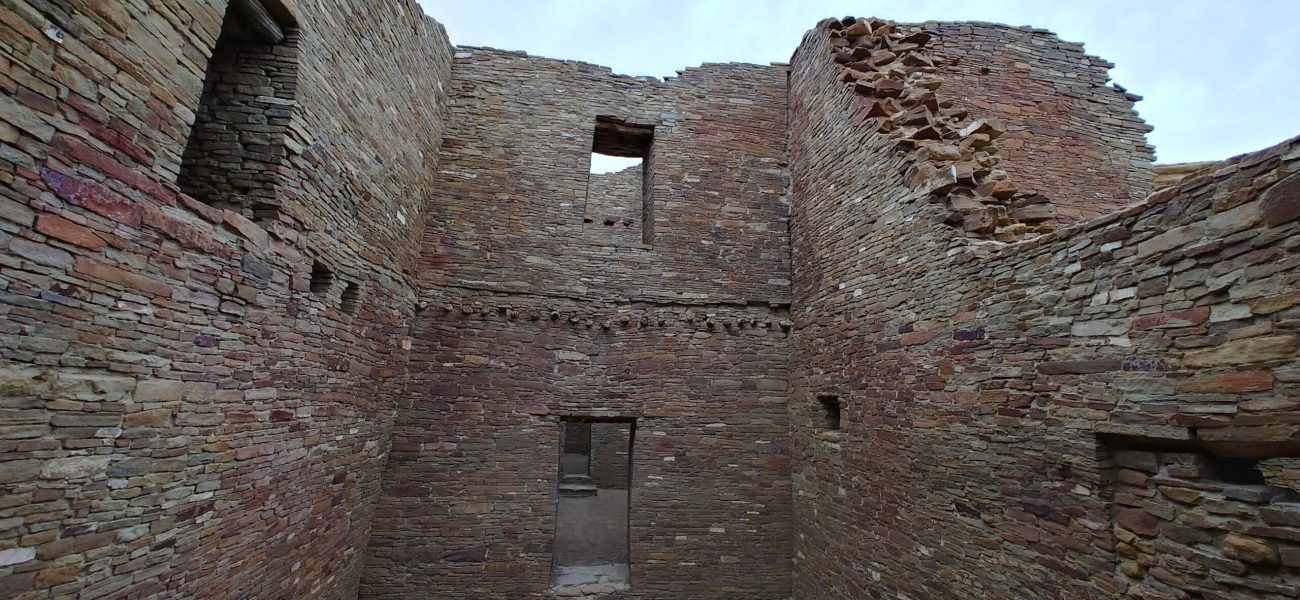
This isn’t about some forgotten frontier outpost or a decaying factory. We’re talking about a UNESCO World Heritage site here, a spiritual heartland for numerous Indigenous peoples, a place whose sophisticated ancient architecture still mystifies archaeologists. But, you know, drilling. That’s the real villain in this narrative, pushing ancient ceremonial grounds ever closer to the brink of modern industry.
For years, folks have been hollering about the encroaching oil — and gas development surrounding Chaco. Now, with this designation, the warnings have morphed into a formal alarm, implying that federal land policies are, frankly, dropping the ball. The Trust isn’t just tsk-tsking; they’re putting their money where their mouth is, meager as it may seem, with a one-time grant of $25,000 for the listed sites. It’s pocket change in the grand scheme of things, but it’s a symbolic gesture that aims to protect stories for generations.
And it’s a story many of us have heard before, domestically — and abroad. It’s a familiar bind, not just for New Mexico, but globally. You see it from the Gandhara ruins in Pakistan’s Khyber Pakhtunkhwa province, where ancient Buddhist sites wrestle with encroaching development, to the Madain Saleh in Saudi Arabia, needing careful stewardship amidst modernization drives. The tension between resource extraction and preserving history, it’s not uniquely American, but we sure seem to perfect its execution.
“This isn’t just about rocks and dirt; it’s about our story, America’s story, interwoven with the identity of living Indigenous cultures. Washington needs to get its priorities straight before we lose these whispers of history forever,” stated Sarah Nez, a spokesperson for the Indigenous Cultural Heritage Alliance, her voice laced with weary determination. She’s not wrong, you know.
Because the stakes are higher than a simple designation implies. This part of New Mexico, like much of the state, sits atop significant hydrocarbon reserves. The state pumped approximately 1.7 million barrels of crude oil per day in March 2024, making it the second-largest crude oil producing state in the U.S., according to the Energy Information Administration. That’s a lot of petro-dollars for state coffers. But how do you balance black gold with sacred earth?
The situation casts a stark light on federal resource management, a dance often performed with two left feet. Changes to federal land policy? They’ve always got the potential to open floodgates, — and not the kind that nourish ancient pueblos. One day it’s protected; the next, well, it’s fair game. This list, it includes a spread of American history – from the Ben Moore Hotel where Civil Rights history was made, to the Women’s Rights National Historical Park. Each place tells a piece of who we’re, or who we once were. For other pressing discussions regarding the state’s complex relationship with its natural resources and future development, we often see a battle brewing, as local stakeholders frequently face tough choices.
But when it comes to Chaco, it’s about a silence that stretches back a millennium. Its towering multi-story structures, its intricate road systems radiating outwards, they weren’t built with drill pads and pipelines in mind. Their legacy was meant to be one of endurance, not a desperate fight for survival against the 21st century’s insatiable energy appetite. Deputy Interior Secretary David Harding, usually a man of carefully worded policy, put it plainly, albeit blandly, last quarter: “We’re absolutely committed to protecting these sites while still ensuring our energy security. It’s an ongoing, complex challenge.” Complex, indeed. Sometimes you’ve gotta wonder if the commitment part is doing a lot of heavy lifting.
What This Means
This endangered designation, while largely symbolic, amplifies the pressure on the Department of Interior to finalize and implement policies that protect Chaco from further oil and gas leasing and development. Politically, it galvanizes Indigenous tribes and environmental groups, giving them stronger leverage in their ongoing advocacy efforts. It forces the administration to publicly confront the cognitive dissonance of acknowledging a site’s historical significance while simultaneously permitting activities that threaten it.
Economically, this is where it gets messy. New Mexico’s economy relies heavily on oil — and gas revenue. Any blanket moratorium on development in Chaco’s vicinity, even on federal lands outside the national historical park boundary but within the greater cultural landscape, triggers predictable pushback from industry and state-level politicians focused on the budget. The designation essentially paints a target on the federal government’s back, forcing it to decide: is this landscape’s ancient whispers more important than immediate energy gains? It’s not a new question, but when you put a place on the ‘endangered’ list, it implies time is running out. That’s the real impact here: not just raising awareness, but escalating the battle from a polite debate to an unavoidable federal dilemma. Because, ultimately, you can’t have both in the same breath, can you?