


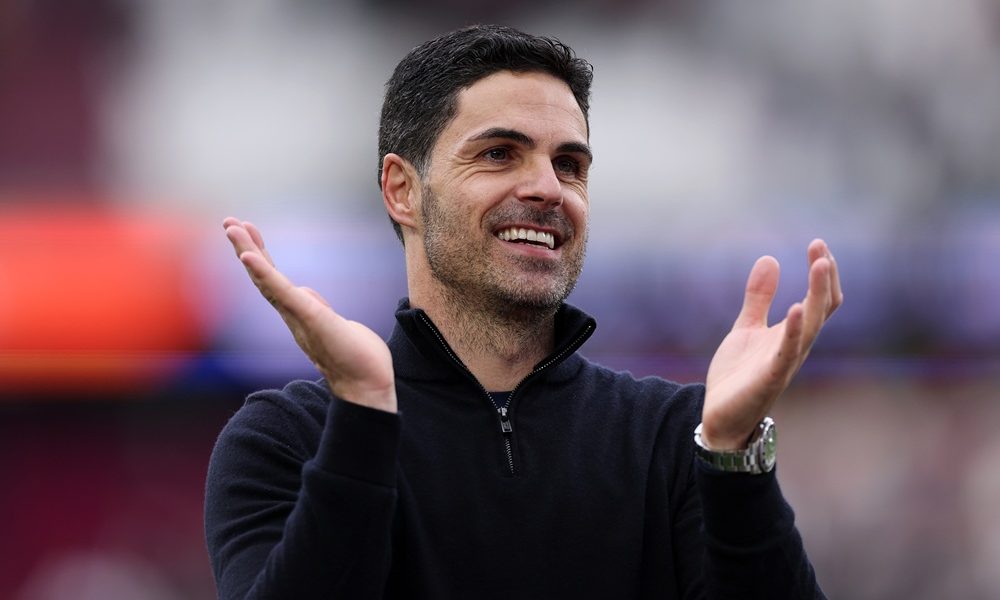
Backyard Boss: How Arteta Grilled Away Title Nerves, Forgetting His Own Coronation
POLICY WIRE — LONDON, UK — The aroma of charring meat hung heavy in the cool London evening air, a surprisingly mundane backdrop to what was, for millions, the zenith of a footballing season. Mikel...

POLICY WIRE — LONDON, UK — The aroma of charring meat hung heavy in the cool London evening air, a surprisingly mundane backdrop to what was, for millions, the zenith of a footballing season. Mikel Arteta, Arsenal’s intensely coiled manager, wasn’t pacing a touchline, nor was he slumped anxiously before a television screen with his squad. No, he was tending to a barbecue in his own backyard, ostensibly disconnected, when his footballing universe finally tipped into glorious confirmation.
It’s not every day a manager learns his team has clinched the most coveted domestic title from a sobbing child running across the lawn. Most would’ve been steeped in the game’s dying embers, dissecting every pass, every foul—a living embodiment of their professional angst. But Arteta, a man known for his almost obsessive attention to detail, consciously stepped away from that particular fire, preferring the more literal one in his garden pit. His son, not a Sky Sports ticker, delivered the definitive word: “We’re champions, daddy.”
And what a quiet detonation it must’ve been. The original plan had Arteta joining his squad at London Colney, the training ground, to collectively endure the final minutes of Manchester City’s crucial match against AFC Bournemouth. A stumble by City would hand Arsenal the Premier League. Yet, a deep, perhaps instinctual, premonition prompted him to pull a tactical retreat from his own celebrations. “I just couldn’t bring the energy they deserved,” Arteta has often recounted. “Sometimes you’ve just got to step back, let the lads have their moment. It’s about their journey, not just mine. And the honesty of that backyard scene—that’s as real as it gets.” It’s an unusual admission from a figure so often seen as the emotional heart of his team’s fierce resurgence.
But that detachment, it speaks volumes. It speaks of a coach who understands the intense, often debilitating, psychological burden of high-stakes football. He chose a kind of domestic exile, a personal bubble where the fate of the league played out as muffled background noise. When the cheers erupted from his living room, filtered through brick and glass, they became something almost otherworldly before his son’s direct, tear-streaked declaration crystallized everything.
“What Arteta pulled off, that wasn’t just a tactical masterpiece on the field,” opined Gary Neville, veteran pundit for Sky Sports, often a fierce critic. “It was a psychological one, too. His deliberate detachment from the game, letting his players absorb that pressure and elation together—it speaks volumes about his understanding of a squad’s soul. It shows genuine leadership, knowing when to be present and when to create space for others to own the moment.” It’s the sort of move you don’t train for, you just live.
The celebrations, naturally, came later. A manager can avoid the build-up, but not the champagne. Arteta eventually joined his elated players at a West London nightclub, reportedly dancing, smiling, and perhaps finally letting the enormity of it all truly sink in, free from the solitary burden he’d opted to shoulder. It’s a moment that will enter Arsenal folklore, a quirky footnote to a historic season.
What This Means
Arteta’s unique brand of championship confirmation, while personal, carries wider implications, particularly for a club like Arsenal with significant global reach. This victory, hard-fought and unexpected by many, isn’t merely about bragging rights in North London; it’s a financial and political booster shot.
From an economic standpoint, a Premier League title translates into immense commercial uplift. Merchandising sales surge globally. Sponsorship deals become more lucrative. Brand visibility, especially in burgeoning markets like South Asia — and the Middle East, rockets. According to the Premier League’s own figures, the cumulative global audience for its matches topped 5 billion for the 2022-23 season, with significant growth observed in Asia and the Middle East. Arsenal’s success means capturing a larger slice of that viewership, directly influencing advertising revenue and the perceived value of the league as an entertainment product. Because let’s be honest, everyone loves a winner, especially after a prolonged dry spell.
Politically, the soft power exerted by global football giants like Arsenal is undeniable. For millions in Pakistan, Bangladesh, and the wider Muslim world, European football isn’t just a sport; it’s an escape, a passion that often transcends borders and even domestic political strife. The Premier League’s brand carries a certain cultural cachet, subtly exporting aspects of British influence and popular culture. A title win enhances this. It offers a fleeting moment of collective joy in regions often grappling with complex socio-economic and humanitarian challenges—Gaza’s humanitarian maze, for instance, remains an ever-present stark reality alongside the fervour for European football.
This success, and its rather unconventional announcement to the coach, reinforces the narrative of Arsenal as a club rebuilding smartly, carefully. It signals not just tactical prowess on the pitch but an understanding of squad psychology and media management that extends beyond the conventional. It’s a reminder that even at the highest echelons of professional sport, moments of profound impact can be born from the deeply human, the unscripted, and—occasionally—the smoky aftermath of a backyard barbecue.