


As India Roasts, A Society Recalibrates Its Clock
POLICY WIRE — New Delhi, India — There’s an eerie hush that falls over Delhi’s arterial roads midday now, a stark departure from the usual cacophony. It isn’t a national holiday, nor some...

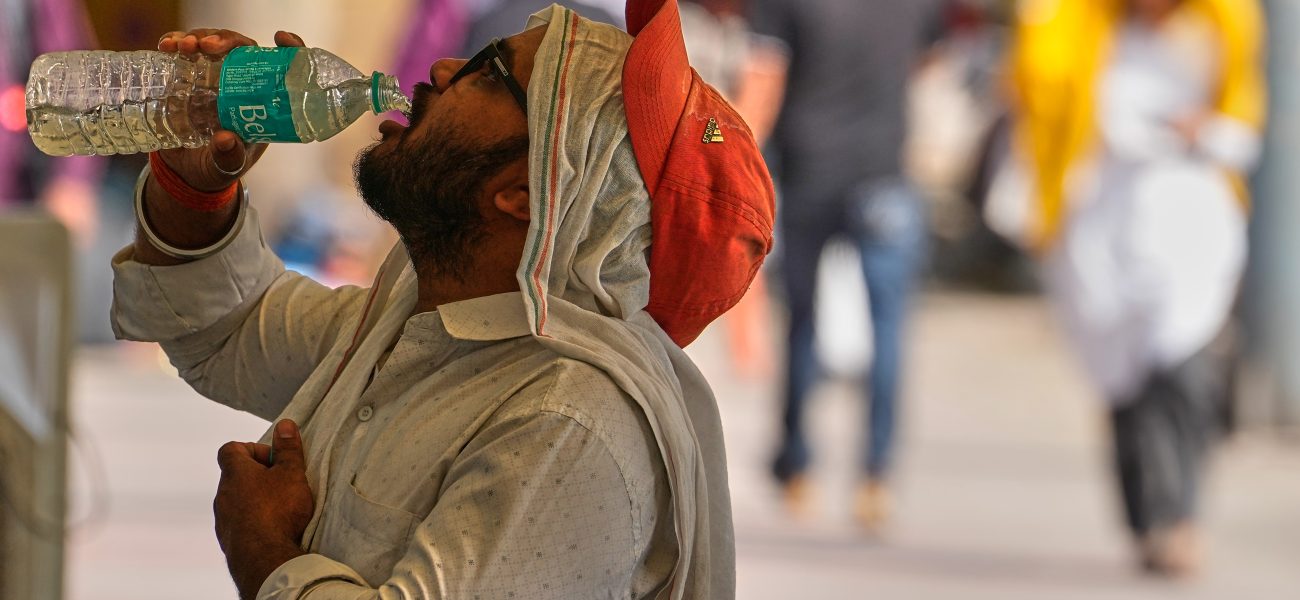
POLICY WIRE — New Delhi, India — There’s an eerie hush that falls over Delhi’s arterial roads midday now, a stark departure from the usual cacophony. It isn’t a national holiday, nor some civic lockdown—just the sun. But this isn’t the genial warmth of spring. It’s a relentless, unyielding furnace, rewriting the very rhythm of life in North India. Forget bustling bazaars — and crowded sidewalks; those have become spectral landscapes by high noon. Daily commerce, social rituals, even agriculture — everything’s been inverted.
And it’s a phenomenon gripping millions. The mercury’s climbing, isn’t it? Upwards of 45 degrees Celsius (113 Fahrenheit) isn’t an anomaly anymore; it’s a standard operating procedure for this region. We’re talking about sustained, body-crushing heat, week after blistering week. And because of it, life’s going subterranean, shifting its entire operational schedule. Farmers, those tireless providers, are finding ingenious—and desperate—ways to cope. Many have simply become nocturnal. They’re out there, in their fields, not watching the dawn, but toiling through the deep indigo hours before it, hoping to beat the inevitable midday blaze. It’s a harsh, enforced pivot, yet essential for their livelihoods.
But the stakes are high, — and they’re rising. This isn’t just about uncomfortable commutes. We’re witnessing a slow-motion re-engineering of an entire socio-economic system. Schools shut early; offices adopt truncated hours. Power grids, already strained, creak under the relentless demand for air conditioning. It’s an unsustainable dance, a forced adaptation that reveals the brittle edges of modernity colliding with a furious climate. Locals can’t just wish it away.
Agriculture, naturally, stands squarely in the path of this climatic onslaught. “We’ve implemented a robust emergency response framework, focusing on early warning systems and crop-specific advisories for our farmers,” Union Agriculture Minister Narendra Singh Tomar told Policy Wire. “But we can’t deny the gravity. This heat demands extraordinary measures from everyone — government, industry, and the populace alike.” It’s true; they’re trying. But can advisories really cool a scorched earth?
Because the challenge extends well beyond India’s borders. Similar, equally punishing conditions are baking Pakistan’s Sindh and Punjab provinces, affecting shared river basins and agricultural productivity across the Indus valley. It’s a regional catastrophe, silently brewing. Dr. Ghulam Murtaza, a climate expert based in Lahore, noted, “This isn’t a unique Indian problem; it’s a South Asian existential threat. Shared water resources, interdependent agricultural markets—when one nation suffers this acutely, its neighbours feel the squeeze. Our collective resilience is being tested.” He’s not wrong; it’s a tightrope walk.
Retail — and urban services aren’t exempt from this bizarre schedule shuffle. Street vendors, construction workers, day labourers—many now kickstart their workday at dusk, pushing through till dawn. Imagine the logistical nightmare. Urban transport is seeing significantly higher ridership in off-peak, nighttime hours, and the demand for cooling solutions has skyrocketed. According to data compiled by the India Meteorological Department (IMD), April and May of this year saw average daytime maximum temperatures in northwest India exceed their 30-year historical averages by an unprecedented 3.2 degrees Celsius—a metric that, if sustained, spells economic disaster.
It’s not just a weather report; it’s a forecast for change. And it means businesses must adjust, government policies need re-thinking. Small businesses, the bedrock of India’s informal economy, are particularly hard hit. They’re grappling with reduced foot traffic during daylight hours — and the increased operational costs of night shifts. They’ve got thin margins to begin with. Meanwhile, state administrations are wrestling with public health crises, dealing with a spike in heatstroke cases and water scarcity. This isn’t just an inconvenience; it’s an urgent, creeping redefinition of public life, demanding rapid adaptation on all fronts.
What This Means
The protracted heatwave sweeping across North India isn’t just an environmental hazard; it’s an economic disruptor and a subtle political challenge. Politically, the ruling government faces pressure to demonstrate its capacity for climate adaptation and disaster mitigation. Failure to protect vulnerable populations—especially farmers and daily wage earners—could ignite social unrest, making things more difficult in upcoming election cycles. Because when people can’t work, they can’t eat, — and that creates deep-seated grievances. State governments, already stretched thin, find themselves battling immediate public health concerns while trying to shore up essential services like power and water. It’s a brutal balancing act.
Economically, the impact is a cascading nightmare. Supply chains for agricultural produce are experiencing significant bottlenecks and price inflation as harvesting, transportation, and market hours get distorted. Businesses, especially those reliant on outdoor activity or traditional daytime schedules, face decreased productivity and increased operational costs. We’re likely looking at a tangible dent in GDP growth for the affected regions, if not the national economy, should these conditions become the new normal. Europe’s fiscal cliffs feel a bit abstract when you’re battling temperatures that boil roads. And think of the long-term capital reallocation. Investment might shy away from regions perceived as climate change hotspots, redirecting towards more resilient areas, exacerbating regional inequalities. It’s an unforgiving business, this climate game, with winners and very definite losers. Policy discussions around urban planning, climate-resistant infrastructure, and agricultural subsidies are now, more than ever, moving from theoretical exercises to urgent imperatives. The clock isn’t just recalibrating; it’s ticking louder.