


Capitan’s Pyrrhic Grind: Battling Ash, Budgets, and a Blistering New Normal
POLICY WIRE — CAPITAN, N.M. — It wasn’t the blaze itself that whispered loudest on Wednesday, but the stubborn, almost bureaucratic rhythm of its opposition. Another hundred bodies trudged onto...

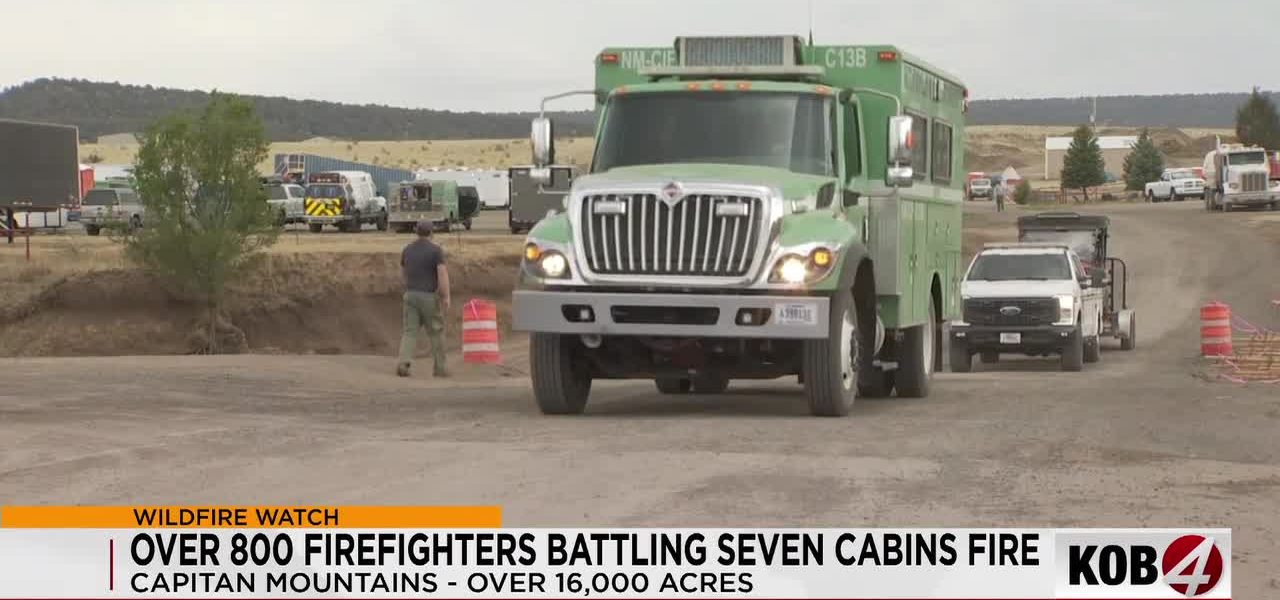
POLICY WIRE — CAPITAN, N.M. — It wasn’t the blaze itself that whispered loudest on Wednesday, but the stubborn, almost bureaucratic rhythm of its opposition. Another hundred bodies trudged onto the lines, swelling the firefighting ranks to 834, just as the declared containment for the Seven Cabins Fire did its perplexing shimmy from a modest 7% down to 6%. One step forward, half a step back—a common dance, it seems, in an era of relentless fire seasons.
But numbers, officials quickly tell you, rarely capture the grit. Crews are working 16-hour shifts, a punishing routine in terrain that scoffs at easy access. Locals, those few who aren’t on high alert, can see it. They’ve witnessed the stoic battle through sun, through wind, through a brief, teasing spritz of rain. It’s an almost biblical trial by fire, played out on the craggy slopes of Lincoln County.
“What we do see out in front of us is higher humidity, lower temps, a potential chance of thunderstorms, and maybe a little wetting rain,” explained Incident Commander Caleb Finch, his voice flat with experience, not hope. “And all those conditions are going to allow firefighters to gain access.” Finch praised his crews’ relentless efforts—it’s an ‘around-the-clock’ gig, after all. You don’t get to pick your weather when the wilderness decides it’s had enough. You just keep going.
The Capitan community, a cluster of resilient souls living on the literal edge of this sprawling inferno, hasn’t forgotten who’s standing between them and ecological ruin. “We can’t say thanks enough for what all they’re doing, because if they weren’t here, we’d probably be in a lot worse shape than what we’re,” remarked Terry Claunch, a local watching the distant smoke plumes with weary eyes. Neighbors like Sabrina Wood echoed the sentiment: “They’ve been good. Really, really good. They were out here in the rain, you know, the cold, the heat. Yeah, they’re always really good.” Businesses, too, are chipping in—coffee, food, a brief respite from the smoke and sweat. It’s a familiar, almost automatic response: the small-town equivalent of wartime rationing, but for the front lines of climate change.
And then there’s the cold math: the fire now spans over 16,000 acres, a brutal expansion that continues to chew through precious land. Officials anticipate another two to three weeks of dedicated — grueling — effort before they can truly pull back. It’s not just a wildfire; it’s an economic siphon, a mental drain, and another stark reminder of an accelerating climate crisis. The National Interagency Fire Center (NIFC) reported that in 2023 alone, over 2.6 million acres burned across the U.S., with federal agencies shelling out over $3 billion in suppression costs. That money doesn’t just materialize from thin air.
“New Mexico’s budgets aren’t infinite. Every mega-fire chips away at resources we desperately need for education, for healthcare,” State Representative Elena Chavez commented, reflecting a pervasive anxiety gripping officials. “It’s a cruel math problem we’re solving annually, with no end in sight.” Because while Capitan’s plight is immediate, it’s also an unsettling microcosm. These localized disasters resonate globally. It’s a stark reminder, too, that similar—often far more devastating—climate-driven crises are playing out from the arid plains of Pakistan to the flood-scarred villages of Sindh, where communities, often with even fewer resources, are confronting the same merciless shifts in weather patterns. The sheer scale of destruction — and the corresponding policy failures know no borders.
What This Means
This isn’t merely a localized emergency; it’s a symptom of a larger, systemic problem that federal and state policymakers seem perpetually ill-equipped to handle effectively. The routine heroism of firefighters, while commendable, often masks an underlying failure in long-term environmental strategy and resource allocation. For communities like Capitan, the constant threat means an ongoing, simmering dread that poisons everything from property values to tourism revenue, hindering sustainable development and draining vital civic resources. Think about the costs not just in terms of suppression, but in lost economic activity, mental health strain, and infrastructure repair that’ll stretch on long after the last ember cools. Policymakers are constantly playing catch-up, pouring money into firefighting rather than prevention, exacerbating the cycle. And until there’s a truly coordinated, proactive strategy, incidents like Seven Cabins—with their frustrating dance of acreage and containment percentages—will simply become the agonizingly predictable soundtrack to summers across the American West, echoing a grim future shared by vulnerable populations around the globe.