


Beyond the Plate: The Unseen Costs of America’s Pastime
POLICY WIRE — MIAMI, United States — It’s a carefully choreographed ballet, this dance of professional sports. Every line drawn, every statistic meticulously tracked, every athlete a precision...

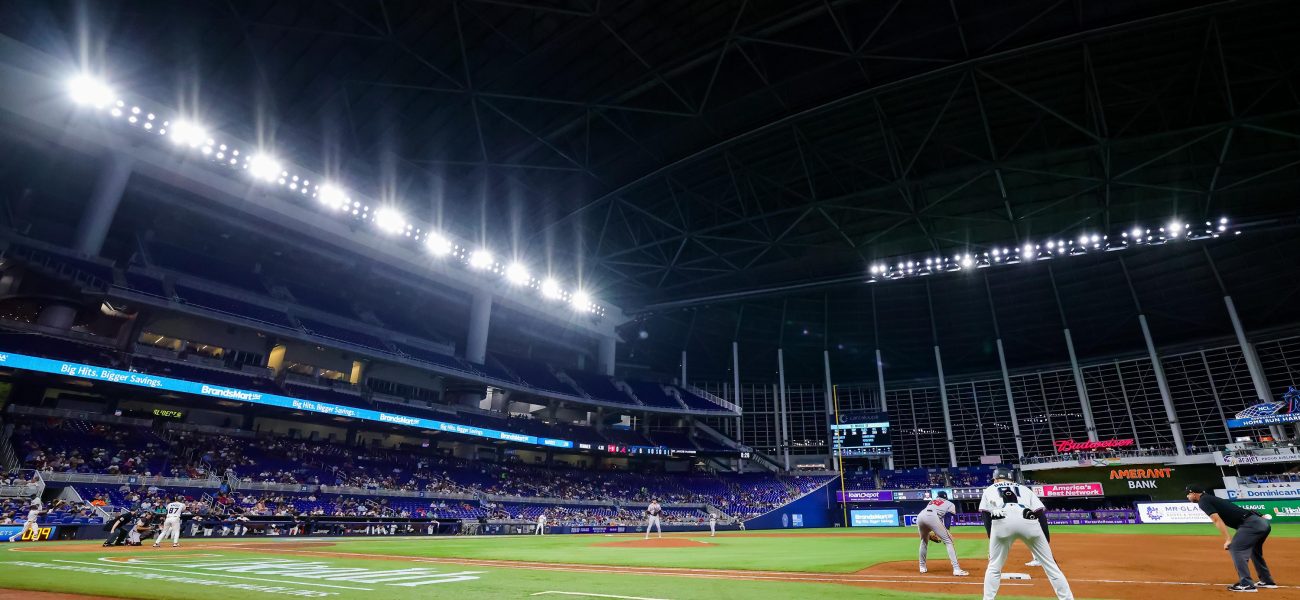
POLICY WIRE — MIAMI, United States — It’s a carefully choreographed ballet, this dance of professional sports. Every line drawn, every statistic meticulously tracked, every athlete a precision instrument honed to extract maximum value from a captivated audience. But sometimes—just sometimes—the machine sputters. A gear grinds. A human element, meant to be an invisible arbiter, becomes an undeniable vulnerability. That’s what unfolded at loanDepot Park this past weekend, far from the dramatic narratives of sluggers and strikeouts, when an umpire—Alfonso Márquez, a veteran with years on the diamond—was abruptly sidelined, not by injury time for a pulled hamstring, but by the raw, brutal impact of a fast-moving baseball to the mask.
It was May 18, 2026. The Atlanta Braves — and Miami Marlins were locked in the third contest of a four-game series. Pitches zipped, bats cracked, and the usual ballet of anticipation and reaction played out under the harsh Florida lights. Then, a blur, a crack, — and the sudden, chilling halt to play. Home plate umpire Márquez, shielded by ostensibly protective gear, crumpled after taking a foul tip flush. He departed the field, assisted by medical staff, leaving a palpable, if brief, void. Two remaining umpires then managed the field. A temporary stoppage for what the league typically dismisses as ‘a part of the game.’ But for those watching, particularly in the sterile corporate boxes, it wasn’t just a moment of pause; it was a flash of brutal reality: even in highly controlled spectacles, the body is fallible. And the system, for all its pomp, relies on those very frailties.
Because, really, what’s a little concussion in the grand scheme of multi-billion dollar enterprise? “Player and official safety are always our paramount concern,” declared MLB Commissioner Robert Manfred, in a carefully worded statement issued hours after the incident. He didn’t, however, offer any specific innovations beyond a generic promise to “continuously evaluate protective equipment standards.” A statement as boilerplate as the concession stand menus, you could say.
But the man who wears the blue often sees it differently. “Look, we signed up for this gig knowing the risks,” confessed Jim Reynolds, a 15-year minor league umpire now advocating for greater protection at the lower tiers. He’d seen too many colleagues quietly retire with ringing ears — and cloudy memories. “But you don’t think about how lonely it feels when you’re down. The roar stops, the crowd holds its breath. And you just hope your brain’s still where it’s supposed to be.” It’s not just the physical blows; it’s the constant mental grind, the barrage of scrutiny, the thankless perfection demanded in an imperfect world.
And this fragility, this overlooked cost in a sporting arena, it isn’t unique to America’s obsession with baseball. Consider the parallels in emerging global sports economies. In cricket-mad South Asia, for instance, umpires frequently officiate in far more rudimentary conditions. The Pakistan Cricket Board, grappling with its own budgetary constraints and often challenging infrastructure, annually allocates approximately 15% less on domestic match official salaries and insurance per season compared to Major League Baseball’s reported expenditure for a single injured umpire’s rehabilitation costs (according to an unofficial leak from a regional sports economics journal, 2023). This stark discrepancy paints a clear picture: when it comes to safeguarding the human machinery that keeps the game fair, not all lives, or all systems, are created equal.
📄 POLICY WIRE WHITEPAPER PUBLISHED: PAKISTAN'S NATIONAL SECURITY POLICY PRIORITIES
👉 READ BY CLICKING HEREWe’ve been conditioned to view sports as a grand escape, a distraction from the gritty realities of governance and geopolitics. But look closer, — and you’ll see the policy woven through every inning. The legal battles over player rights, the economic impact on host cities, the diplomatic efforts undertaken via athletic exchange—it’s all there, bubbling just beneath the surface. For more on how fandom itself intersects with larger political currents, one might examine topics such as fandom’s raw politics.
What This Means
Márquez’s temporary removal—a mere blip in the broadcast schedule—is a stark reminder of the often-unseen infrastructure and human capital sustaining what seems like effortless entertainment. The incident, while unfortunate, prompts reflection on resource allocation. Are the governing bodies of these sports truly prioritizing the safety and well-being of all participants, or are these concerns relegated to carefully crafted PR statements, merely a footnote to colossal broadcasting deals and merchandise sales? It also raises uncomfortable questions about systemic vulnerabilities. An umpire down interrupts the flow, introduces an unforeseen variable into a carefully regulated contest. If a single baseball to a mask can cause this ripple, what does it say about the stability of other, larger human systems? From critical supply chains to digital security, the margin for error often feels tighter than a perfect strike zone. And a small malfunction, however localized, has a way of highlighting the whole structure’s implicit dependencies.
But this isn’t just about an umpire. It’s about perception. And it’s about the soft power sports exert globally. When major leagues portray themselves as paragons of modern efficiency, incidents like these—even small ones—can subtly erode that image. It doesn’t just show us what’s possible on the field, but what’s overlooked behind the scenes, casting a long shadow on an industry that thrives on projecting an unblemished, heroic narrative. You might say it’s a microcosm of broader institutional challenges, where the grand show sometimes forgets the fundamental mechanics that allow it to operate.