


Bare Chests and Ballgames: What MLB’s ‘Tarps Off’ Says About Fandom’s Raw Politics
POLICY WIRE — Washington, D.C. — It’s a primal scream, really. Or maybe a collective dare. Forget the intricate strategies, the million-dollar swings, the finely tuned mechanics of America’s pastime...

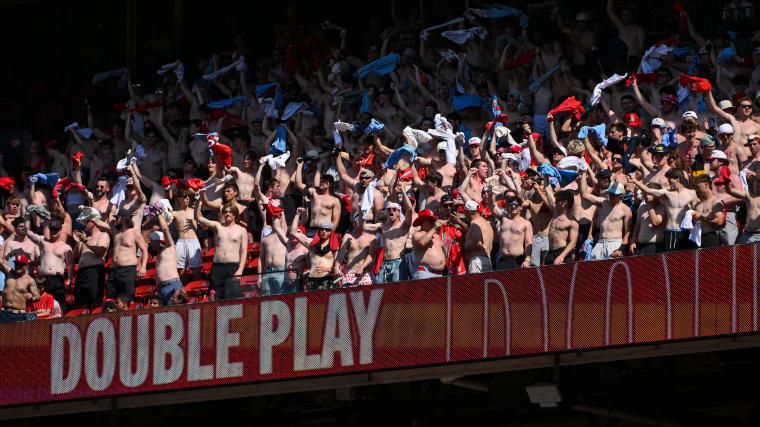
POLICY WIRE — Washington, D.C. — It’s a primal scream, really. Or maybe a collective dare. Forget the intricate strategies, the million-dollar swings, the finely tuned mechanics of America’s pastime for a minute. On sweltering summer nights in ballparks across the nation, an altogether stranger spectacle unfolds: sections of grown adults—mostly men, let’s be honest—ripping off their shirts, waving them like banners of rebellion, and howling at the heavens. This isn’t some spontaneous heat-induced delirium; it’s a deliberate, coordinated ritual, — and it’s dubbed ‘tarps off.’
It’s an act of desperation, pure and simple, but also an exercise in shared vulnerability, a desperate plea to the baseball gods for a rally. You won’t find it in any coaching manual. But for the uninitiated, picturing legions of shirtless fans, torsos slick with stadium beer and honest sweat, flailing fabric like some bizarre pagan offering to ward off a slump, it’s a potent image. And it’s one that started, not in some sun-baked college game, but in the staid, usually shirt-on world of Major League Baseball.
Initially, a casual observer might write it off as frat-boy antics, perhaps. Because, let’s face it, baseball’s 162-game schedule is a marathon, not a sprint. Maintaining fan engagement through five months of mid-week slogs can be a Herculean task. And teams, desperate for any edge, often implicitly or explicitly encourage these quirky manifestations of devotion.
The genesis story is less epic, more collegiate caper. Word has it, back in 2025, a lone, perhaps inebriated, Oklahoma State student in an embarrassingly empty stadium dared to bare. Others joined. A tradition was born from sheer, unadulterated boredom—and a truly abysmal team. Fast forward to May of this year, — and MLB’s St. Louis Cardinals, decidedly *not* a bad team, picked up the torch. Their fans, perhaps channeling the collective angst of a losing streak that never quite materialized, got loud and proud in Busch Stadium, and wouldn’t you know it, the team won. A new superstitious spark caught fire. Soon, the Rays, Mariners, Tigers, and even the beleaguered Angels fans (whose shirtless pleas ironically became a chant to ‘Sell the Team’), all joined in.
But what does this peculiar display actually mean in the grander scheme? “It’s a beautiful, chaotic example of communal effervescence,” observed Dr. Anya Sharma, a cultural anthropologist at Georgetown University. “It’s about shedding inhibitions, literally and figuratively, to create a collective identity that transcends individual despair. You see similar fervor, albeit often clothed, amongst passionate cricket fans across South Asia – particularly in Pakistan, where allegiances aren’t just recreational, they’re expressions of national pride and tribal loyalty. That raw, almost visceral devotion to team and flag isn’t exclusive to one culture or sport; it’s a human constant.” Indeed.
Sarah Adams, MLB’s Vice President of Fan Engagement, offers a more tempered, perhaps more corporate, view. “We’re always monitoring innovative forms of fan expression,” she noted recently in a digital press briefing. “This phenomenon, while certainly… physical, demonstrates an unparalleled passion. It shows our product resonates deeply enough for fans to literally put skin in the game. It’s something we aim to nurture, ensuring stadium environments are safe and inclusive for all forms of enthusiasm.” It’s corporate speak, sure, but also a quiet acknowledgement of the commercial power such organic movements hold.
This isn’t just about fans having fun; it’s about their influence, the raw power they exert on an economic juggernaut. Because, ultimately, baseball is a business. According to analysts, Major League Baseball alone generated a record-breaking 11.6 billion U.S. dollars in revenue in 2023. You can bet that fan engagement, even the kind that involves spontaneous partial nudity, feeds into those figures. It brings eyeballs, builds brand loyalty, and sells tickets—not to mention overpriced stadium beer and hotdogs. The energy fuels an entire industry, even if it feels like just a bit of silliness.
What This Means
The ‘tarps off’ phenomenon, in its bare-chested glory, isn’t merely a viral moment; it’s a potent, if accidental, expression of how collective identity forms and exerts influence in a fractured society. Economically, it showcases the immense value of grassroots fan movements to major sports leagues. Teams like the Cardinals, embracing—even commercializing—the trend by designating ‘high-energy’ sections, demonstrate a shrewd understanding of monetizing passion. Politically, if you wanna stretch it a bit, you could argue it’s a microcosm of populist fervor, an almost rebellious display of unity from a disparate crowd demanding a specific outcome, bypassing conventional structures. They aren’t asking for change; they’re *creating* a spectacle to *force* change (in the game’s momentum, anyway). It taps into a shared need for belonging and escapism, a release valve for collective anxieties in an increasingly stressful world. From a cultural perspective, it represents the evolving landscape of sports fandom—less about genteel applause and more about raw, unfiltered, almost tribal engagement. We see echoes of this visceral community in many global sports, including the unwavering support for Pakistan’s national cricket team. Whether it’s an unexpected turnaround for a struggling franchise, or the sudden jolt of a team finding its stride, the passion is palpable, driving narrative and, critically, revenue. It also reflects how online trends, originating in collegiate fringes, can quickly metastasize into mainstream cultural events, altering the very fabric of how public spectacles are consumed. These aren’t just shirtless fans; they’re unpaid marketing consultants, building hype one unbuttoned uniform at a time.