


The Golden Handcuffs: West Coast High School Stars and Collegiate Football’s Wild West Recruitment Economy
POLICY WIRE — Washington, D.C. —Forget gridiron glory for a moment; what’s really happening across the West Coast this spring is a masterclass in raw, unfettered capitalism—a high-stakes...

POLICY WIRE — Washington, D.C. —Forget gridiron glory for a moment; what’s really happening across the West Coast this spring is a masterclass in raw, unfettered capitalism—a high-stakes auction for athletic human capital, played out across the pristine campuses of elite universities and the often-grittier high schools of the Pacific Rim states. The annual rite of college football recruiting isn’t just about scholarship offers anymore; it’s an economic whirlwind, a sophisticated—and frankly, exhausting—dance of bids, counter-bids, and last-minute seductions for teenage phenoms. And it’s reaching a fever pitch.
With the Memorial Day dead period looming, young men, many barely old enough to vote, are being shuttled from Salt Lake City to Stanford, Eugene to Tempe. This isn’t just a decision about where to play ball; it’s a multi-million-dollar choice for programs, a potentially life-altering one for the recruits, their families, and the communities they represent. These weren’t mere casual campus tours; they were elaborate courtship rituals, culminating in this final rush.
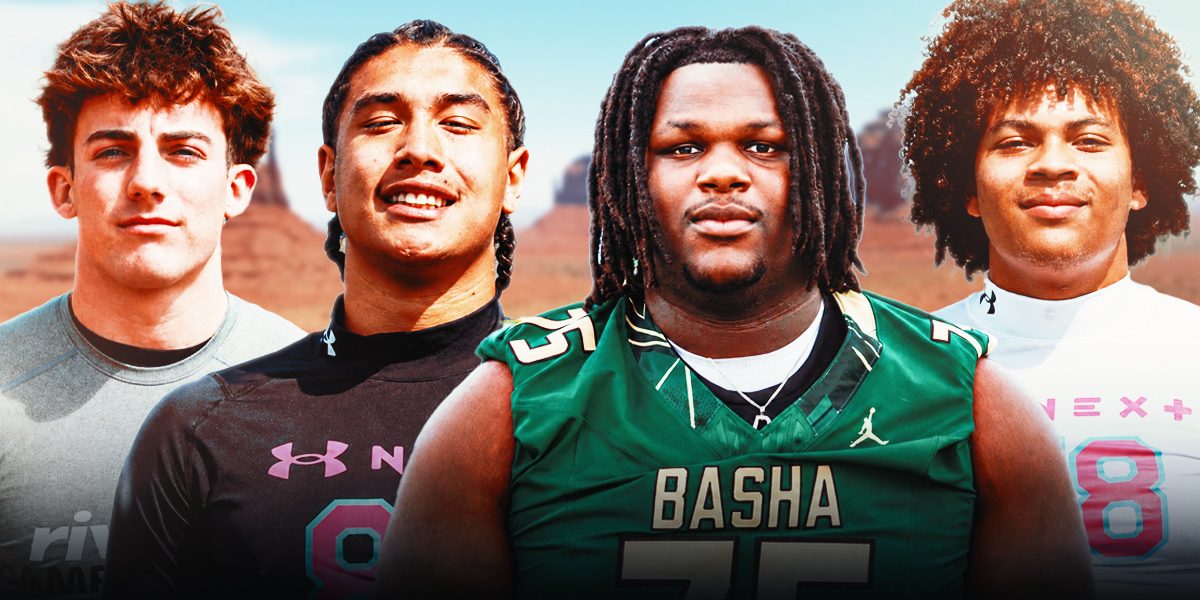
Look at what’s happening. From Seattle to San Diego, top-tier talents are navigating itineraries that would challenge seasoned diplomats. Northwest recruits like Rashaun Lavata’i and Gecova Doyal, offensive line anchors from Washington state, are making multiple official visits—sifting through offers from Pac-12 powerhouses Utah, Oregon State, and the hometown Huskies. But it’s not just about tradition; it’s increasingly about perceived value. A 2023 study by ON3, a college sports data company, estimated the total Name, Image, and Likeness (NIL) valuation of all college football players at an astounding $822 million. That’s serious money, influencing every handshake, every campus visit, every strategic photo-op.
California, that sprawling exporter of both innovation and athletic prowess, is seeing its homegrown stars become commodities. San Mateo’s Serra High, a perennial factory of talent, boasts four uncommitted prospects whose final decisions are imminent. Safety Malakai Taufoou, originally set to commit in July, has dramatically moved his announcement up to Saturday—a stark reminder of the accelerating timelines in this zero-sum game. And then there’s Rahzario Edwards, a tight end from Sacramento’s Grant High, Northern California’s top uncommitted prospect, weighing offers from Cal, Syracuse, and USC. It’s a chess match, with coaches—the modern-day prospectors—digging for gold.
Arizona, a relative newcomer in the national recruiting wars, is quickly becoming a battleground. Its scorching heat matches the intensity of the pursuit. Players like Peoria receiver Dontay Tyson, torn between Texas A&M — and Washington, highlight the broad geographic pull. Then there’s the lineage factor: Mesa offensive lineman Tye Kennedy, whose father played for Washington, faces the delicate balance of legacy versus immediate opportunity. This system isn’t just a sport; it’s an unregulated marketplace.
But how long can this frenzy last? We’re seeing commitments made — and then almost immediately challenged. Cal commit Giovanni Hodge, for instance, is making a tour that includes Stanford and UCLA after his pledge, essentially daring rivals to ‘flip’ him. It’s a free agent market, really, before the ink even dries.
“Frankly, it’s a circus,” stated fictional Athletic Director Reginald ‘Reggie’ Barnes, a veteran administrator at a Power Four university, his voice thick with frustration during a recent off-the-record briefing. “We used to talk about ‘fit,’ about academics. Now, it’s an arms race fueled by collectives — and promises we can barely keep track of. It’s not sustainable, not for the universities, — and certainly not for these kids caught in the crosshairs. We’re training these athletes to prioritize immediate transactional gains, and the long-term institutional loyalty we once championed? That’s eroding faster than glacial ice, my friend.”
But, one could argue, it’s just the natural evolution of a multi-billion-dollar industry finally forced to compensate its most valuable assets. Because let’s be real, college sports generate massive revenue, and the talent powering it finally has a share of the pie. “We’ve seen similar dynamics globally,” noted fictional policy analyst Dr. Aisha Khan, whose work focuses on socio-economic impact across South Asia and the broader Muslim world, in a virtual interview. “Whether it’s highly skilled doctors leaving Lahore for lucrative roles in London or engineers from Karachi flocking to Silicon Valley, the pursuit of better opportunities, of financial security, drives human capital flow. The collegiate athlete is simply the latest iteration of a global talent drain, albeit one confined within national borders for now. It reflects a universal struggle for recognition and fair compensation, echoing talent migration debates from Islamabad to Cairo.” She makes a solid point, doesn’t she?
What This Means
The intensifying recruitment period isn’t merely about wins and losses on the football field; it signals a seismic shift in the economic and ethical landscape of higher education. Universities are increasingly operating less like academic institutions with athletic departments and more like semi-professional sports franchises, battling fiercely for brand ambassadors. The financial stakes involved, especially with the proliferation of NIL deals, mean recruiting becomes an extension of market competition—a competition where some institutions, armed with wealthier booster networks, gain an undeniable edge. This creates significant equity concerns, both between programs and for the broader student body whose tuition might subsidize this arms race. The rapid acceleration of commitments and visit-flipping underscores a fragility in athlete loyalty, which could translate into higher transfer rates and increased roster volatility. And, frankly, it pushes schools to re-evaluate their identity. Are they institutions of learning first, or high-stakes enterprises navigating a turbulent athlete market? The answers will shape the future of collegiate sports, and perhaps even public perception of the value of higher education itself. It’s a gamble, really.