
Keir Starmer’s Kyiv Echo: A Labour Leader’s Rite of Passage in War-Torn Europe
POLICY WIRE — London, UK — Another week, another virtual handshake across battle lines. Or so it felt, anyway, when UK Labour leader Keir Starmer picked up the phone for a chinwag with Ukrainian...

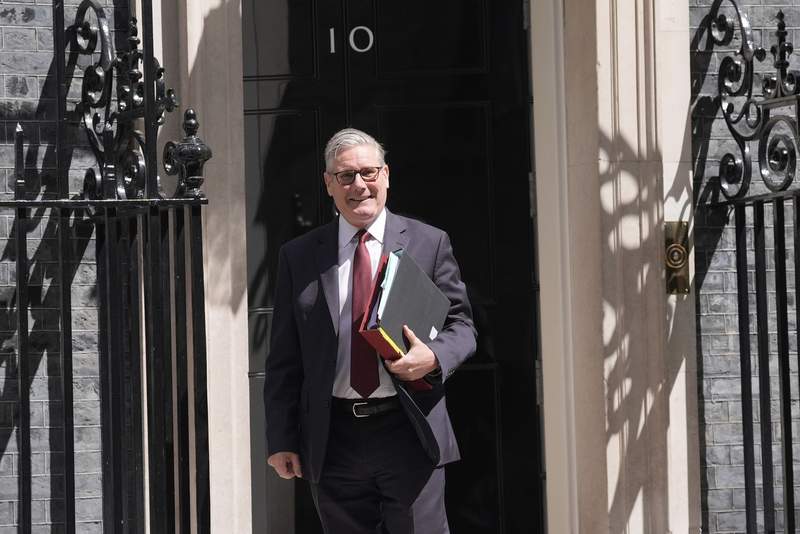
POLICY WIRE — London, UK — Another week, another virtual handshake across battle lines. Or so it felt, anyway, when UK Labour leader Keir Starmer picked up the phone for a chinwag with Ukrainian President Volodymyr Zelensky. The headline? Starmer ‘reaffirms’ Ukraine backing. You know, just in case anyone had forgotten what a mainstream British political leader, especially one eyeing Number 10, was supposed to think about Europe’s most grinding conflict. It’s practically an induction ceremony these days: express solemn solidarity, maybe mention sovereignty, and promise future aid. A box ticked, then onto the next performance.
But beyond the routine diplomatic niceties, this particular exchange carried a different weight. Britain, after all, is bracing for a general election, and the man likely to win it—Starmer, that’s—doesn’t want a flicker of doubt about his party’s commitment to Ukraine’s struggle. He’s got to demonstrate continuity, a steady hand. He needs to assure Kyiv (and Washington, and Brussels, for that matter) that Labour’s foreign policy compass, should they come to power, points due East, right towards Ukrainian defense. Zelensky, no stranger to a shrewd political calculus himself, wouldn’t have called without good reason. He needs commitment that runs deeper than current parliamentary terms. He needs bipartisan, cross-government, multi-year guarantees. And frankly, who can blame him? Wars don’t end on election cycles.
“Britain’s support for Ukraine won’t just endure, it will strengthen under a Labour government,” Starmer is said to have declared on the call. “We understand the long game, the sacrifices, and the existential threat Putin poses to democratic values everywhere.” It’s a statement tailored for maximum reassuring effect, a kind of pre-emptive foreign policy doctrine, neatly packaged. But behind the firmness, you can almost hear the unstated question: How much more? For how long? These are the brutal economics of modern warfare. As for Zelensky, he reportedly reiterated, “Our fight isn’t just for Ukraine. It’s for a rules-based international order, an order the British have helped construct. We count on consistent, unwavering partnership, no matter who leads the government.” It’s a deft nod, linking Ukraine’s current struggle to the historical role of Britain, placing the onus of continued aid firmly on London.
The call itself, coming amid Britain’s ongoing debate about defense spending and a stagnating economy, offers a glimpse into Labour’s nascent approach to global crises. They aren’t just inheriting a country; they’re inheriting its international commitments, some with price tags stretching into the billions. The UK has been a consistent backer of Ukraine, providing military, financial, — and humanitarian aid. To wit, official figures indicate that the UK has committed £12.7 billion in military, humanitarian, and economic support to Ukraine since the full-scale invasion in February 2022. That’s a significant outlay for a nation battling its own domestic fiscal pressures, no doubt.
And that’s where the broader geopolitical chessboard gets tricky. Because while Western leaders like Starmer rally around Ukraine, the global landscape looks rather different from other vantage points. Nations in the global south, including those across South Asia, often perceive such unwavering focus through a different lens. Take Pakistan, for instance. It navigates a complex diplomatic course, balancing historic ties and burgeoning economic relationships with countries like China and even Russia, while also seeking engagement with the West. From Islamabad, the fierce commitment to Ukraine can sometimes feel like a regional priority that overshadows, or even sidelines, long-standing conflicts and development needs elsewhere. The perception, right or wrong, is that certain crises get the full, immediate, unfettered backing, while others are met with more muted responses. You see similar concerns arise when discussing resource management and regional disputes in nuclearized South Asia, where stability is often fragile.
What This Means
Starmer’s call with Zelensky is less about an immediate policy shift and more about laying the groundwork for a post-election reality. It’s a performative act, yes, but a necessary one for a Labour Party that needs to reassure both allies and voters that it’s fit for serious international leadership. The political implications are pretty clear: Labour aims to present itself as a continuation of Britain’s hawkish stance on Russia, perhaps even trying to outflank the Tories on national security credibility. It’s an exercise in optics as much as diplomacy. Economically, this means aid packages to Ukraine aren’t going to vanish overnight; if anything, Labour might explore new avenues for long-term reconstruction funds or even greater military cooperation within NATO frameworks. This, of course, has direct implications for the British Treasury’s bottom line. The underlying message here is about stability and continuity, particularly for those nations seeking to understand strategic partnerships in a shifting security landscape. Starmer’s alignment with current Western policy ensures that Britain’s position on Russia, Ukraine, and wider European security remains a steady force, regardless of who occupies Downing Street. He’s trying to say, “It’s business as usual, but perhaps a bit more organized, come election time.” We’ll see how that plays out when the bills come due.