


Kyiv’s Northern Gambit: Digging In Against Minsk’s Ominous Silence
POLICY WIRE — KYIV, Ukraine — For ordinary folks, the quiet hum of farm machinery signifies the season’s toil. Along Ukraine’s protracted northern frontier, however, that hum’s been...

POLICY WIRE — KYIV, Ukraine — For ordinary folks, the quiet hum of farm machinery signifies the season’s toil. Along Ukraine’s protracted northern frontier, however, that hum’s been replaced by the rhythmic clanking of shovels and the growl of earthmovers—a cacophony of fear, preparing for another ghost to rise from Belarus. It’s not just about guarding against an invasion anymore, is it? It’s a full-blown existential chore, a digging-in against the very idea of predictable peace.
Ukrainian authorities aren’t just reinforcing defenses; they’re creating an altogether new landscape. Fortifications that would make Cold War strategists nod approvingly now stretch across vast tracts. And this isn’t some quick-and-dirty barrier work. We’re talking anti-tank trenches—tens of kilometers of them—minefields, bunkers designed to withstand serious barrages, and intricate layered defenses meant to absorb a hit, perhaps even two, should Moscow decide that the northern flank is ripe for a reprise of 2022’s disastrous advance.
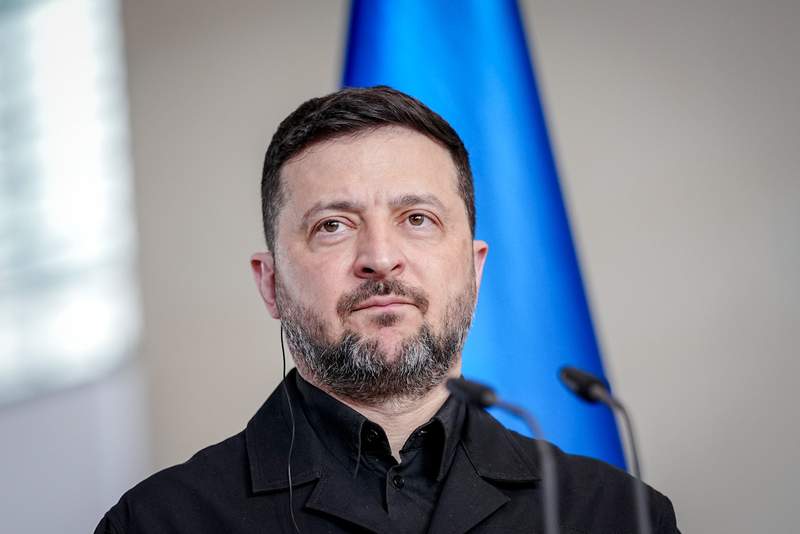
President Volodymyr Zelenskyy, whose pronouncements typically swing between defiance and appeals for Western aid, addressed the fortifications with a pragmatic weariness. “We aren’t building sandcastles, are we? We’re building walls, and they’re made of concrete and steel, not optimism,” he told a small group of journalists, a subtle edge to his voice. “Because, frankly, we’ve learned the hard way that when aggressors look north, they’re not checking the weather.” It’s a sentiment that resonates. No one forgets that the first thrust toward Kyiv came barreling through what was, ostensibly, neutral territory.
The situation in Minsk isn’t exactly helping ease anyone’s nerves. Alexander Lukashenka, Belarus’s long-standing strongman, continues to dance to Moscow’s tune, offering his nation as a staging ground—a useful, if politically compromised, geographical cudgel. But how much say does he really have? Many speculate, privately, that Minsk is now just another district of the Kremlin, a subservient player in Putin’s grand strategy. His latest bluster about ‘joint exercises’ doesn’t fool anyone with a geopolitical map — and a working memory.
This endless shoring-up of borders consumes colossal resources. Ukraine’s Defense Ministry reported in January that 28 percent of its national budget for 2024—that’s roughly $10.2 billion—is earmarked for defense spending. That’s a staggering figure for a nation fighting for its very survival, constantly weighing the cost of survival against the needs of its battered populace. Every penny, you see, matters, particularly when Western aid seems to waver with each election cycle or legislative squabble.
Meanwhile, the implications ripple far beyond Eastern Europe. Nations like Pakistan, navigating their own intricate balance of foreign policy and economic woes, watch these European machinations closely. Global energy prices, commodity markets, — and even the strategic posture of alliances are all affected. When Europe—the presumed stable West—is in perpetual turmoil, it shifts investment priorities, complicates trade routes, and redefines global perceptions of power. Because if even established international borders can be so brazenly ignored in one region, what precedent does that set for others with disputed territories or anxious neighbors?
“The Belarusian corridor isn’t just about Ukraine’s physical security,” stated Dr. Fatima Khan, a South Asia analyst from the London School of Economics, during a recent digital briefing. “It’s a barometer for Moscow’s long-term intentions — and a test of Western resolve. And the entire Global South, from Karachi to Cape Town, watches not just for geopolitical tremors but for economic aftershocks. Instability anywhere creates inflation everywhere, particularly for those on the financial margins.” Khan’s insight cuts straight to it, doesn’t it? For some, this conflict is abstract; for millions, it’s very much about the price of flour or fuel.
The strategic intent here is crystal clear: turn Belarus, should it again become an aggressor’s springboard, into a deadly quagmire. Slow any potential advance to a crawl, bleed the invaders dry before they can even sniff Kyiv. It’s a grim task, but one Ukraine isn’t taking lightly. And you can bet that this isn’t just a physical barrier; it’s a psychological one, too—an attempt to break the cycle of unprovoked attacks. This isn’t unlike the anxieties felt in other global flashpoints.
What This Means
The feverish pace of Ukrainian fortification along the Belarusian border signals more than just defensive readiness; it reflects Kyiv’s deep-seated skepticism about the efficacy of international norms when facing a determined aggressor allied with a compliant satellite state. Politically, it complicates Russia’s calculus, forcing Moscow to weigh the immense costs of a potential renewed northern offensive against a more prepared opponent. This shifts the focus of any new aggression, likely reinforcing pressure on existing eastern fronts, but it doesn’t eliminate the threat. Economically, this sustained investment in fixed defenses, while critical for national survival, represents a massive diversion of capital and labor from desperately needed reconstruction efforts. It’s a costly choice between defending what’s left — and rebuilding what’s been lost. the persistent threat from Belarus—a nation seemingly robbed of its sovereign agency—casts a long shadow over regional stability. It forces Western allies to maintain vigilance not only on Ukraine’s borders but also on the subtle yet dangerous erosion of nation-state integrity, a worrying trend that reverberates far beyond Eastern Europe’s chilly plains. It tells you something about the nature of power in this new, old world.