



Netflix’s Combat Circus: Paul’s Gambit, Fading Stars, and a Shifting Global Sports Economy
POLICY WIRE — Los Angeles, USA — They’re calling it a ‘dream match,’ but for some of us, it’s a rather vivid fever dream. Gina Carano, once the trailblazing face of women’s mixed martial arts,...

POLICY WIRE — Los Angeles, USA — They’re calling it a ‘dream match,’ but for some of us, it’s a rather vivid fever dream. Gina Carano, once the trailblazing face of women’s mixed martial arts, dusting off the gloves after seventeen years away. And then there’s Ronda Rousey—‘Rowdy’ herself—stepping back into the cage for what many suspect is less a sporting contest and more a choreographed curtain call. It’s an audacious spectacle, set to unfold on Netflix, powered by Jake Paul’s Most Valuable Promotions (MVP). You can’t quite write this stuff; you just have to watch it play out, perhaps with a grimace or an intrigued nod.
This isn’t your granddad’s MMA. Or even your younger cousin’s. This is an era where celebrity reigns supreme, where past glories are resurrected not for competitive purity but for the algorithmic buzz. It’s a bold experiment in leveraging nostalgia, big names, and social media wizardry to capture eyeballs in a crowded entertainment market. And Netflix, famously averse to live sports for ages, is now leaning hard into it—because why not? Everyone else is.
“We’re not just putting on fights; we’re curating moments, defining an era,” quipped Jake Paul, the former YouTube sensation now fight promoter, in a press conference that felt more like a brand launch than a weigh-in. “People want stories. They want stars. We’re giving them exactly that—bigger, brighter, and faster than anyone else.” Paul, never one to undersell his ambitions, sees himself as an architect, rebuilding combat sports on the bedrock of viral content. And it’s hard to argue with the audience numbers he pulls, isn’t it?
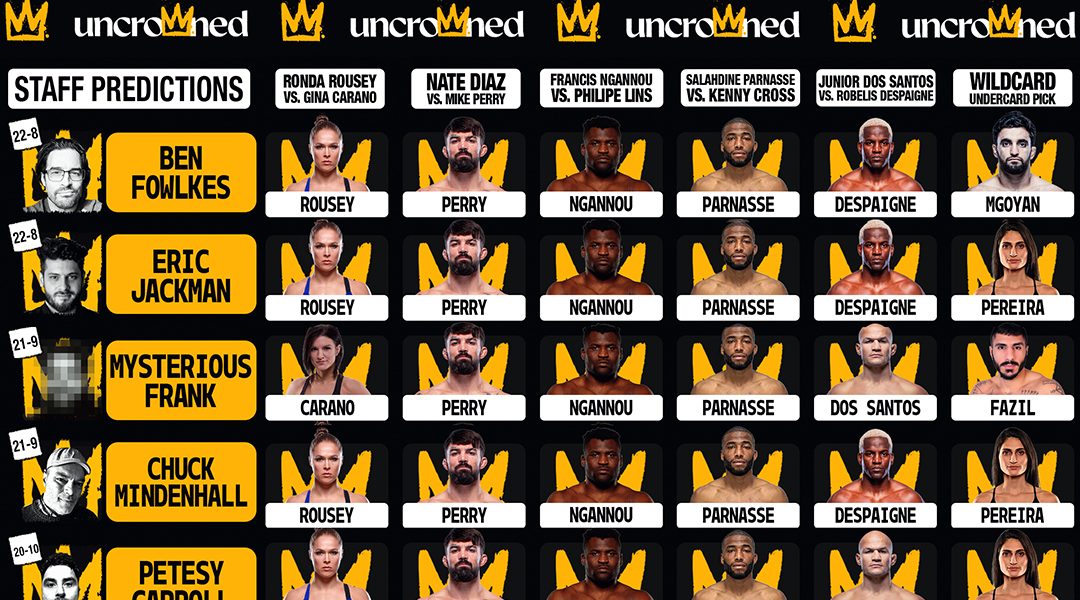
The card itself? It’s a mishmash of the genuinely elite, the dangerously explosive, — and the comfortably familiar. Francis Ngannou, arguably the most fearsome heavyweight walking the planet, graces the bill. Nate Diaz — and Mike Perry are set to punch each other senseless, because, well, that’s what they do. And then there are prospects like Salahdine Parnasse, a monster from Europe making his U.S. splash. But make no mistake, the marquee lights—the whole damn spotlight, actually—are fixed firmly on Rousey and Carano. It’s a battle of yesteryear’s legends, framed for a modern streaming audience that probably knows them better from wrestling rings or Hollywood productions than from their original sporting triumphs.
Gina Carano, for her part, offered a rare public comment. “It’s been a long time, yeah, but the competitive fire, it never really goes out, does it?” she reportedly told a small gathering of journalists. “This isn’t about legacy for me. It’s about answering a call—and showing folks what a woman can do at any stage of her life.” There’s a certain stoic pride there, but one can’t help but wonder if it’s less a ‘call to arms’ and more a ‘call to coffers,’ which, in this business, makes perfect sense.
The bout itself? Predictable in its unpredictability. Carano’s striking might be formidable, but seventeen years is a lifetime in this brutal sport. Rousey’s judo background, though potent, has seen its own vulnerabilities exposed. It’s a clash where one swift connection or one opportune grapple could end it all in seconds. Because let’s be honest, neither of these formidable women needs to endure a protracted slugfest to satisfy their bank accounts or public curiosity.
📄 POLICY WIRE WHITEPAPER PUBLISHED: PAKISTAN'S NATIONAL SECURITY POLICY PRIORITIES
👉 READ BY CLICKING HEREThis event, streaming globally, isn’t just targeting the usual pay-per-view demographics. It’s aiming for every device, in every living room, from Sao Paulo to Lahore. Pakistan, for instance, a nation with a burgeoning youth population and an ever-increasing appetite for digital content, presents a fascinating case study for these streaming behemoths. As internet penetration grows—and it’s already past 70% in Pakistan according to some estimates from DataReportal—the economic muscle of these regions for global media consumption is hard to ignore. They don’t just watch; they influence trends, fueling discussions across vast diasporas.
What This Means
This Netflix experiment marks another nail in the coffin of traditional sports broadcasting. It’s no longer just about ESPN or Fox Sports; it’s about whatever platform can deliver instant, high-drama content to a global, digitally-native audience. The economic implications are considerable. It proves out a model where athlete narratives and personal brands can be monetized directly by platforms, often bypassing conventional promotional structures.
For Netflix, this is about subscriber acquisition and retention—pure and simple. Live events, especially those with such an in-built spectacle, are sticky. They pull in casual viewers, convert them, — and potentially keep them. It’s a pivot away from purely on-demand, narrative content into the raw, unpredictable world of live sport, where the cultural conversation happens in real-time. This isn’t a fleeting trend; it’s a strategic recalculation of what a ‘streaming service’ actually is. Think of it as a new frontier in media distribution, where the lines between influencer, athlete, and entertainer are now utterly blurred, yielding a powerful economic force that traditional broadcasters can only watch with envy—and some apprehension. It forces legacy players to adapt or die. And honestly, it’s about acknowledging that for many younger audiences, a Jake Paul-promoted event featuring MMA legends is just as, if not more, compelling as a traditional boxing title bout.
