
Cross-Strait Tempest: Taipei Sounds Alarm as Beijing’s Shadow Grows
POLICY WIRE — Taipei, Taiwan — You’d think the South China Sea, bristling with contested claims and artificial islands, would grab the top spot in regional security fears. But no, according to...

POLICY WIRE — Taipei, Taiwan — You’d think the South China Sea, bristling with contested claims and artificial islands, would grab the top spot in regional security fears. But no, according to those sitting pretty on the democratic island Beijing covets, that’s not where the real trouble brews. It’s the constant drone of Chinese fighter jets, the naval exercises inching closer, and those thinly veiled threats that keep Taipei’s security strategists reaching for the strong coffee.
Because, as Taiwan made plain, Beijing’s military muscle-flexing isn’t just a nuisance; it’s the greatest disruptor of stability across the entire Indo-Pacific. It isn’t just about who owns what little rock; it’s about sovereignty, self-determination, and the very concept of international maritime law getting elbowed aside.
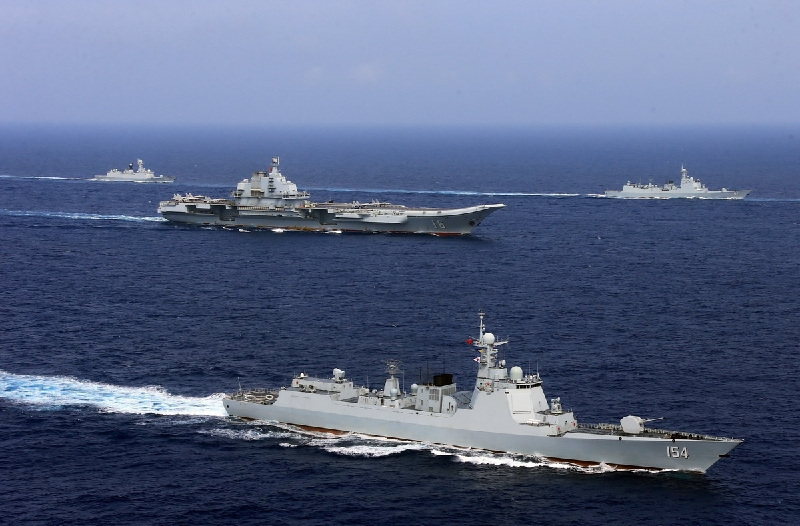
For months now—years, if we’re being honest—China has been cranking up the volume. We’re talking about military aircraft and naval vessels routinely buzzing Taiwan’s self-declared air defense identification zone. It’s a relentless, psychological grind. They aren’t just testing Taiwan’s defenses; they’re trying to chip away at its resolve, perhaps, and definitely sending a message to anyone else thinking of cozying up too much to Taipei. But the Taiwanese aren’t folding their hand easily. Not even close. You can almost feel the collective clenching of jaws on the island.
“It isn’t just about us; it’s about the very order of things, a global economy that can’t stomach another shock,” observed Joseph Wu, Taiwan’s Minister of Foreign Affairs, in a candid chat with journalists last week. He didn’t mince words. “When a single nation unilaterally decides the rules of the road for everyone else, then we’ve got bigger problems than just a spat over territory.”
And what bigger problems they might be. Consider this: Taiwan produces upwards of 60% of the world’s semiconductors, and an even more staggering 90% of the most advanced chips, according to Boston Consulting Group data. A serious conflict in the Taiwan Strait wouldn’t just disrupt global trade; it’d bring much of the tech-dependent world economy to a screeching halt. Imagine your phone, your car, your microwave—everything — suddenly in limbo. It’s a terrifying prospect, one that keeps CEOs — and generals awake at night.
Across the strait, Beijing’s response is predictably boilerplate. Wang Wenbin, a spokesperson for China’s Ministry of Foreign Affairs, typically bats away such accusations with practiced disdain. “Taiwan is an inseparable part of China. These accusations are mere distractions orchestrated by external forces bent on meddling in our internal affairs and impeding China’s rightful reunification,” he said in a recent press briefing. Casual, right?
But the world beyond these immediate neighbors watches with bated breath. In faraway Karachi, Jakarta, or Riyadh, leaders might see the headlines about fighter jets over Taiwan as distant thunder. Yet, the economic ramifications of any flare-up would hit hard — and fast. Pakistan, for instance, a nation increasingly reliant on stable global trade routes and seeking foreign investment, couldn’t avoid the fallout. Supply chain disruptions, soaring energy costs – they wouldn’t just be inconveniences; they’d be economic earthquakes in countries with already fragile economies.
Even Saudi Arabia’s push for tech diversification, its Vision 2030 initiatives, they all depend on a predictable international environment. And Beijing’s overarching geopolitical ambitions, clearly articulated by President Xi Jinping, aren’t limited to the immediate neighborhood; they extend far, touching trade, diplomacy, and security arrangements globally. The shadow of Beijing doesn’t stop at the South China Sea, it reaches for the horizon.
What This Means
This isn’t merely political posturing, it’s a high-stakes chess game with real military consequences looming. Taiwan’s unambiguous declaration serves as a global warning shot. For one, it amplifies the strategic calculations for the United States and its allies—Japan, South Korea, Australia—who’ve been grappling with how to deter Chinese aggression without triggering an even larger conflict. Secondly, it forces every nation with a stake in global trade, which is effectively *every* nation, to seriously ponder the costs of this brinkmanship. The economic shockwaves from a Taiwan conflict would dwarf any recent crisis, sending commodities prices through the roof and bringing manufacturing to a crawl. the perceived impunity of such actions by a major power sets a dangerous precedent. It fuels a cycle of regional provocations, reminiscent of Moscow’s own bellicose declarations regarding the Baltic states. The dry official statements out of Taipei hide a deeper, more profound anxiety about the future of international law and order—or the lack thereof.