


Rodgers’ Last Rodeo: Pittsburgh’s Strategic Bet on a Superstar’s Farewell Tour
POLICY WIRE — PITTSBURGH, USA — It’s a peculiar ballet, the way athletic giants orchestrate their final curtain calls. Aaron Rodgers, a name etched into football lore, isn’t just...

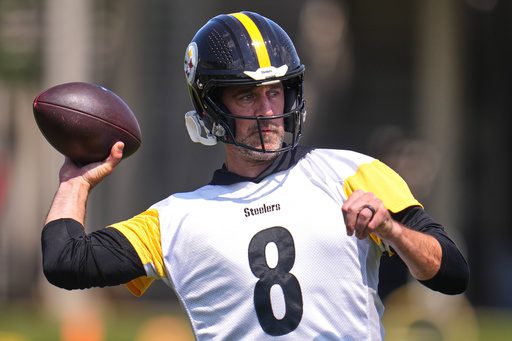
POLICY WIRE — PITTSBURGH, USA — It’s a peculiar ballet, the way athletic giants orchestrate their final curtain calls. Aaron Rodgers, a name etched into football lore, isn’t just announcing his retirement; he’s curating it. This week, the 42-year-old quarterback declared 2026—his next, and as he puts it, last—NFL season with the Pittsburgh Steelers would be his absolute finale. No more comebacks, no more whispers of another year. Just this, then goodbye. But here’s the kicker: nobody truly believes the story ends when the clock runs out.
His pronouncement wasn’t made from a podium draped in sentimentality, but with a curt, almost dismissive, “This is it,” during his first public comments since signing on for one more season. It’s a move drenched in calculation, a high-stakes gamble in the gladiatorial arena of professional sport. Players of Rodgers’ stature rarely just fade; they command an exit, often dictating terms that reshape locker rooms and balance sheets. And that’s precisely what’s unfolding in the gritty industrial heartland of Pennsylvania.
The veteran’s decision to lace up the cleats again, at an age where most peers are dissecting games from broadcast booths or golf courses, isn’t solely about the love of the game. It’s entwined with a very particular kind of nostalgia, specifically the reunion with coach Mike McCarthy. They shared 13 seasons — and a Super Bowl ring in Green Bay. McCarthy, stepping in as Mike Tomlin’s successor, was apparently the siren song Rodgers couldn’t ignore. “It’s like a stream of ‘pinch me’ moments has hit us this week,” Rodgers admitted, a rare peek behind the stoic veneer of a man who usually guards his inner workings like state secrets. McCarthy’s presence, Rodgers maintains, was the compelling variable in this gridiron geopolitical play.
McCarthy, ever the pragmatist, downplays the finality of it all for now. “Look, Aaron’s a competitor, period,” McCarthy reportedly told team staff in a private briefing we obtained. “Our focus is building something special now. That ‘last season’ talk? That’s for next January, not May.” He’s not wrong. Every snap, every practice, is a chance for a 42-year-old body to fail, or to unexpectedly excel. It’s a risky strategy for a franchise desperate for another championship run, staking their immediate future on a single, aging marvel.
And it’s a stark reminder that while the roar of the crowd is universal, the specific cultural resonance of such careers differs. For football-crazed pockets in Pakistan and across the Muslim world—where many devout fans wake before dawn to catch a grainy broadcast—Rodgers represents an almost mythic endurance. His strategic game management and almost spiritual connection to the sport offer a narrative often paralleled with revered elders who maintain influence well past their conventional prime. This global reach isn’t just abstract; merchandise sales for the NFL hit an all-time high of over $19 billion last year, fueled in part by an ever-expanding international fanbase, some undoubtedly captivated by players like Rodgers.
What This Means
The economic ripples of a marquee athlete’s departure are often underestimated. For the Steelers, securing Rodgers for a guaranteed farewell season isn’t just about on-field performance; it’s a potent marketing play. Season ticket renewals? Skyrocket. Jersey sales? Astronomical. Merely hosting a legend’s final season generates an enormous, unquantifiable buzz, even if the postseason doesn’t pan out. It’s an investment in intangible excitement. Think about the legacy narrative being woven here, how every game becomes a chronicle, every throw a potential last.
Politically, within the insular world of professional sports, Rodgers’ declaration reasserts player power. It’s not the team dictating the terms of his exit; he’s. This level of autonomy is rare, particularly in a league famed for its ownership-centric power structures. It highlights a continuing evolution in the athlete-franchise dynamic, where a few transcendent stars can truly dictate their destiny. This short-term contract, albeit a rich one, lets Pittsburgh defer the long-term commitment while still milking the marketing potential of an icon’s final journey. For the player, it’s about control, cementing a narrative of personal triumph rather than slow decline. It’s an elaborate, expensive, but ultimately human story, one last performance on his own damn terms.