

Post-Championship Paradox: Arsenal’s Silent Chase for Sustainable Dominance Amidst Geopolitical Capital
POLICY WIRE — London, UK — The champagne corks are barely silent in North London, the chants of victory still echoing faintly in the taverns surrounding the Emirates, but for those truly pulling the...

POLICY WIRE — London, UK — The champagne corks are barely silent in North London, the chants of victory still echoing faintly in the taverns surrounding the Emirates, but for those truly pulling the strings at Arsenal, the celebrations have already given way to a grimmer reality. Triumph, it seems, isn’t an end point; it’s just the starting gun for the next, more vicious race. Forget basking in glory; the immediate agenda is an existential one: how to forge fleeting success into an enduring dynasty, particularly when your closest rival might be losing its strategic mastermind.
It’s not just about winning the Premier League for the first time in two decades anymore. It’s about cementing that claim, defending the new turf from a hungry pack, and—most importantly—capitalizing on the potential power vacuum created by whispers of Pep Guardiola’s imminent departure from Manchester City. That’s a tectonic shift, a real ‘Game of Thrones’ moment for English football supremacy, and Mikel Arteta, Arsenal’s intensely pragmatic chief, isn’t about to squander the opportunity.
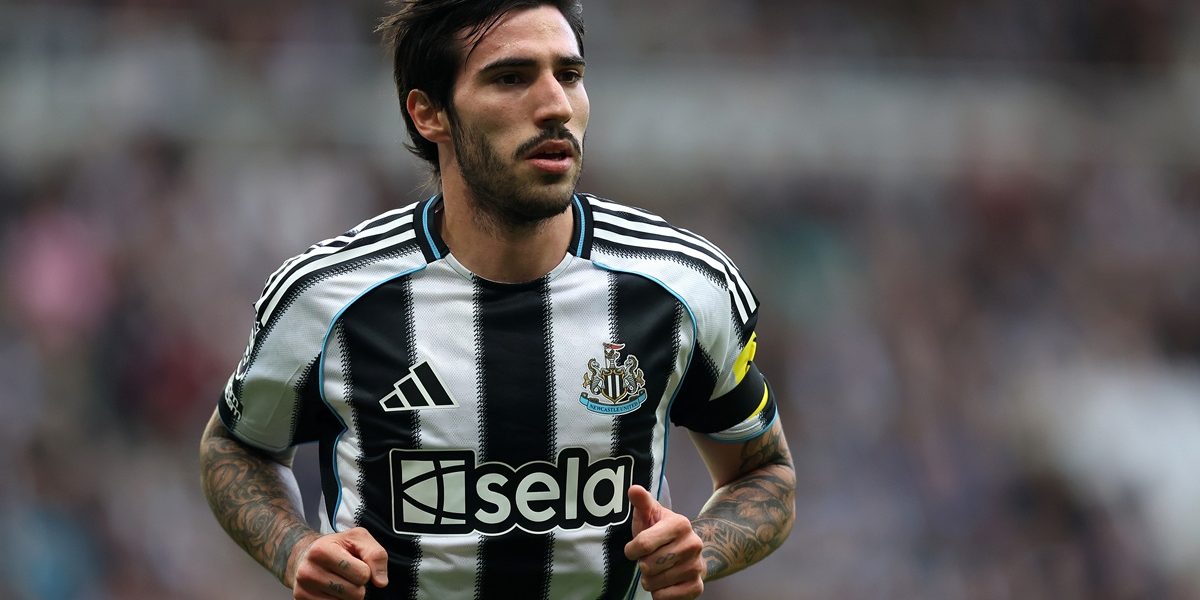
Word filtering down from Arsenal’s inner sanctum suggests Arteta has fixed his gaze on Sandro Tonali, the Italian midfield maestro currently plying his trade for Newcastle United. This isn’t just a wish-list fantasy; sources familiar with the club’s transfer machinations say Arteta made his intentions crystal clear to the Arsenal board, directing them to aggressively pursue Tonali. And he means aggressively. Because if you’re going to build an empire, you’d better equip your legions.
But this isn’t simply a coach asking for a player. It’s a multi-layered negotiation fraught with economic — and even geopolitical undercurrents. Newcastle, after all, isn’t your average mid-table outfit; they’re backed by Saudi Arabia’s Public Investment Fund (PIF), turning every transfer discussion into a delicate diplomatic dance, where financial might meets sporting ambition. You don’t just ‘ask’ PIF to part with a talent they’ve invested heavily in; you propose an offer that respects the sheer scale of their sovereign wealth—or you don’t bother showing up.
Arteta, ever the strategist, reportedly sees Tonali as the lynchpin, the missing piece that could stabilize the Gunners’ midfield for years. They’d tried to get him back in January, didn’t they? And the man himself? Tonali, a technician with a tenacious streak, is no doubt weighing his options, a prospect of consistent Champions League football and chasing top-tier silverware a compelling lure. “I’m a competitor,” Tonali was quoted saying privately to a confidante last season, “I want to be where the highest stakes are played, where championships are won and futures forged.” Sounds like a man ready for the big stage, doesn’t it?
It’s not lost on anyone that this entire dance unfolds under the fervent scrutiny of a truly global audience. From the cafes of Islamabad to the living rooms of Lahore, millions of fervent football fans, for whom Premier League allegiances run deep, dissect every rumor, every transfer tweet. Their passionate engagement transforms a simple player move into a cultural touchstone, a moment where sports and broader global identity intersect.
The numbers in this high-stakes game are staggering. The global football transfer market surpassed an eye-watering $7.35 billion in spending in 2023, according to FIFA’s Global Transfer Report. Arsenal’s quest for Tonali isn’t just about tactical acumen; it’s a cold, hard fiscal decision, a bet on human capital in a market notorious for its volatility. “This isn’t about basking; it’s about building an empire,” Arteta reportedly told his executive team recently. “Every transfer window is a skirmish, and we intend to win the strategic battles too.” That’s the mindset driving Arsenal now.
What This Means
The pursuit of Sandro Tonali isn’t merely a sporting acquisition; it’s a masterclass in market signaling. For Arsenal, securing a player of Tonali’s caliber after a league win serves multiple functions: it reassures fans of ambition, sends a warning shot to rivals, and — perhaps most significantly — boosts the club’s perceived institutional strength. But it also represents a tangible cost in an escalating arms race of talent. For Newcastle, selling Tonali, especially to a direct competitor, would be a complex calculus involving significant financial inducement offsetting a potential weakening of their squad, but also showcasing a pragmatism often seen in state-backed investments seeking optimized returns rather than purely emotional allegiances to specific players. The very notion of loyalty, in fact, often comes with a price tag. these mega-deals have an amplifying effect across the sport, distorting valuations and pulling resources from less affluent leagues globally, including those in emerging markets where development is already a grind. It creates a vacuum of talent. Think of it as a constant reshuffling of the ‘golden geese’ within the upper echelons of global sport, impacting everything from merchandising revenues in Dhaka to scouting networks in Karachi. This isn’t just football; it’s big business, played out on the grandest international stage, where every transfer is a micro-economic policy decision.