


Silent Standoff: Asia’s Air Hubs Hold Their Breath as a Distant Scourge Nudges Closer
POLICY WIRE — Singapore, Republic of Singapore — The air in Changi’s sprawling terminals still hums with its familiar, almost clinical efficiency. Yet, beneath the polished facade, you can almost...

POLICY WIRE — Singapore, Republic of Singapore — The air in Changi’s sprawling terminals still hums with its familiar, almost clinical efficiency. Yet, beneath the polished facade, you can almost taste the old dread, a familiar unease. It’s not just a virus; it’s the memory of one. And that ghost – the silent, shape-shifting threat of contagion – has spurred Asia’s hyper-connected air hubs into a nervous, pre-emptive defense, dusting off protocols designed for an age we thought was behind us.
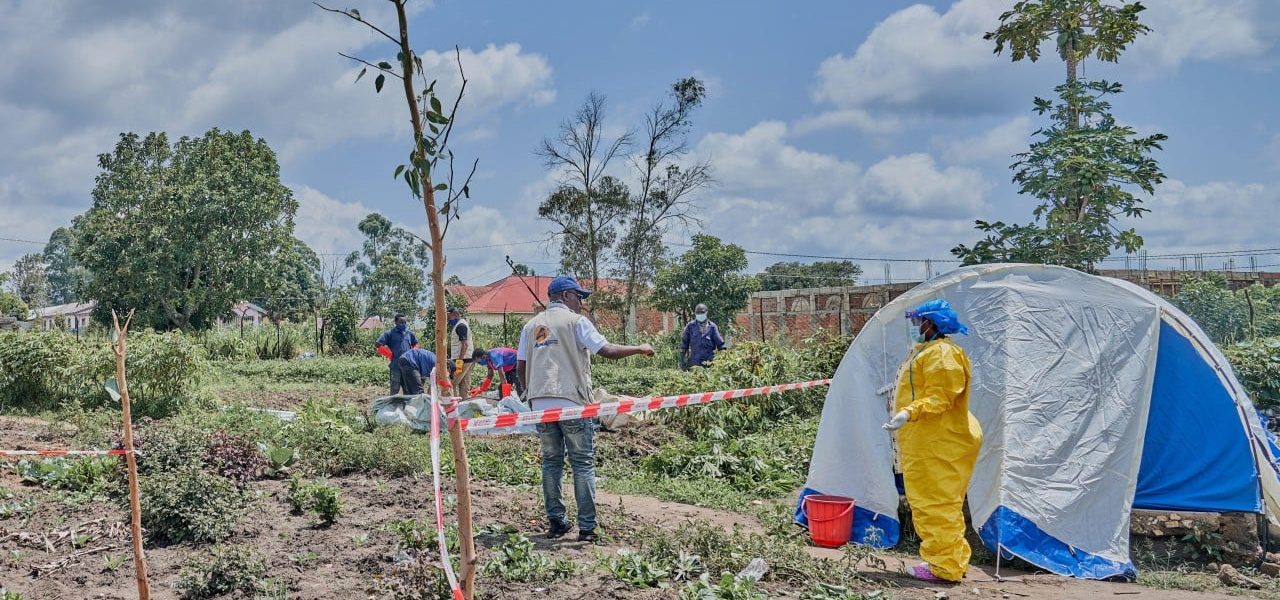
Governments across the continent, from Seoul’s bustling Incheon to Tokyo’s Narita, are tightening up border controls and getting their quarantine apparatus back in fighting trim. They’re scanning, questioning, and tracking arrivals from parts of Central Africa where an Ebola outbreak just won’t quit. It’s an urgent response to a World Health Organization alert, of course. But don’t kid yourself—it’s also a deeply ingrained institutional paranoia, born of SARS, MERS, and a little thing called COVID-19. Nobody wants to be caught flat-footed again, no sir.
They’re doing it, despite official assurances that the immediate likelihood of a local transmission remains negligible. We’ve all heard that tune before, haven’t we? No confirmed cases in Asia yet, they say. Still, you’ve got these gleaming, technologically advanced nations — Singapore, Japan, South Korea leading the charge — erecting invisible walls, because they know better. Because experience taught them better.
“We’re seeing a highly commendable level of proactive engagement from our member states,” offered Dr. Lena Hansen, the World Health Organization’s (WHO) Regional Director for the Western Pacific, in a rare statement. “While the immediate risk in Asia remains exceptionally low, vigilance is our collective shield against unseen threats. We cannot afford complacency, even for a moment.” Hansen, known for her measured caution, always prefers the safer bet.
This isn’t just about public health; it’s about preserving the delicate economic balance that defines much of Asian prosperity. The global supply chains, the frenetic tourism, the very identity of these economic powerhouses are built on seamless connectivity. An uncontrolled health scare, even a perceived one, can unravel that in days. And that’s a nightmare these capitals remember all too well. It’s a quiet scramble, almost dignified in its urgency, to secure their borders against an enemy you can’t see until it’s too late. The measures are detailed: expanded health declarations, thermal scanners hum again, and isolated facilities on places like Hong Kong’s Lantau Island are on standby, relics from another recent global crisis. It’s an almost ritualistic cleansing, really, trying to scrub away the specter of what *could* happen.
And these ripples, no matter how distant the outbreak, spread fast. Imagine the impact on nations like Pakistan. Already grappling with its own complex health infrastructure and the incessant demands of a vast, young population, a sniff of Ebola hitting its borders—however remote a possibility—would trigger immense alarm. Historically, regions with dense populations and strong ties to international travel routes become unwitting battlegrounds during outbreaks. “We don’t take chances here. We’ve learned bitter lessons,” stated Dr. Fahmida Sheikh, Pakistan’s Federal Minister for National Health Services. “Our primary focus is on bolstering internal health systems and collaborating closely with international bodies to prevent any ripple effect from reaching our shores. It’s about protecting our people, and that starts now.” Her sentiment reflects a broader understanding in a region where resource scarcity can amplify any health crisis.
Because that’s the reality. Quiet Scrutiny: Asia’s Air Hubs Brace for an Unseen Shadow as an invisible adversary looms. The world is too small, too interconnected for outbreaks to remain localized. Data from the World Health Organization reveals that global air travel, pre-pandemic, facilitated the movement of over 4.5 billion passengers annually, an undeniable highway for pathogens. It highlights why even a seemingly localized African epidemic can trigger seismic preparedness plans thousands of miles away.
What This Means
This heightened alert isn’t just about health; it’s a profound economic — and geopolitical stress test. The speed — and severity of Asian nations’ reactions speak volumes about their learned trauma from past pandemics. We’re witnessing the institutionalization of caution. Economically, even the perception of a threat can deter business travel and tourism, acting as a soft drag on recovery for countries heavily reliant on international movement. Politically, leaders who initially downplayed COVID-19 suffered dearly; none want to repeat that script. So, they overcorrect, signaling strength and foresight to their populations. It’s a calculated gamble – invest now in what might be an overreaction to avoid the crushing consequences of an underreaction. It’s an acknowledgement that in our deeply entwined world, national borders offer less protection than ever, and a health crisis anywhere is a threat everywhere. These stringent measures also serve as a dry run, an almost morbid rehearsal for whatever devastating bug inevitably comes next. It’s less about Ebola today, and more about preparedness for tomorrow. The fear isn’t of the known, but of the unknowable.
So, the gates remain guarded, the monitors hum, and a wary continent holds its collective breath, hoping this distant scourge remains exactly that: distant. The cost of peace of mind, it seems, is eternal vigilance, wrapped in the cold, hard logic of geopolitics.