


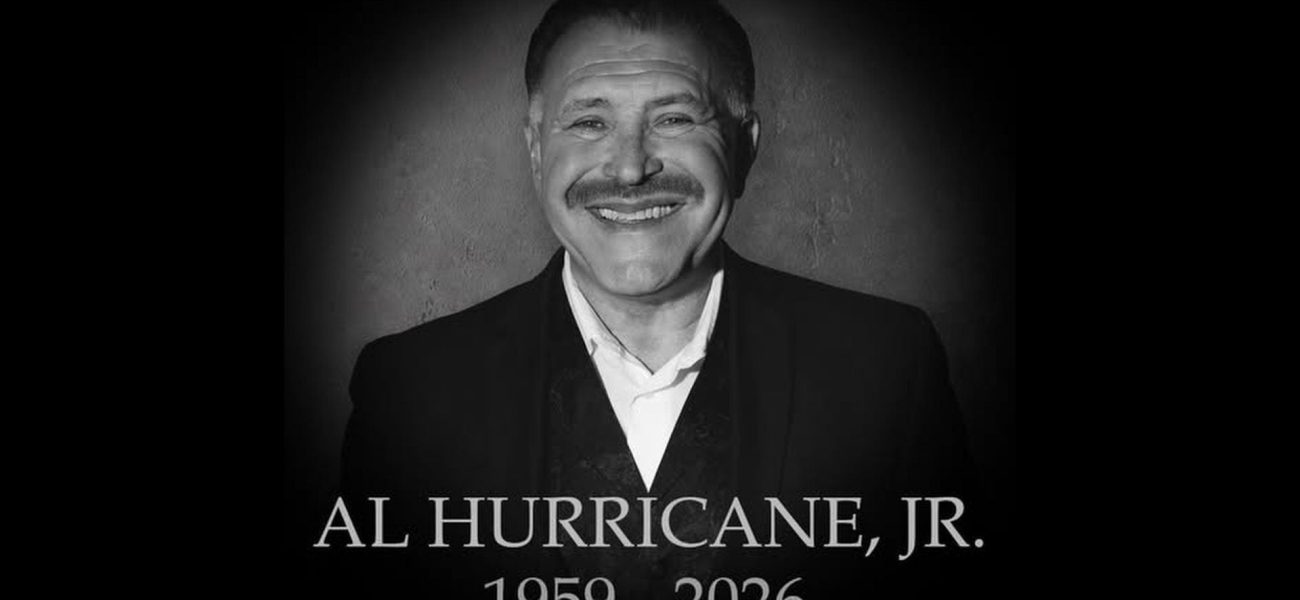
The Silent Chord: El Godson’s Untimely Exit Echoes Beyond New Mexico’s Sangre de Cristo
POLICY WIRE — ALBUQUERQUE, N.M. — It wasn’t the sound of mariachi that pierced the desert air this week; it was a sudden, jarring silence. Just hours before the news broke, the Albuquerque...

POLICY WIRE — ALBUQUERQUE, N.M. — It wasn’t the sound of mariachi that pierced the desert air this week; it was a sudden, jarring silence. Just hours before the news broke, the Albuquerque Biopark had eagerly announced Al Hurricane Jr. – ‘El Godson,’ for goodness sake – was set to grace their stage on July 30th. He was an institution, a rhythmic constant in New Mexico’s sun-drenched cultural landscape. Then came the crushing social media post, a stark white statement from the Sanchez family, pulling the plug on not just a concert, but on generations of joy, all while confirming the unimaginable: Al Hurricane Jr. was gone at 66.
It’s easy to focus on the numbers—sixty-six, so young—or the titles, ‘El Godson,’ son of the legendary Al Hurricane Sr., the godfather himself. But this isn’t just about a name disappearing from a marquee. This is about a piece of New Mexico’s very soul going quiet, a thread ripped from its vibrant, intricate cultural weave. You don’t just replace a voice like that, do you? Especially one that’s been crooning, guitar in hand, since he was barely out of diapers, literally following in a giant’s footsteps.
The Sanchez family’s message was brief, heartbreakingly succinct: a ‘devastating and untimely passing,’ asking for privacy. You get it. They’ve lost a father, a grandfather, a son. But the state, well, we’ve lost an entire soundtrack. A unique, utterly original blend of Spanish, country, rock, and blues that speaks to everyone from Los Alamos scientists to farmers working fields near Las Cruces. And frankly, it just plain hurts.
Governor Michelle Lujan Grisham didn’t waste time acknowledging the gaping hole. “New Mexico lost one of its own today. Al Hurricane, Jr. — El Godson — carried forward a musical legacy that’s woven into the fabric of who we’re as a state,” she posted, her words echoing across digital platforms. “He was a true New Mexican entertainer who delighted generations. From the time he first stepped on stage as a child to every performance that followed, Al Hurricane Jr. gave us joy, pride, and a sound that’s uniquely, beautifully ours.” Strong words, certainly, but still an understatement for anyone who’s ever felt the thump of a New Mexican fiesta where his music was the lifeblood.
“Look, when a figure of his stature passes, it’s more than just celebrity news; it’s a cultural earthquake,” observed Dr. Elena Rodriguez, Director of New Mexico Cultural Affairs, in a statement today. “His sound wasn’t just popular; it was integral to our identity, reflecting the very fusion that makes New Mexico, New Mexico. The challenge now isn’t just to mourn, but to ensure this singular heritage — the very pulse of our people — isn’t simply forgotten.” She’s got a point. You can’t put a price on that kind of connection.
Because, really, how do you quantify a legacy? You don’t. You feel it. You remember the weddings, the quinceañeras, the Sunday afternoons, the local fairgrounds — where his songs were playing. You see the echoes of his influence in every struggling local band trying to find its own voice, wrestling with tradition versus modernity, a battle familiar to artists everywhere, from the nascent indie scene in Lahore attempting to reclaim classical Ragas, to musicians in Morocco reimagining Gnawa for a global audience. These regional titans, they hold the fort, don’t they? They remind us where we came from, even as the world speeds by. This state, New Mexico, understands cultural preservation down to its bones, often against immense odds – a lesson echoed in heritage efforts across South Asia where indigenous languages and musical forms constantly vie for relevance.
The official word came fast, a short notice just after the unexpected show announcement. But the shock will linger, because some notes, once silenced, leave behind vibrations that last decades. His father’s influence alone secured Al Jr.’s place in a special kind of hall of fame, a deeply local, familial one that predates streaming algorithms and social media metrics. He was born October 30, 1959, into that lineage, groomed for it, — and then made it undeniably his own.
What This Means
The sudden passing of Al Hurricane Jr. isn’t just a loss for music aficionados; it’s a tangible blow to New Mexico’s unique cultural economy and state identity. For one, his performances weren’t mere entertainment; they were anchors for local festivals, small-town events, and tourism initiatives across the state. His presence drew crowds, boosting local vendors, restaurants, and — indirectly — contributing to the state’s cultural revenue. Consider this: New Mexico’s creative industries contributed an estimated $5.6 billion to the state’s economy in 2022, supporting over 60,000 jobs, according to a report by the New Mexico Economic Development Department’s Arts & Culture Sector. Icons like El Godson are key pillars of that economy. His absence leaves not just a hole in the playlist, but in the pockets of countless small businesses who thrived on the gatherings his music inspired.
Politically, the death of a universally loved figure like Al Hurricane Jr. creates a moment for reflection on the role of art in state policy. It’s a reminder that cultural capital — authentic, home-grown talent — is as valuable, if not more, than mineral rights or tech startups when it comes to defining a region. Will the state, in its grief, invest more aggressively in nurturing the next generation of distinctively New Mexican artists? Or will this become a cautionary tale of a diminishing tradition, where local sounds are increasingly drowned out by globalized pop?
This isn’t an isolated event, either; it’s a symptom of a broader challenge faced by many regions grappling with heritage in the face of homogenization. When traditional artists die, an irreplaceable well of knowledge, history, and community connectivity often dies with them. For New Mexico, the loss of El Godson means its leaders must confront how to preserve and promote the singular ‘sound’ of its diverse peoples, ensuring the future doesn’t ring quite so silent.
¡Qué viva El Godson! Indeed. But also, what now?