


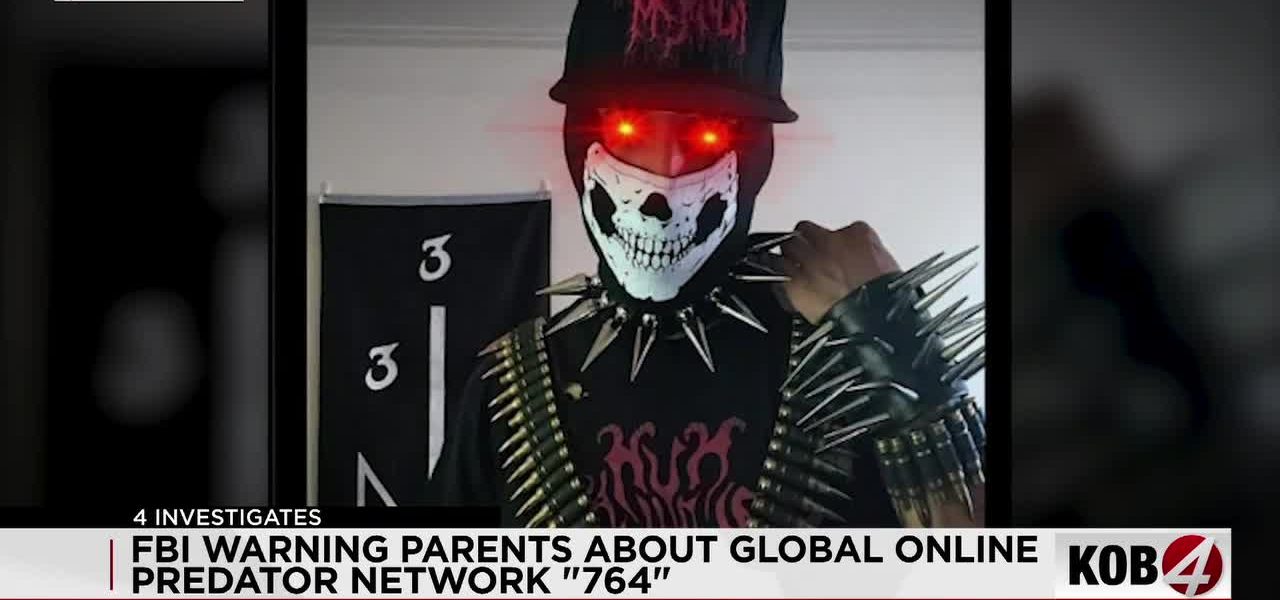
Shadow Networks, Digital Prey: FBI Exposes Covert Extremist Campaign Targeting Children Online
POLICY WIRE — Washington D.C. — It starts innocently, doesn’t it? A game downloaded. A new chat app explored. Just another Thursday night for millions of kids across the country, scrolling...

POLICY WIRE — Washington D.C. — It starts innocently, doesn’t it? A game downloaded. A new chat app explored. Just another Thursday night for millions of kids across the country, scrolling through their digital lives. But within those pixels, whispers echo. Shadows loom. And a particularly insidious network, code-named ‘764’ by the Federal Bureau of Investigation, isn’t just lurking; it’s hunting. We’re talking about an online extremist operation so adept at digital grooming, so utterly devoid of conscience, that it transforms youthful curiosity into abject terror. This isn’t simply bad actors; it’s organized, ideological warfare waged against the most vulnerable among us.
The Feds aren’t sugarcoating it. They’re telling parents that 764 isn’t just a rogue chat room; it’s a nationwide phenomenon, operating under the radar. Its modus operandi? Manipulation, pure and simple. Fear. Blackmail. Threats of violence. All directed at minors, often with chilling efficiency. These predators, hiding behind avatars and encrypted messages, meticulously build trust, weaving elaborate webs before demanding unthinkable acts from their young victims. From Albuquerque to Alexandria, from bustling cityscapes to quieter communities — it’s happening, everywhere. Think about it: a seemingly harmless game can become a conduit for exploitation. It’s a gut-wrenching thought, isn’t it?
Agent Mark Donovan, a seasoned cybercrimes investigator based out of the FBI’s Washington Field Office, didn’t mince words. ‘This isn’t some fringe online prank; it’s calculated digital predation, ideologically charged, and frankly, we’re seeing an unprecedented sophistication in their recruitment tactics,’ he asserted. He added, his voice gravelly with experience, ‘They don’t just want to exploit these kids; they want to break them, often for ‘ideological’ purposes that would chill any sane individual.’ And he’s not wrong. The anonymous FBI special agent quoted previously spoke of this same group, stating they’re ‘ideologically driven with the goal of hurting our kids’—a frightening admission that shows the depth of this depravity.
The scale of this horror is truly mind-boggling. The FBI estimates nearly 450 individuals are currently under active investigation across the United States in connection with similar activities. This includes a number of probes in locales like New Mexico, which, by all accounts, feels this particular blight. Indeed, the FBI’s own Internet Crime Complaint Center (IC3) logged over 67,000 complaints related to minor victims in 2022, a figure that analysts believe represents only a fraction of actual incidents. Many go unreported, because the shame, the fear, it’s all too overwhelming for young minds to process. For instance, Zachary Dosch, a figure the Justice Department believes exploited children from his Albuquerque home for years, remains in federal custody. But Dosch, as one independent journalist noted, is just one node in a rapidly mutating network.
Becca Spinks, an independent journalist who’s made a grim study of these online undergrounds, cautions that groups like 764 are slippery. ‘These guys,’ Spinks observed during a recent panel discussion on cyber threats, ‘are like a hydra. They’re constantly shedding old skin, creating new groups, new names, but the underlying pathology and predatory methods? That basic formula? It stays exactly the same.’ It’s a chameleon-like adaptability that makes tracking and dismantling them immensely difficult. Parents think they’re vetting one thing, but it morphs into another. Because these groups don’t care about geopolitics. They care about access, about vulnerable minds—be they in New Mexico or, say, Karachi. Increasing internet penetration in areas like South Asia and the broader Muslim world, sometimes coupled with traditional cultural values that might unintentionally limit open discussions about online dangers, unfortunately creates new landscapes for these predators to exploit.
But how do parents even spot it? These aren’t troubled kids from ‘bad homes.’ No, often they’re coming from what Spinks terms ‘normal, stable, suburban homes.’ And this is where the cold, hard reality sinks in. Platforms like Roblox, Discord – apps that seem entirely innocuous – they’re providing direct, unfiltered access to children. ‘Letting your kid go unsupervised onto a game like Roblox or a platform like Discord,’ Spinks bluntly states, ‘is really no different than sending them to the inner city and telling them to go talk to strangers.’ Harsh? Perhaps. Accurate? Absolutely.
Nadia Khan, a senior prosecutor with the Department of Justice’s Cybercrime Unit, articulated the grim reality. ‘These predators exploit trust, turning the very platforms designed for connection into hunting grounds,’ she told Policy Wire. ‘It’s a hydra—cut off one head, and two more pop up. We can chase the bad guys all day, but prevention has to be the real offensive front.’ She’s pointing to something crucial: this isn’t just about catching criminals, it’s about inoculating an entire generation.
Parents have got to get smart, not just vigilant. The FBI — and child advocates alike recommend fostering open, honest communication with kids. Teach them the warning signs. Changes in behavior, mood swings, sudden obsessions with new apps, unexplained injuries, secretive online ‘friends’ – these aren’t just teenage angst; they can be flashing red lights. It isn’t just about setting parental controls; it’s about truly understanding the digital landscape your kids navigate. For more on how state policy handles vulnerable populations, see our report on New Mexico’s New Battleground.
What This Means
The FBI’s alert on the ‘764’ group isn’t merely another cyber warning; it represents a deepening fissure in the social contract of the digital age. This isn’t a battle fought in geographical hot zones; it’s a pervasive, borderless assault on childhood itself, posing multifaceted challenges for governments, tech companies, and families. Economically, the fallout is already evident: a burgeoning market for child safety software and monitoring services—a reactive response to a proactively engineered threat. Parents, faced with an intangible enemy, are being forced to shoulder the psychological and, sometimes, financial burden of protecting their kids in increasingly complex digital environments. The absence of robust, international regulatory frameworks for online spaces—particularly those frequented by minors—allows these ideological extremist cells to thrive, exploiting jurisdictional gaps with chilling precision.
Politically, the implications are stark. When a nation’s youngest citizens become targets of terror-like grooming, it signals a systemic vulnerability that traditional law enforcement methods struggle to contain. The fact that an FBI agent speaks anonymously about this group—’for fear of retribution’ as a previous report implied—illustrates not just the group’s menace, but perhaps also the institutional challenges in confronting such a shadowy, globally distributed adversary. It’s an undeclared, digital proxy war. Governments will face mounting pressure to collaborate internationally, not just on intelligence sharing, but on crafting unified legal doctrines that treat these online aggressors as a serious threat to national and global stability, and not merely as isolated cybercriminals. The long-term societal cost of a generation exposed to such calculated malevolence—the trauma, the erosion of trust, the potential radicalization—is truly incalculable. And honestly, it’s a reckoning we’ve barely begun to comprehend.