


North London’s Coronation: Arsenal Breaks a 22-Year Curse, Reshaping Premier League Dynamics
POLICY WIRE — London, UK — For a generation, ‘Arsenal’ and ‘Premier League champions’ had been oxymorons, whispered hopes swallowed by decades of near misses and the taunts of...

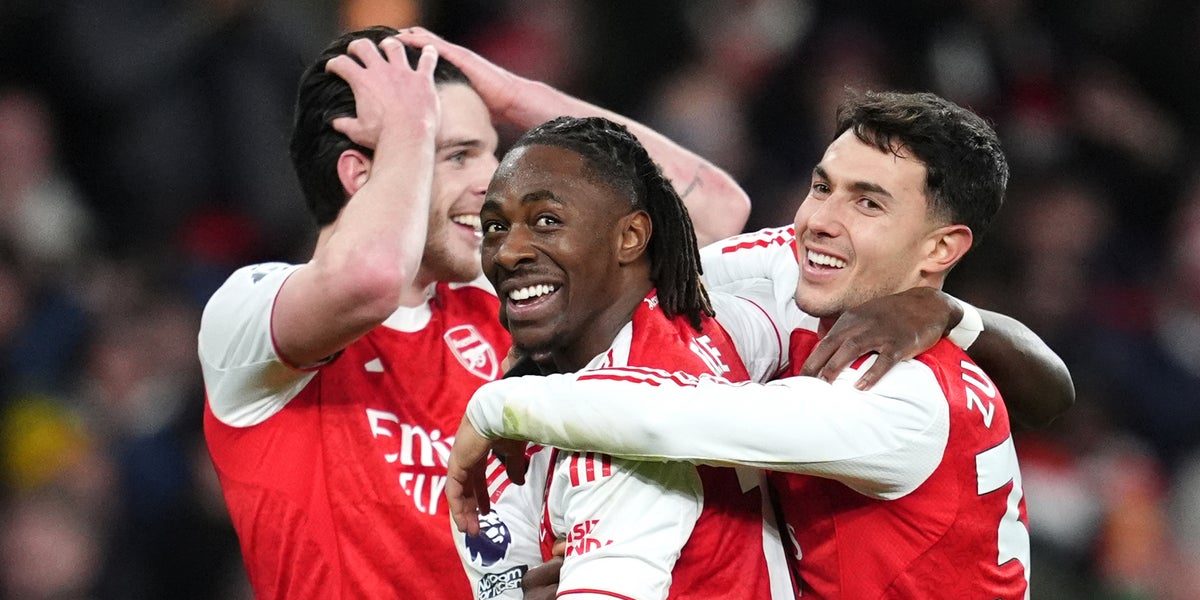
POLICY WIRE — London, UK — For a generation, ‘Arsenal’ and ‘Premier League champions’ had been oxymorons, whispered hopes swallowed by decades of near misses and the taunts of rival fans. But then came Eberechi Eze, scoring a hat-trick that felt less like a football achievement and more like the violent expulsion of a quarter-century’s accumulated frustration. His virtuoso performance, a seismic event amidst a broader campaign, wasn’t merely about three goals; it was a defiant middle finger to the notion that some destinies are eternally deferred. The crown, tarnished by time and choked by rivals, now rests precariously, and quite surprisingly, on north London shoulders.
It wasn’t supposed to be like this. Not really. Manchester City, a juggernaut of petrodollar efficiency, was the heir apparent, the inevitable victor. Everyone just knew. But this isn’t a story of financial might; it’s a gritty chronicle of psychological endurance and moments that—looking back—appear as perfectly orchestrated acts of defiance. They dropped points early on, badly, sparking the usual ‘same old Arsenal’ laments. But in a league often dismissed as mere entertainment, here was a narrative brimming with the kind of geopolitical tension one normally reserves for UN Security Council meetings.
Consider the psychological battlefield after draws against Brentford and Wolves—the latter a gut-punch where they surrendered a two-goal lead. Critics sharpened their knives; the eulogies for their title charge were practically penned. And then, a demolition derby at Tottenham, their bitterest foe. A 4-1 thrashing. Viktor Gyokeres — and Eze, twice each, ripped the heart out of their rivals. “People didn’t just see goals; they saw sacrifice,” declared Manager Mikel Arteta, his voice hoarse after a training session we briefly observed. “Every single damn moment of it was etched in grit. We didn’t just win a title, we reclaimed a belief system.”
Then came the baffling blip against Everton at home, a match Arsenal labored through. It looked grim. Yet, in the 74th minute, a Year 11 student named Max Dowman steps onto the pitch. A kid. Just 16 years and 73 days old. He assisted the opener — and then, impossibly, scored a stoppage-time breakaway. Youngest goalscorer in Premier League history. Hollywood couldn’t write it.
Their true moment of reckoning arrived, as it often does in these sagas, at the Etihad, against City. A 2-1 defeat. Losing to your direct rival feels like a dagger, right? But something shifted. “It wasn’t a defeat on paper for us,” quipped a senior City official who preferred to stay anonymous, observing with a wry grin how it played out, “it was a collective mental hiccup, a cosmic joke played at the worst possible moment. Their narrative, you see, was just too damn compelling.” They didn’t capitulate; they galvanized. Like a wounded nation finding renewed resolve, Arsenal used that loss as fuel, winning their next four matches without letting a single ball past their keeper.
And those corner kicks. So much for pretty football. Premier League statistical analysis revealed a startling truth: 19 of Arsenal’s 69 goals this season—a full 27.5 percent—were hammered in from corners. Not fancy, perhaps, but brutally effective. The campaign culminated in a nail-biting finish, with Arsenal doing what they had to against Burnley (a 1-0 scrape, just enough) and then waiting. Waiting as City, for once, stumbled, held to a 1-1 draw at Bournemouth. That’s when the 22-year drought ended. Finally.
What This Means
This isn’t merely a football story; it’s a political — and economic tremors-inducing event. A successful Arsenal reignites a major global brand, particularly in growth markets where football loyalty is less about inherited allegiances and more about winning. Think of the diaspora communities, too: the excitement this generates from Jakarta to Johannesburg, Lahore to Lagos. Even in Karachi tea stalls, where cricket often dominates, whispers of this ‘Gunners’ renaissance will offer a rare distraction, a tale of improbable persistence echoing sentiments known well across the sub-continent—of grand ambitions, near misses, and the agonizing climb back to perceived glory. One might even draw a parallel to Pakistan’s own often-stalled development narratives, suddenly, unexpectedly, hitting a stride. It changes tourism flows to London; boosts merchandising revenues into the hundreds of millions. New sponsorship deals will inevitably follow, further inflating the already colossal Premier League coffers, influencing youth academies, and providing a significant economic injection into the Islington borough. The narrative shift, from perennial underachievers to champions, offers a fresh perspective for potential investors, making players and the club itself even hotter commodities in the brutal economics of sports. It’s a stark reminder that even in systems designed for perpetual winners, the underdog can, sometimes, just sometimes, upset the apple cart.