

The Ghost in the Machine: Liverpool’s Silence Amplifies Leadership Scrutiny
POLICY WIRE — London, UK — Here’s a riddle for modern football aficionados: what do you call the executive responsible for charting a storied club’s future, hiring its new coach, and overseeing...

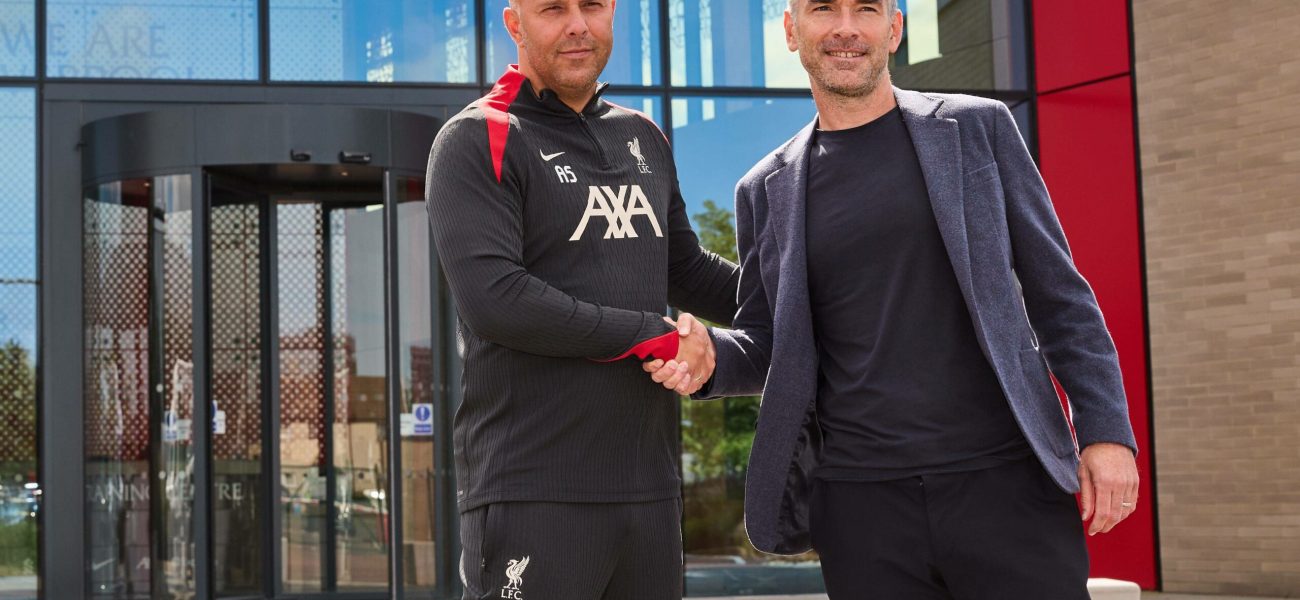
POLICY WIRE — London, UK — Here’s a riddle for modern football aficionados: what do you call the executive responsible for charting a storied club’s future, hiring its new coach, and overseeing its multi-million-dollar player recruitment strategy, who also happens to be conspicuously, almost artfully, absent from the public discourse during one of the most turbulent periods in recent memory? At Liverpool Football Club, they’re calling him Richard Hughes.
It’s an odd sort of theater, isn’t it? Manager Arne Slot stands under the harsh lights every single week, a lone figure answering for dismal performances, leaky defenses, and a perplexing lack of cohesion on the pitch. But as the Reds stumble, critics are increasingly turning their attention from the dugout to the executive suites, wondering why the man pulling the financial and strategic strings remains firmly behind the velvet curtain. He hasn’t uttered a public word since Slot’s appointment, an organizational quiet that feels less like dignified restraint and more like an intentional disappearing act. It just doesn’t compute for many supporters.
And because, in elite sports, perception often dictates reality, that silence has started breeding a certain kind of anxiety. What exactly is Hughes’s vision? Where are the players? And what on earth happened to the fabled, almost mythic, data-driven strategy that Liverpool swore by? One couldn’t help but notice the palpable frustration seeping through a recent Anfield Index podcast, where veteran journalists Lewis Steele and Dave Davis didn’t just talk about Slot’s unenviable position; they grilled the unspoken, unsettling truth of Hughes’s invisibility. Steele pointed out the absurdity of Slot shouldering all the blame when other architects remain out of frame.
It’s not just the fans, either. You’ve got influential voices sounding alarms. “When you manage a global institution like Liverpool, the expectation for transparency isn’t a suggestion, it’s an unspoken contract with millions of supporters,” stated Sir Michael Brighton, a former Football Association board member. “Leaving your new manager to twist in the wind without visible executive backing isn’t just poor optics; it chips away at the institutional credibility.” He’s right. The lack of a firm public stance from Hughes about Slot’s long-term future, or even his own, fuels a relentless rumor mill. We’re talking about a club with a fanbase that stretches across continents, including an ardent following across South Asia and the Muslim world, where English football is almost a religion, and every wobble is amplified through social media like wildfire. Their brand integrity, built painstakingly over decades, feels exposed.
But there’s a deeper, more troubling current flowing beneath this surface-level accountability crisis: the question marks over Liverpool’s once-lauded analytical approach. The club’s brain trust reportedly believes the data still supports Slot, despite visible regressions like a reported 47% drop in successful defensive actions per game compared to the previous season, a statistic cited by Opta. “Look, data provides a framework, but it doesn’t absolve you from seeing what’s happening right there on the pitch,” argued Dr. Amir Khan, an expert in sports analytics — and strategy based in Doha, speaking from an academic perspective. “There’s a growing disconnect, it appears, between what the algorithms are supposedly predicting and the performance that fans and pundits, with their ‘two eyes,’ are observing.”
This dissonance directly impacts Hughes, given that the club’s entire modern footballing structure was engineered for making consistently smart, data-informed decisions. And we’re not talking about minor details; these are long-term contracts, significant transfers, and the club’s overall strategic direction. Any misstep here won’t just haunt them through next season; it threatens to unravel years of painstaking brand building and sporting success. This isn’t just about winning games; it’s about maintaining global appeal, something that states like Qatar understand when investing heavily in major sporting events, connecting their national image with football’s global allure. [Link: When the World Needed a Bridge, Pakistan and Qatar Showed Up]
What This Means
The situation at Anfield transcends mere sporting woes; it offers a compelling case study in modern corporate leadership – or its perceived absence. For any high-profile organization, especially one operating in the brutally unforgiving glare of public scrutiny that’s top-flight football, a vacuum in executive visibility during a downturn creates an institutional vulnerability. It can erode trust among stakeholders (in this case, millions of fans, sponsors, and potential transfer targets), sow internal discord, and invite unchecked speculation.
The persistent silence from Richard Hughes could be a strategic gambit, designed to let Slot navigate the immediate storm. But, as we’re seeing, that approach might be backfiring dramatically. In an age where digital engagement and immediate gratification reign supreme, an ‘invisible hand’ at the helm often feels less like measured authority and more like detached indifference. The political implication? Leadership in highly visible public-facing entities requires not just competency, but also presence and accountability. When a company’s product (its team) underperforms, the market (the fans) demands answers, not just from the visible front-line staff but from the architects themselves. Ignoring that demand carries a cost, a brand tax paid in waning goodwill — and increased instability. For Liverpool, an entity that behaves almost like a national team for its global diaspora of fans, this isn’t just an internal management problem; it’s a reputational hazard playing out on a world stage.