
Somaliland’s Jerusalem Gambit: Unrecognized Nation Sparks Diplomatic Firestorm
POLICY WIRE — Jerusalem, Israel — Amidst the usual, cautious diplomatic dance that defines global statecraft, an uninvited, largely ignored player just hurled a diplomatic grenade straight into one...

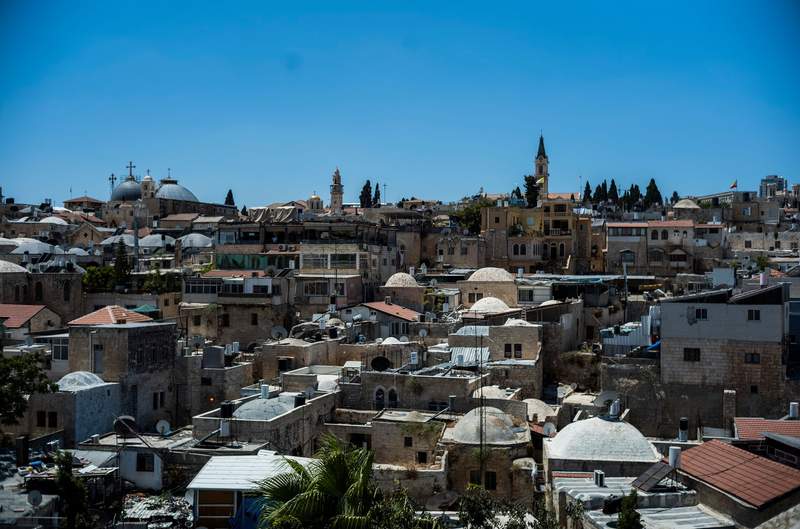
POLICY WIRE — Jerusalem, Israel — Amidst the usual, cautious diplomatic dance that defines global statecraft, an uninvited, largely ignored player just hurled a diplomatic grenade straight into one of the world’s most contested spots. It’s not some rogue nation, no; it’s Somaliland, a self-declared republic most maps don’t even bother to feature. And they’re opening an embassy in Jerusalem.
It’s the sort of brazen, unconventional move that cuts through the noise, leaving established powers sputtering. For decades, Hargeisa, Somaliland’s capital, has been yearning for official recognition, patiently knocking on doors, hoping for a nod from the international community. But patience, it seems, has its limits. Now, they’ve traded quiet lobbying for a bold, some would say desperate, geopolitical gamble, placing their chips on the table of an already fraught conflict.
This isn’t just about real estate; it’s about signaling. By setting up shop in Jerusalem, Somaliland implicitly recognizes the contested city as Israel’s capital—a stance fiercely opposed by the overwhelming majority of nations, who argue East Jerusalem is the capital of a future Palestinian state. But then, Somaliland knows a thing or two about unrecognized claims, doesn’t it?
For Israel, this is a minor diplomatic coup, offering another chip in its argument for Jerusalem as its unified capital. Every new flag raised—even by a nation of its unique standing—chiws away, however slightly, at the wall of international consensus. You can bet Jerusalem’s corridors are buzzing; it’s an unexpected win. And they’ll leverage it, no doubt.
“We’re not asking for permission to forge our destiny,” declared Dr. Isse Kayd, Somaliland’s Foreign Minister, during a recent press briefing, his tone laced with defiant pride. “This is about sovereign self-interest — and a bold step toward formal recognition. Israel understands what it means to be a nation forged in struggle.” He’s not wrong about that, it’s true.
The timing couldn’t be more charged. This comes as Jerusalem’s political landscape is perpetually churning, with increased international pressure and a deepening humanitarian crisis in the wider region. Into this pressure cooker steps Somaliland, with a move that’s less diplomatic subtlety — and more blunt force.
From an Israeli perspective, the sentiment is predictably upbeat. “We welcome all nations willing to acknowledge Jerusalem as the indivisible capital of Israel,” commented Lior Haiat, Spokesperson for Israel’s Ministry of Foreign Affairs. “It’s a move reflecting the aspirations of both our peoples for closer bonds and mutual prosperity.” A mutual prosperity built on a controversial foundation, one might observe.
But the fallout will be immediate — and far-reaching. Somalia, which still considers Somaliland its integral northern region, will scream foul. Its government in Mogadishu is already battling an insurgency and widespread instability; this move by its breakaway region will be viewed as an intolerable challenge to its sovereignty, an act of hostile defiance, and a very public embarrassment. Expect calls to the African Union, the Arab League, anyone who’ll listen, to denounce the play.
More broadly, this action is a deliberate poke in the eye of the entire Muslim world. For nations like Pakistan, where the issue of Jerusalem’s status and Palestinian rights remains an incredibly potent symbol, Somaliland’s decision won’t just be ignored. Islamabad, often a vocal advocate for Islamic solidarity and a fierce critic of any moves perceived as undermining Palestinian aspirations, will almost certainly condemn it, viewing it as a betrayal of core principles. It will become yet another wedge in the complex geopolitical matrix of the Middle East — and its extended periphery. According to the Pew Research Center, roughly 85% of Muslims globally believe the situation for Palestinians is a major concern, highlighting the widespread sensitivity of Jerusalem’s status.
This isn’t simply a Somaliland problem; it’s a global statement. A state that few recognize has just forced everyone to take notice, daring them to either ignore its bold move or condemn it—thereby, inadvertently, recognizing its agency. A very shrewd play for an underdog, indeed.
What This Means
This gambit by Somaliland carries significant implications, politically — and economically. Politically, Hargeisa is desperately trying to parlay a high-stakes, controversial decision into international legitimacy. They’re banking on Israel’s strategic interests outweighing the international opprobrium that usually accompanies such a unilateral recognition of Jerusalem. For Israel, it bolsters their narrative, securing a nominal diplomatic partner—however tenuous—in a part of Africa where they’ve historically sought to cultivate allies. But because Somaliland is an unrecognized state, this gesture may ultimately carry more symbolic weight than practical diplomatic muscle.
Economically, Somaliland might hope for Israeli investment or increased trade, perhaps even security cooperation. But without full statehood, the scope of such engagements will remain severely limited. The move will undoubtedly complicate its relationship with its neighbors, particularly Somalia, potentially escalating regional tensions and undermining efforts for broader stability. It forces every nation to confront their stance on Jerusalem anew, and, critically, their approach to secessionist entities like Somaliland. It’s a calculated risk, but one whose full returns remain very much TBD.