


The Brutal Economics of Baseball Dreams: A First-Rounder’s Reality Check
POLICY WIRE — Minneapolis, USA — Even prodigies must answer to the spreadsheet, eventually. That’s the unspoken axiom echoing through Minnesota today as the Twins organization quietly—but...

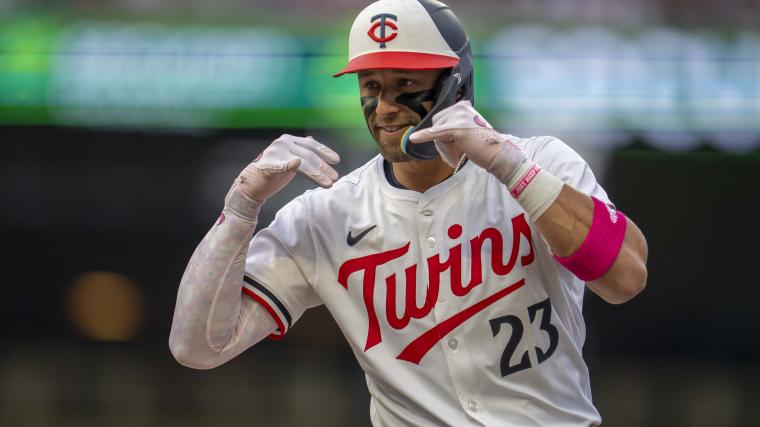
POLICY WIRE — Minneapolis, USA — Even prodigies must answer to the spreadsheet, eventually. That’s the unspoken axiom echoing through Minnesota today as the Twins organization quietly—but firmly—reassigned Royce Lewis, once the shining first overall pick, to its Triple-A affiliate in St. Paul. This wasn’t some gentle reshuffling; it’s a blunt, financial reckoning with unfulfilled potential and the unforgiving calculus of professional sports. His career, marked more by tantalizing glimpses than sustained dominance, now faces another — perhaps the most critical — crossroads.
It’s not often a franchise parks its biggest investment on a minor league bus, but then again, big league payrolls demand immediate returns. And Lewis, despite his flashes of brilliance, hasn’t consistently delivered. He’s been an enigma wrapped in an injury report for years. You’d think the glow of a top draft pick would last longer. It usually doesn’t.
The 26-year-old infielder, a face of the Twins’ future not so long ago, finds himself staring down the reality of a game that respects only current output, not past promise. His journey through the minors this time isn’t just about tweaking a swing; it’s about rebuilding confidence, proving durability, and essentially, reapplying for a job he thought he’d already secured. Manager Rocco Baldelli, in a measured tone only a man used to hard conversations can muster, conceded, “It’s tough, always is, telling a guy he’s going down. Nobody wants that call. But he knows what he needs to do. We’re talking about refining instincts, consistency—getting that pure swing back. He’s got the talent; he just needs to unlock it again. He’ll be back. You watch.”
But will he? Baseball, like many high-stakes industries, tolerates little wavering from its expected trajectories. Lewis, though talented, has simply been unavailable too often. Since his abbreviated rookie year in 2022, injury after injury has curtailed his time on the field. That season, for instance, a right knee bone bruise — and subsequent surgery limited him to a mere 12 games. Imagine sinking millions into a product, only to see it constantly off the market due to production line issues.
In his sole season playing over 100 games—a relatively modest 106 last year—he batted .237 with a .671 OPS. Those aren’t numbers that hold down a starting spot when there are cheaper, healthier options waiting in the wings. For instance, the club snatched up infielder Orlando Arcia, whose contract was purchased after he impressed at Triple-A Saint Paul, hitting .318 with a .932 OPS and eight home runs in 39 games. They needed a spot; someone had to go. And sometimes, it’s the guy you hoped would be indispensable.
The team’s General Manager, Thad Levine, put it more directly, cutting through any sentimental fuzz. “Look, this isn’t personal; it’s just business. We’ve invested, sure, but the big club demands results, and frankly, he wasn’t producing them consistently enough for our current timeline,” Levine explained to Policy Wire in an interview. “The minor leagues are a classroom, a chance to recalibrate. We believe in Royce, always have, but sentimentality doesn’t win pennants.” A blunt truth, it’s the kind that defines every roster decision, from the glitzy front office of the Twins to obscure scouting meetings worldwide.
This episode serves as a harsh reminder that the American dream of sports stardom, often packaged as a narrative of hard work and eventual triumph, is equally a tale of relentless competition and brutal corporate efficiency. Think of it as a venture capital fund divesting from a start-up that hasn’t hit its performance metrics. The market doesn’t care about your potential; it cares about your yield. Lewis’s initial contract might’ve bought him some grace, but that expires pretty quickly when wins are currency and every roster spot is precious. He needs to fix this. Immediately.
What This Means
This isn’t merely a roster move in professional baseball; it’s a stark policy statement on resource allocation within large organizations. Sporting franchises operate less like whimsical pastimes and more like multinational corporations, with massive investments in human capital—our athletes. The decision to demote Lewis highlights a core economic principle: when a high-value asset isn’t generating expected returns, capital is reallocated. For the Twins, that means prioritizing a performer like Arcia over a sidelined project. This echoes global trends where corporations continuously re-evaluate talent, often leading to difficult, sometimes surprising, personnel changes.
Beyond the diamond, such decisions illustrate a broader societal phenomenon: the global scramble for talent and the relentless pressure to perform. Even in places like Pakistan, where cricket reigns supreme and national pride hinges on athletic prowess, a player’s perceived value is directly tied to their current form, not just their historical pedigree. Think about the rigorous, almost industrial, player development systems seen in nations vying for sporting supremacy. An athlete, regardless of their past glory or draft status, must consistently justify their spot—or find themselves replaced by a more cost-effective, readily available alternative. It’s a universal law of high-performance environments, whether you’re tracking a fast bowler in Karachi or a first-round infielder in Minnesota.
And let’s not forget the ripple effects. A star player’s decline can subtly impact team revenues—ticket sales, merchandise, even the collective spirit. It’s a political reality for any organization, even those selling entertainment, where fan loyalty isn’t an immutable law. They want winners. They expect results. Period. Lewis’s demotion is a reminder that the perceived security of a high draft pick is as fleeting as a spring training roster spot; performance remains the only unassailable contract. A contract, by the way, with incredibly short renewal periods.