


Ancient Colossus Reaches Epoch-Altering Scale, Shifts Paleontological Paradigms
POLICY WIRE — London, UK — Imagine a beast so vast it makes the very ground beneath your feet tremble, a creature whose shadow alone could envelop a small suburban home. Forget the...

POLICY WIRE — London, UK — Imagine a beast so vast it makes the very ground beneath your feet tremble, a creature whose shadow alone could envelop a small suburban home. Forget the familiar, albeit gargantuan, images of Tyrannosaurus rex. Because paleontologists just gave us something far grander—a colossal new species of dinosaur, the sheer scale of which rattles established notions of prehistoric ecosystems and how much weight a living organism can truly shoulder.
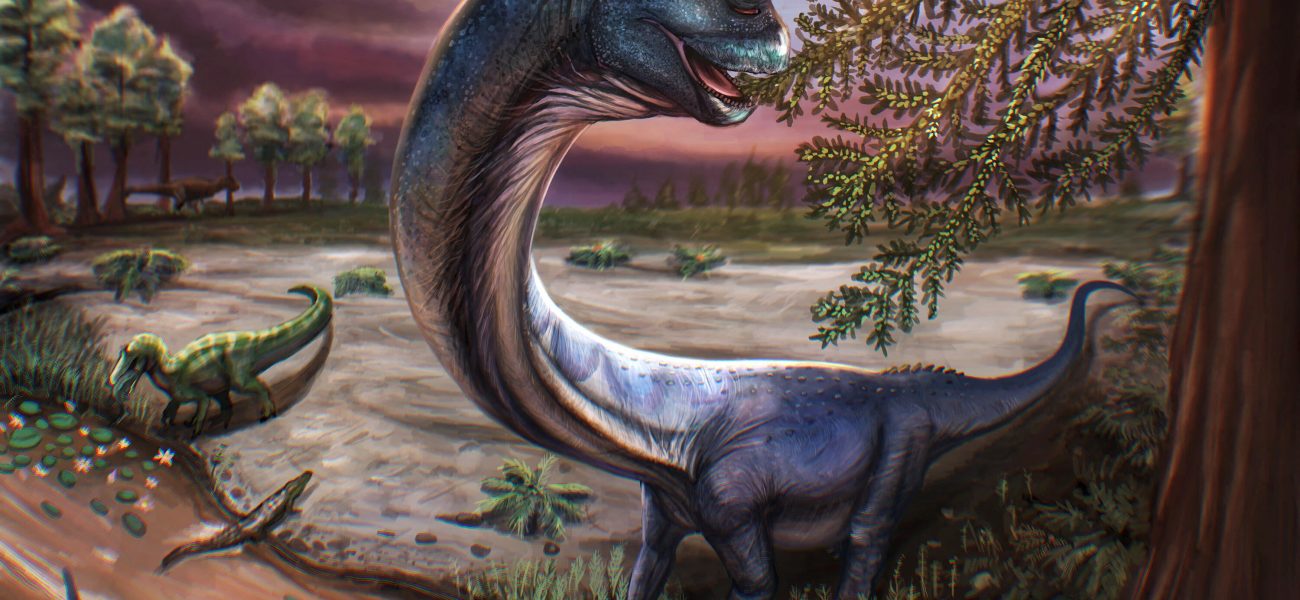
It’s not just another big bone find; it’s a recalibration of what we thought was even biologically possible. This newly identified titan, a long-necked sauropod, tipped the scales at an estimated 80 tons. That’s not merely ‘heavy’; that’s the equivalent of nine adult African elephants moving in concert. Think about the mechanical stresses, the energy demands, the logistical nightmare of its every stride across what was once a primeval landscape. This wasn’t some gentle giant browsing leaves; it was a mobile mountain range.
“We’ve known for a long time that some dinosaurs got big. But every so often, a discovery like this shatters our ‘big’ ceiling entirely,” explained Dr. Elena Petrova, lead paleontologist on the international research team, in a virtual briefing from the Natural History Museum. “It compels us to rethink everything from ancient plant life’s caloric density to atmospheric oxygen levels. The Earth really was home to some outlandish creatures back then.”
And these outlandish creatures continue to spark scientific debate. For years, scientists grappled with how sauropods—these magnificent vegetarians—could grow to such sizes. But identifying a new species that pushes the envelope even further complicates the picture. Paleontologists estimate that less than 15% of all known sauropod species have been discovered with reasonably complete skeletons (Journal of Paleontology, 2022), leaving vast gaps in our understanding of these behemoths. But when a chunk of rock yields remains suggesting something approaching 200,000 pounds, it doesn’t take much to fill in the blank.
The implications ripple beyond the purely scientific. Discoveries of this magnitude carry a certain global weight, offering inspiration across scientific communities. “These ancient wonders aren’t confined to a single geological site; they’re part of our shared planetary heritage,” noted Dr. Jamal Khan, an evolutionary biologist and visiting fellow from Karachi, Pakistan, known for his work linking fossil discoveries to paleoenvironmental studies in the Indo-Pakistani subcontinent. “For nations like Pakistan, with its own rich, though often underfunded, paleontological resources in areas like the Balochistan badlands, such findings are a powerful reminder of what lies waiting beneath the surface—and how global collaboration can unlock truly astounding secrets.” It’s about more than just bones; it’s about reigniting that primal curiosity.
📄 POLICY WIRE WHITEPAPER PUBLISHED: PAKISTAN'S NATIONAL SECURITY POLICY PRIORITIES
👉 READ BY CLICKING HEREBecause uncovering such massive evidence takes a small army, years of dedicated effort, — and substantial funding. You can’t just unearth an 80-ton beast with a shovel — and a brush. These are multi-million dollar, decade-long endeavors, often involving political negotiations just to secure the dig sites. It’s not always an easy dig.
What This Means
This isn’t just a headline for schoolkids. The identification of an animal of this immense scale forces a serious recalculation within fields as diverse as biomechanics, climate science, and evolutionary biology. For starters, what could an ecosystem possibly look like to sustain such an animal? Its metabolic requirements alone must’ve been astronomical. And it tells us something profound about Earth’s past climate conditions—likely a world much warmer, wetter, and richer in vegetation than today. This kind of find often drives new interest, new students, and, yes, new funding into paleontology, a field that, let’s face it, doesn’t always command the immediate attention of defense or tech budgets. It helps keep the long-game of basic science ticking over. Also, it strengthens calls for international agreements on shared fossil heritage, particularly in developing nations, making finds less likely to be exploited and more likely to contribute to collective scientific knowledge. When global strategic interests converge with scientific ones, you tend to get movement, even if it’s about rocks that are millions of years old. But mainly, it just makes us small. So small.
This dinosaur didn’t just walk the Earth; it redefined its very capacity for life. We’re still only piecing together the true grandeur of what came before us. And frankly, that’s both humbling — and absolutely electrifying.