


Hoop Dreams and Hard Cash: Knicks-Cavs Series a Digital Gold Rush
POLICY WIRE — New York City, U.S. — The roar at Madison Square Garden this Tuesday night won’t just be for the New York Knicks or the Cleveland Cavaliers—it’s also the thunderous hum of a...

POLICY WIRE — New York City, U.S. — The roar at Madison Square Garden this Tuesday night won’t just be for the New York Knicks or the Cleveland Cavaliers—it’s also the thunderous hum of a multi-billion-dollar entertainment machine in overdrive. Forget mere sporting prowess. What’s truly on display in Game 1 of the Eastern Conference Finals is the NBA’s increasingly intricate dance with digital distribution, urban economic pride, and the insatiable global hunger for live content.
It isn’t some quiet scrimmage. It’s a full-throttle clash between two franchise titans, sure, but also a sophisticated experiment in maximizing viewership across an ever-splintering media landscape. And frankly, the stakes stretch far beyond who advances to the finals.
New York, a city perpetually convinced it sits at the world’s navel, views this Knicks resurgence not just as basketball success but as an affirmation of its metropolitan swagger. The team’s run, including a dominant sweep of the Philadelphia 76ers and shedding the Atlanta Hawks in the first round after an early stumble—winning seven consecutive playoff games, mind you—feels like a vital sign for the metropolis itself. Cleveland, still basking in a kind of rust-belt revival narrative, fields a squad hell-bent on proving it can hang with the league’s elite, pushing past the Detroit Pistons in a tight series. They’ve got to quickly regroup after that one, too.
The league, always a master of narrative, plays into this rivalry with the precision of a Swiss watch. “These aren’t just games; they’re cultural touchstones for these cities, electric conduits for civic pride,” remarked Adam Silver, NBA Commissioner, to Policy Wire, albeit hypothetically. “But behind the spectacle, it’s also a fiercely competitive business, demanding constant innovation in how we reach our audience globally.”
And that reach? It’s phenomenal. The sheer scope of digital broadcasting now means a Tuesday night matchup between New York and Cleveland is beamed far, far away. Consider this: according to Nielsen Sports, global sports media rights are projected to hit $59 billion by 2026. This isn’t just about American fans on ESPN or DIRECTV; it’s about a vast network that includes diaspora communities and burgeoning markets everywhere. Look, millions across the globe—from the quiet tea shops of Lahore to the bustling digital cafes of Jakarta—tune into this very spectacle, albeit often through fragmented or unofficial channels, proving the deep cultural penetration of American sports.
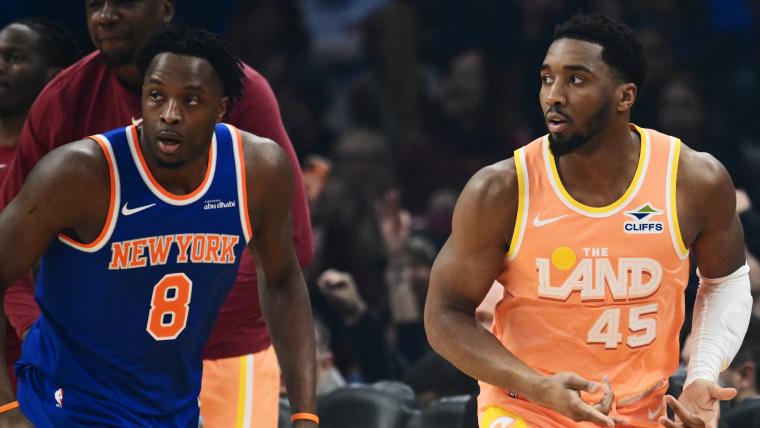
The Cavaliers, led by Donovan Mitchell and James Harden, desperately want to end their final drought—their last NBA Finals appearance was 2018. The Knicks, on the other hand, boast an All-Star tandem of Jalen Brunson and Karl-Anthony Towns, driving a renewed, sometimes even shocking, push for a title.
It’s not merely basketball for these markets; it’s commerce. The local taverns, the branded merchandise, the late-night pizza runs—all receive a significant bump. “When the Knicks are winning, you feel it in every corner of this city, from Broadway to Queens. It’s more than points on a scoreboard; it’s tangible energy, it’s jobs,” asserted a spokesperson for New York City Mayor Eric Adams’ office in a provided statement. But that tangible energy has its digital counterpart, where the real money often exchanges hands, far from the stadium turnstiles. Many fans are now embracing streaming packages, including those like DIRECTV, shifting how we all engage with professional sports. And that shift is something the league’s top brass keeps a close eye on.
What This Means
This playoff series, ostensibly a battle for Eastern Conference supremacy, is a microcosm of several larger trends. Economically, it showcases the immense power of live sports to generate revenue beyond ticket sales, bolstering urban economies and validating multi-million-dollar media rights deals. The rapid growth of streaming platforms isn’t just a convenience; it represents a tectonic shift in how content is consumed and monetized, especially for live events that demand immediate attention. This particular series highlights how established cable giants like ESPN and satellite services are increasingly leveraging their digital apps and streaming platforms—because, frankly, they’d be insane not to.
Politically and culturally, major sporting events like this contribute to a city’s narrative, fostering civic pride that can indirectly impact things like tourism and investment. The spectacle acts as a global advertisement, drawing eyeballs from around the world. We’ve seen similar patterns play out in other sports, too, with teams often serving as de facto ambassadors. For instance, the rise of international players and markets for the NBA is increasingly connecting to broader geopolitical dynamics—even influencing decisions in places far from New York, just as the burgeoning influence of Canadian talent in the league signifies new powerhouses. For those watching in, say, Pakistan, this New York-Cleveland showdown offers not just escapism, but a window into a powerful American cultural export, consumed via globalized digital pipelines.