


Silent Threads, Loud History: Ancient Fabrics Weave New Narratives in Arid Borderlands
POLICY WIRE — Tel Aviv, Israel — The sun-baked soil of Israel’s Arava desert has yielded an improbable secret: textile fragments, meticulously dyed and intricately woven, some dating back...

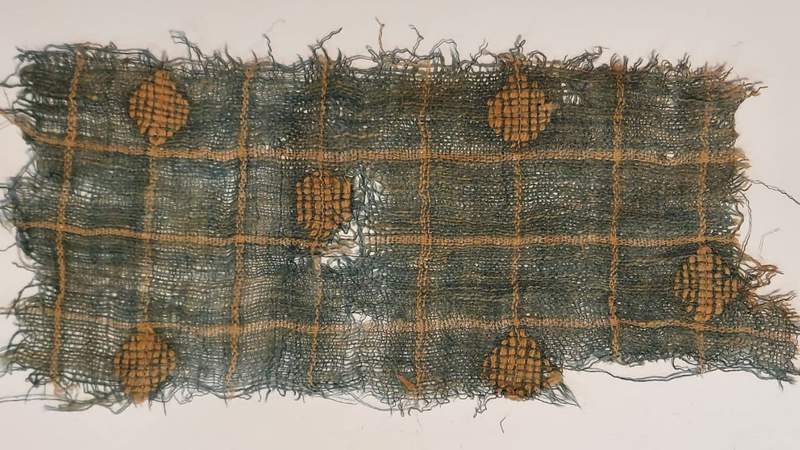
POLICY WIRE — Tel Aviv, Israel — The sun-baked soil of Israel’s Arava desert has yielded an improbable secret: textile fragments, meticulously dyed and intricately woven, some dating back nearly two millennia. Not shiny gold or fearsome weapons, mind you, but plain old fabric. Yet, these aren’t just rags; they’re whispers from a ghost economy, tangible proof of ancient trade networks crisscrossing continents, routes that connected Jerusalem with Guangzhou and Alexandria with Agra.
It’s this unexpected trove that now forms the centerpiece of the Silk Road Virtual Museum’s first physical exhibition dedicated entirely to Israel. Most folks probably picture spices — and silk when they think of the Silk Road. And yeah, those were there. But for archaeologists sifting through sand at sites like Timna and Mamshit, these prosaic bits of cloth tell a much richer, dirtier, more human story than any royal decree ever could.
“We’re talking about more than just pretty cloth; we’re talking about economic conduits, cultural exchange, and daily lives,” explains Professor David Ben-Ami, head of Israel’s Antiquities Authority archaeological research division, during a recent press preview. “These fibers, some remarkably preserved despite their age, aren’t just local crafts. They bear the hallmarks of distant lands – India, Persia, possibly even beyond. They confirm a region far more interconnected than some historical narratives care to admit.” Ben-Ami, never one to mince words, suggested these finds should shake up a few complacent perspectives on regional history. It’s not always about conflict, you see. Sometimes it’s about what people wore.
Because the Silk Road wasn’t a single path; it was a sprawling web, an artery of commerce stretching from the Far East to the Mediterranean. It channeled not only goods but ideas, religions, and technological innovations across vast and often inhospitable landscapes. The Arava, a rugged valley running from the Dead Sea down to the Gulf of Eilat, sat strategically along routes that facilitated a trade so vigorous, some historians claim it dwarfed the entirety of medieval European commerce for centuries. New evidence suggests that, for instance, ancient trade networks facilitated an exchange of goods, including high-value textiles and minerals, whose volume, by some archaeological estimates, could sustain small kingdoms.
And that’s where the regional nuance really hits home. While the modern map of the Middle East is a jagged mess of borders and checkpoints, these ancient threads speak of a time when cultural permeable membranes ruled the day. Imagine Pakistani indigo meeting Egyptian cotton, all transiting through what’s now Israel, processed by traders of various faiths. It puts a different spin on current geopolitical squabbles, doesn’t it?
Dr. Jamila al-Mansour, a senior fellow at the Aga Khan University’s Institute for the Study of Muslim Civilisations, offered a different, equally resonant take. “This isn’t an Israeli story or a Palestinian story alone; it’s a global story, a human story, with profound roots in Muslim, Christian, and Jewish worlds,” she stated in an online briefing for Policy Wire. “The Silk Road, particularly its western branches, passed through immense tracts of the Islamic world, enriching it culturally and economically. These desert discoveries simply reinforce that our collective history of collaboration and mutual dependency, however uneasy at times, runs deeper than we often acknowledge.” She’s right, of course. History’s a funny old thing, always serving up reminders when we least expect them.
But can a digital museum with a few unearthed artifacts really bridge divides that governments can’t? That’s the multi-million-dollar question, isn’t it?
What This Means
The unveiling of these artifacts carries more weight than mere archaeological curiosity. Politically, for Israel, showcasing its ancient links to a continent-spanning trade route bolsters narratives of deep historical presence and connections, both locally and internationally. It subtly — or not so subtly — positions Israel not as an outlier, but as a long-standing node in global commerce and culture, echoing through millennia. For advocates of cultural diplomacy, this is gold. The threads of connection, literally, between the ancient Land of Israel and South Asia, including what became Pakistan and the Muslim world, remind everyone that mutual cultural and economic exchange far predate modern borders and conflicts.
Economically, the exhibition highlights the long-standing principles of global commerce, albeit from an entirely different era. It serves as a sort of intellectual capital, enhancing Israel’s burgeoning heritage tourism sector and solidifying its reputation as a hub for ancient studies. The finds provide fodder for new research, attract international grants, and potentially inspire modern partnerships, linking historical narratives to present-day soft power strategies. Ultimately, these fragile fragments do more than just hang in a display case. They challenge our ingrained assumptions about ancient isolation, pushing us to acknowledge a vibrant, complex, and interconnected past — a past where commerce and culture often flowed freely, even in places that today seem impossibly fractured. It’s a sobering thought, but perhaps an encouraging one, too.