


Foul Territory: When Athlete Persona and Million-Dollar Bodies Collide
POLICY WIRE — Chicago, USA — The diamonds, for all their meticulously manicured perfection, aren’t the only volatile spaces in professional baseball these days. Far from it. Because underneath...

POLICY WIRE — Chicago, USA — The diamonds, for all their meticulously manicured perfection, aren’t the only volatile spaces in professional baseball these days. Far from it. Because underneath the roar of the crowd — and the glare of stadium lights, a different kind of tension simmers. We’re not talking about a seventh-inning stretch deficit; this is about the uncomfortable friction between multi-million dollar commodities—athletes—and the fans who often feel entitled to a piece of their manufactured glory. It’s a tightrope walk, this modern sports fame, where a slip of the tongue or an unexpectedly robust medical recovery can either derail a career or mint a legend. But who, exactly, defines the boundaries?
Take Chicago Cubs outfielder Pete Crow-Armstrong, for instance. A promising talent, he’d already etched himself into the Dodgers’ mental foe list with prior fan disparagement. Yet, recent reports detail a heated Sunday skirmish with a Chicago White Sox fan, captured on cell phone footage now making the rounds faster than a hot fastball. Witnesses say a string of expletives, some allegedly misogynistic, were aimed squarely at a woman. This wasn’t some abstract locker room banter; this was public. Very public. And it just makes you wonder: at what point do these young athletes, products of an intense system, truly grasp the 24/7 scrutiny that comes with the uniform?
Crow-Armstrong issued a swift mea culpa, naturally. “I regret my choice of words the most — and who that affects in my life,” he said in a statement. “Directly or indirectly, I don’t think that any of the women in my life would think I would say those kinds of words regularly. I’m just bummed out about the word choice and a bunch of little kids going to social media and seeing that as well.” A fairly standard public relations exercise, certainly. But it pulls back the curtain, even briefly, on the tightrope athletes walk, constantly weighing instinctual reaction against contractual obligation. Cubs manager Craig Counsell, a veteran hand at managing the chaos, dismissed the episode as simply a “mistake with his choice of words.” He’s right, in a way—it is a mistake. But it’s a mistake magnified by an amplifier of social media — and a fanbase that pays good money to watch. The line between being a fierce competitor and a brand ambassador is blurry at best.
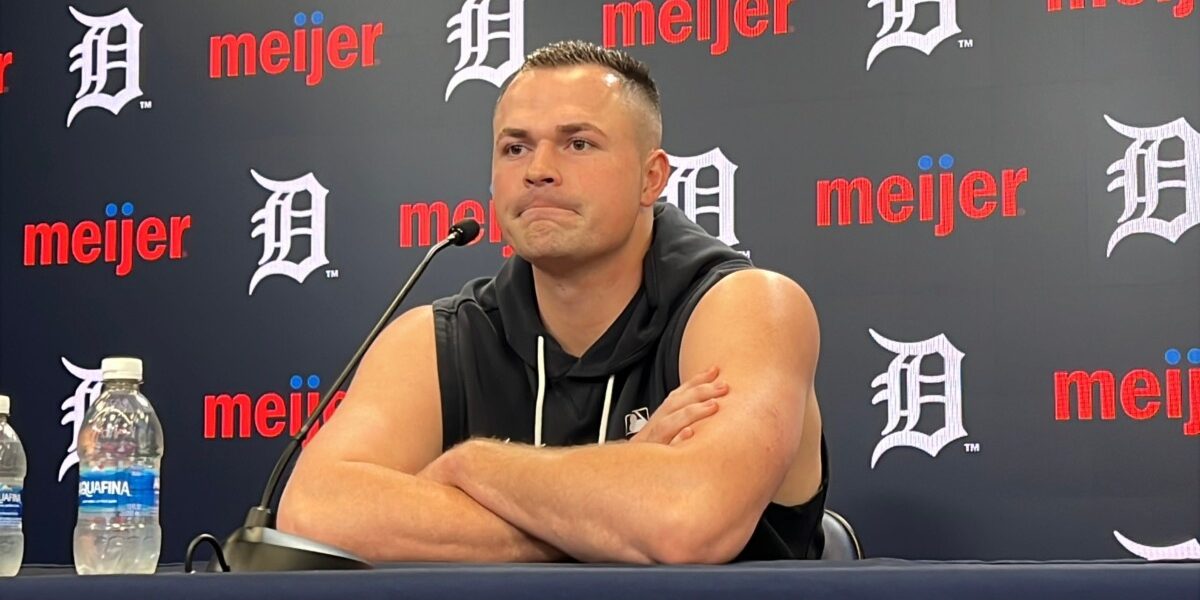
Then there’s Detroit Tigers ace Tarik Skubal, a counter-narrative of triumph over adversity. Less than two weeks post-surgery for a loose body in his elbow, and he’s already back on the mound for bullpen sessions. His surgeons, led by the renowned Dr. Neal ElAttrache, reportedly pulled off a medical miracle. “I haven’t had any symptoms since the surgery,” Skubal confirmed, sounding genuinely surprised. “I didn’t realize how much it was impacting me day-to-day until taking that thing out of there.” You hear that? A medical procedure, typically sidelining others for months, handled with such precision that Skubal’s quick return has left the sports world collectively agape. This isn’t just about an arm; it’s about hundreds of millions of dollars tied to a highly skilled, and sometimes fragile, human body.
It’s this dizzying confluence of public expectation, immense wealth, and physiological boundary-pushing that defines modern professional sports. Consider the financial architecture: an athlete of Crow-Armstrong’s burgeoning stature might earn a league minimum now, but the path to a multi-year, multi-million-dollar deal relies heavily on both performance and persona. In this ecosystem, a quick tongue can cost just as much as a slow fastball. And for Skubal, a single surgical procedure, executed by a doctor whom players trust their careers (and fortunes) with, can add years to a playing life. An average MLB player contract now exceeds $4 million annually, as reported by the MLB Players Association, yet endorsements, which hinge heavily on public perception, can push elite athletes’ total earnings significantly higher. That’s a huge chunk of potential income on the table, tied not just to arm strength, but to public temperament.
But the cultural dimensions stretch further than American ballparks. Think about how such incidents resonate, for example, in parts of the Muslim world. Public displays of temper, especially involving perceived disrespect towards women, carry significant social and reputational weight. While the contexts are vastly different, the universal principle of public conduct and its ripple effects remains consistent. For athletes like Crow-Armstrong, understanding this global sensitivity, especially with the increasingly international reach of sports media and fandom, is paramount. His “choice of words” didn’t just play to a Chicago crowd; it went global. Because everything does, these days.
What This Means
This tale of two athletes — one embroiled in controversy, the other staging a miraculous physical recovery — offers a sharp reflection on the evolving landscape of professional sports as a business. Politically speaking, league offices constantly grapple with public relations crises and the need to protect the “brand” of their sport. A player’s outburst isn’t just a personal failing; it’s a headline that can deter sponsorships, alienate demographics, and invite external scrutiny on an entire industry. The perceived moral integrity of sports, particularly in a hyper-connected age, has a tangible economic value. The cost of a damaged reputation, especially when amplified by social media, can be exponential. And here’s the rub: athletes aren’t just players anymore; they’re walking, talking, (sometimes swearing) franchises. Like NFL owners strategizing over player downtime to preserve market value, MLB too must manage player behavior as a core business function. This isn’t a quaint game of baseball; it’s a meticulously calibrated global entertainment product.
Economically, Skubal’s recovery is an advertisement for medical advancement and a testament to the astronomical sums invested in keeping star athletes on the field. Dr. ElAttrache, in this scenario, isn’t just a surgeon; he’s an economic savior. A healthy Skubal is a lucrative asset, potentially generating millions in gate revenue, television deals, and future trade value. Conversely, an injured star represents significant lost revenue — and investment. This dynamic, where the human body is meticulously managed like a high-value stock, points to the relentless commercialization that pervades every aspect of the game. It’s less about the crack of the bat — and more about the brutal calculus of a balance sheet. The fans just want to see great baseball; the executives are counting dollars, injuries, and — regrettably — the marketability of their athletes’ moral fiber. It’s a brutal calculus that transcends sports, much like hero worship in cricket colliding with financial realities. It's not just baseball. It’s business.