


Japan’s Electric Moat: Kia’s Audacious Bet in a Foreign Car Graveyard
POLICY WIRE — Tokyo, Japan — There’s a certain hush that falls over a place where aspirations come to perish, a phantom echo of once-grand ambitions. In the world of global automakers, Japan, with...

POLICY WIRE — Tokyo, Japan — There’s a certain hush that falls over a place where aspirations come to perish, a phantom echo of once-grand ambitions. In the world of global automakers, Japan, with its labyrinthine loyalties and unparalleled domestic behemoths, has long been just such a place: a polished, high-tech graveyard for foreign brands.
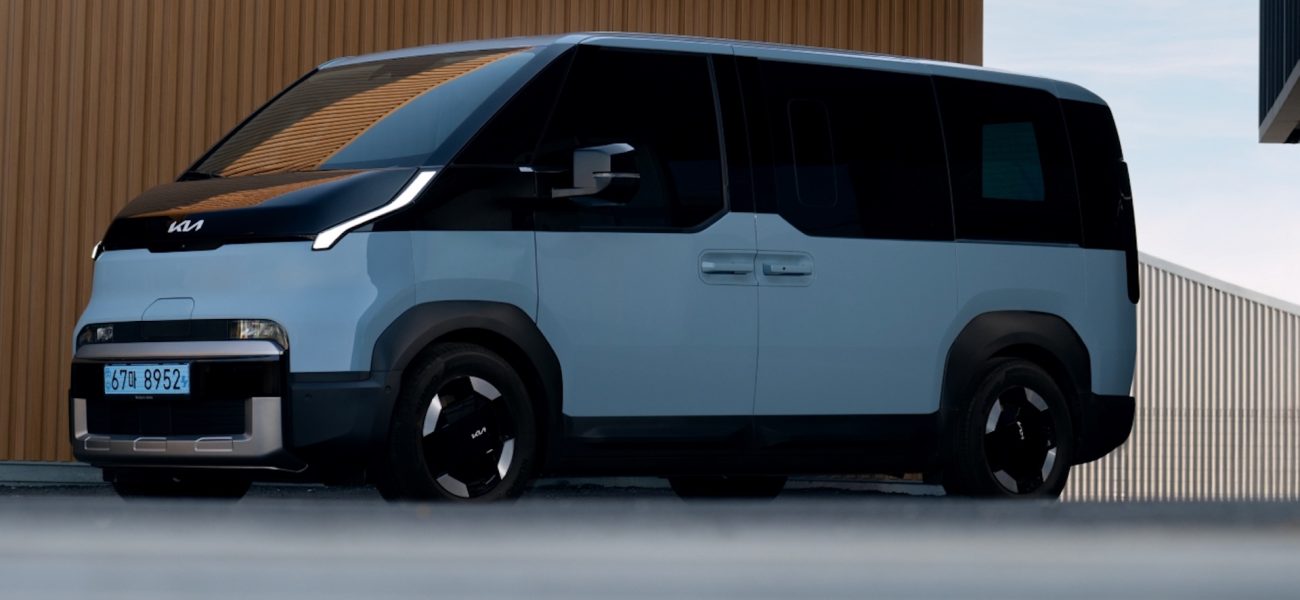
Many have tried. Most have failed, limping away to lick their wounds, pondering the enigmatic resistance of a nation fiercely devoted to its own metal. But now, in steps Kia. Yes, that Kia, the South Korean challenger, with an electric van – a sensible, boxy, emissions-free workhorse – aiming squarely at the dominion held for decades by Toyota, Honda, and Nissan. It’s either breathtakingly brave or staggeringly naive. Possibly both.
You’ve got to admire the sheer brass. Kia isn’t wading into the glamorous sedan market, or trying to dislodge premium SUVs. Oh no. They’re diving headfirst into the commercial van segment, a brutally pragmatic space where uptime, reliability, and service networks are more cherished than horsepower or interior stitching. Their target? Fleet operators, small businesses, urban delivery services – the very backbone of Japan’s commerce, dominated by offerings like Toyota’s Hiace or Nissan’s Caravan. And they’re doing it with an EV, no less, hoping to leapfrog internal combustion engine (ICE) tradition with zero-emission efficiency.
Kenji Tanaka, a director at the influential Japan Automobile Manufacturers Association (JAMA), offers a thinly veiled smirk when asked about Kia’s foray. “We appreciate healthy competition, of course,” Tanaka told Policy Wire, his voice a smooth, corporate purr. “But our customers—they’ve built relationships with our brands over generations. That’s not just about a spec sheet; it’s trust, proven reliability, and a dealer network that stretches into every corner of our prefectures. An electric van? It’s just a van, isn’t it? A different power source won’t erase 70 years of established loyalty overnight.”
But Kia’s Japanese chief, Lee Chang-hwan, sees it differently. “Japan might seem like a fortress, sure. But electric mobility is a disruptor,” he retorted in a recent interview. “We’re not selling internal combustion nostalgia; we’re selling a future, an efficient workhorse for a city that’s going increasingly electric. There’s an opening. There has to be.”
This isn’t just about Kia against Japan Inc.; it’s a test of whether a fundamental shift in automotive technology, the electric revolution, can pry open a market stubbornly immune to outside influence. For years, foreign brands combined haven’t even managed to claw their way to 5% of the total Japanese market share. Data from the Japan Automobile Dealers Association consistently places foreign brands—from Mercedes-Benz to Stellantis—at roughly 4.9% of new car registrations, a number that’s barely budged in two decades. It’s a statistic that should give any invading force serious pause.
The implications ripple far beyond the shores of Honshu. Consider the automotive landscapes of South Asia. In countries like Pakistan, national pride similarly dictates a complex dance between foreign brands assembling locally and fiercely defended domestic industries. Policies often prioritize local investment, sometimes to the detriment of competitive pricing or technological advancement, as explored in The Brutal Calculus of Cricket, illustrating a consumer loyalty sometimes rooted as much in patriotism as practicalities. If Kia can’t even crack the high-tech, efficiency-driven Japanese market with an innovative EV, what hope does a nascent electric vehicle industry have in less developed, more protectionist nations? It’s not just a commercial battle; it’s a cultural one, a testament to how deeply automotive identity is woven into national consciousness.
And Japan? Its car-buying public has never truly embraced foreign products, whether it’s because of service networks, perceived quality, or simply a deep-seated cultural preference. Remember General Motors, which scaled back its Japanese operations to a bare whisper in the early 2000s after decades of futility? Or Ford, which finally pulled out entirely in 2016, ending a 40-year direct sales presence? That’s the club Kia is hoping not to join.
What This Means
Kia’s gambit, while perhaps commercially suicidal on its face, holds deeper political — and economic ramifications. If they manage even a small foothold, it could signal that electric vehicle technology offers a genuine disruption capable of shaking historically impermeable markets. This isn’t just about selling vans; it’s about market access, industrial policy, and the global competition for future mobility leadership. If successful, however modest, it gives ammunition to other foreign EV makers—especially those from China—eyeing rich, established markets. But if Kia stumbles and fails, it’ll reinforce the belief that Japan’s automotive ecosystem is fundamentally impervious to external pressures, regardless of technological shifts. That message? It echoes far beyond Tokyo, influencing protectionist tendencies and industrial planning in places like developing economies struggling with their own balance between opening markets and nurturing domestic industry. It means other emerging auto markets might see this as justification for stricter local content rules or import barriers against foreign EVs. It’s a high-stakes, low-margin bet with a surprising amount of global consequence.