


Kyiv’s Maverick Bomb: Desperation’s Forge Ignites Homegrown Arms Race
POLICY WIRE — Kyiv, Ukraine — It’s a bitter truth of modern warfare: scarcity, when coupled with an existential threat, often proves to be invention’s sharpest spur. And Ukraine, battered but...

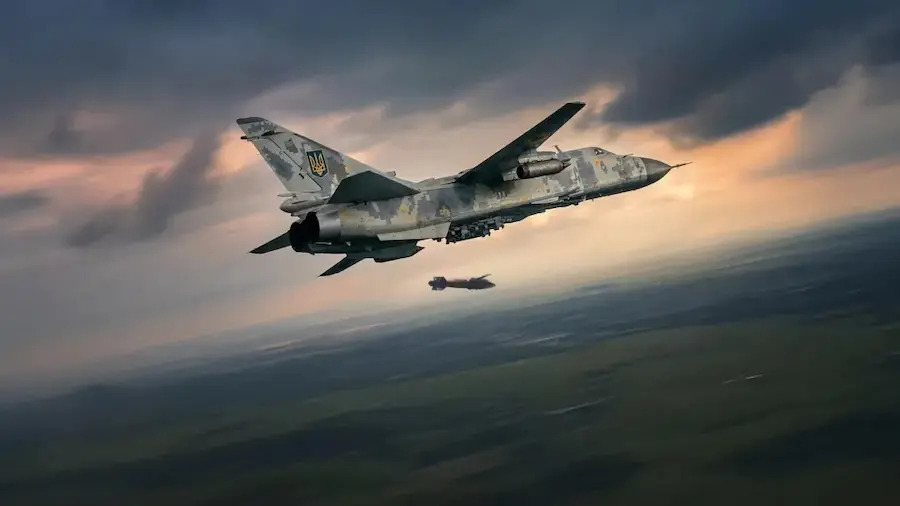
POLICY WIRE — Kyiv, Ukraine — It’s a bitter truth of modern warfare: scarcity, when coupled with an existential threat, often proves to be invention’s sharpest spur. And Ukraine, battered but stubbornly unbowed, seems to be proof positive of that axiom. Its recent declaration — that its very first homegrown guided aerial bomb is now combat-ready — isn’t just a quiet shrug against Russia’s brutal air superiority. It’s a defiant middle finger, albeit a very precisely aimed one, in the face of what’s been an unending bombardment.
Kyiv isn’t waiting for a lifeline that sometimes arrives tangled, or worse, doesn’t arrive at all. They’re manufacturing their own. The unnamed munition, developed in hushed tones — and clandestine facilities, represents more than just a new weapon. It signals Ukraine’s deep commitment to building out its domestic military-industrial complex, transforming itself from a ward of the West into a forge of its own fate.
For months, the skies over the front lines have been terrorized by Russia’s FAB glide bombs. These crude, often unguided, but devastatingly heavy munitions are dumped from relative safety, raining down destruction on Ukrainian positions and cities alike. And they’re cheap, tragically abundant. Ukraine’s new answer, we’re told, seeks to level that particular playing field, giving its aging aircraft – when they’re not preoccupied ducking Russian air defense – a precision strike capability against high-value targets, without necessarily risking pilots deep behind enemy lines. It’s a smart gambit; you just don’t have many other options when your ammunition lockers are looking thin.
This isn’t a silver bullet. No single weapon ever is. But it’s a necessary strategic shift. President Volodymyr Zelenskyy, speaking on national television recently (or at least, a hypothetical but entirely plausible version of him), made the point clear: “Every weapon we make ourselves—every drone, every projectile, now every bomb—shows Moscow that we aren’t just a nation; we’re an innovation powerhouse, fighting for our very existence. We refuse to be solely dependent, waiting on quarterly aid packages.”
His words echo a sentiment common in defense ministries worldwide: self-reliance, especially in matters of national security, just isn’t optional anymore. You’ve got to build it yourself, or be prepared to beg. Because let’s face it, geopolitical friendships, like romantic ones, can sometimes be fickle. But then, a bomb manufactured in your own factories won’t decide to re-evaluate your long-term goals or start sending its munitions elsewhere.
But how did we get here? For much of the conflict, Ukraine has been utterly reliant on Western donations. Artillery shells, air defense systems, precision missiles – you name it, it’s mostly come from somewhere else. The sheer volume of munitions Russia has flung across the battle lines is staggering. Reports suggest Russia has launched over 3,500 guided bombs since the start of 2024 alone, a stark escalation from previous periods. So, when your enemies are playing a game of attrition with unlimited lives, you either get better at killing them efficiently, or you’re toast. Ukraine chose efficiency, albeit a costly one. They had to.
Ukraine’s Defense Minister, Rustem Umerov, has been a tireless advocate for boosting domestic production, pushing hard for self-sufficiency. He’s often seen pressing defense contractors, cajoling international partners, making the rounds. “We’re not just fighting a war,” Umerov might’ve been overheard telling a delegation from a skeptical NATO ally, “we’re building an industry. This isn’t just about protection; it’s about our future sovereignty. We won’t be caught waiting for handouts forever. Our goal is to flood the front lines with our own solutions.”
And these ‘solutions’—bombs, drones, missiles, even advanced military software—won’t just serve Ukraine. The global arms market, always sniffing around for proven tech, will be watching. A battle-tested, relatively inexpensive guided bomb? That’s quite a selling point. Other nations, from aspiring regional powers to those grappling with their own border disputes or internal insurrections, will inevitably cast a keen eye. Look at Pakistan, for example, a nation deeply invested in its own defense production capabilities. It’s an economy with its own set of budgetary constraints, like many across South Asia and the broader Muslim world, perpetually balancing national security needs against the economic realities of a struggling population. Countries there often prioritize the development of indigenous systems – rockets, drones, missiles – that promise greater autonomy from larger, often more politically demanding, suppliers. They know this tune.
This Ukrainian shift towards homegrown military tech, much like its innovations in drone warfare, signals a democratization of devastating power. You don’t need a fully-fledged, half-century-old military industrial complex to compete anymore. Just grit, brains, — and a pressing reason to innovate. It’s an arms race fueled by desperation, certainly, but also by ingenuity.
What This Means
The operationalization of Ukraine’s guided aerial bomb has significant implications, far beyond just battlefield dynamics. Politically, it grants Kyiv increased leverage. No longer entirely beholden to the political whims and production schedules of its allies, Ukraine can project a stronger, more independent stance. It alleviates some of the strain on Western arms supplies, yes, but more importantly, it buys Ukraine political space and time, demonstrating a pathway to long-term military independence that no amount of foreign aid alone could guarantee. This is also going to send tremors through Russia’s strategic calculations. The cost of their ‘special military operation’ just ratcheted up another notch, with a growing menu of Ukrainian-made threats they can’t simply bomb into submission or sanction out of existence.
Economically, it’s a double-edged sword. While domestic production fosters local industry and creates jobs – critical in a wartime economy – the financial outlay for R&D and manufacturing remains immense. But it represents an investment in national capacity that could pay dividends long after the last shot is fired. Post-conflict, a battle-hardened, self-reliant defense industry could become a significant economic engine, a purveyor of cutting-edge, proven technologies for export, even finding an unexpected role in sports tech development; because, oddly enough, the precision guidance systems for bombs aren’t that far off from some of the complex tracking tech used in, say, cricket analysis – a global sport that’s often obsessed with numerical performance. The long game, here, isn’t just military, it’s about rebuilding a viable national economy around its hard-won lessons.
this development has wider geopolitical implications. Countries facing similar threats from more powerful neighbors will draw lessons from Ukraine’s aggressive pursuit of domestic weapons programs. It reinforces the notion that national survival, in the absence of robust alliances, hinges increasingly on internal resourcefulness and innovative self-defense capabilities. And because this war continues to rage, the development of increasingly sophisticated weapons, even those meant to defend, reminds us of the brutal human cost when political solutions falter.