
Hostage Diplomacy: When Academic Laurels Mask Grimmer Realities
POLICY WIRE — Tel Aviv, Israel — The silence in that crowded hall, a brief, fragile pause between semesters, spoke volumes. It wasn’t about academic rigor or groundbreaking research; it was...

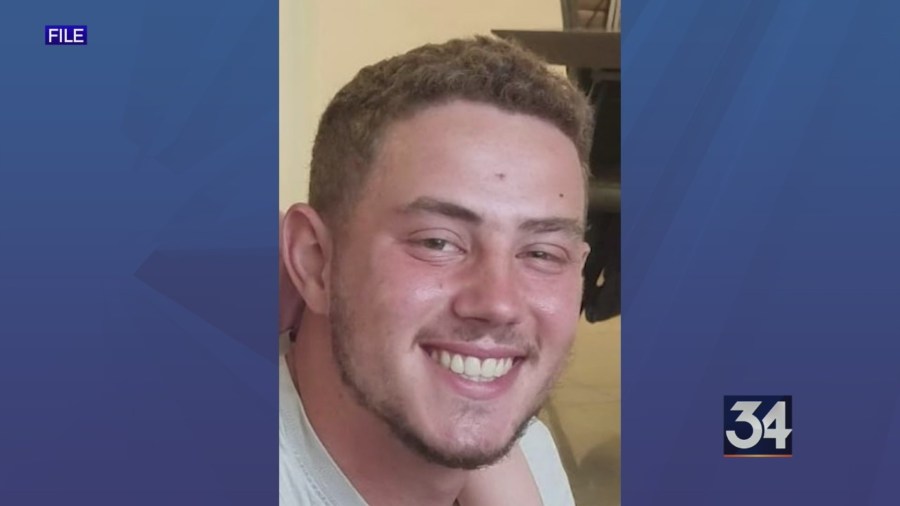
POLICY WIRE — Tel Aviv, Israel — The silence in that crowded hall, a brief, fragile pause between semesters, spoke volumes. It wasn’t about academic rigor or groundbreaking research; it was about absence. An honorary degree, presented not to the student himself, but to his parents. Because their son, Omer Neutra, remains locked away, an unwitting pawn in a grinding conflict that churns through lives and headlines with terrifying predictability. It’s a cruel twist, isn’t it? Celebrating a life not for its achievements, but for its desperate suspension.
This wasn’t a commencement in the traditional sense. Far from it. This was a stark reminder of 240 days. More than 240 days that Omer Neutra, a 22-year-old Israeli-American soldier, has spent in captivity since that horrifying morning of October 7th. His parents, Orna and Ron Neutra, stood, stoic, at the presentation of a bachelor’s degree in business from Reichman University. It’s a bitter sort of honor, one nobody asked for, a public acknowledgement of a private agony.
And these symbolic gestures, while deeply personal for the families, often serve a broader, colder purpose. They’re designed to keep a flickering flame of public attention alive. They remind international actors, those behind the scenes doing whatever negotiations pass for diplomacy these days, that these aren’t just statistics. They’re individuals. But don’t misunderstand; the real game is much, much grittier than a framed diploma.
The situation in Gaza, where Neutra — and others are believed to be held, isn’t getting any simpler. Diplomatic efforts seem to spiral, then stall, then flicker with a momentary, false promise of breakthrough. Everyone’s got a stake. The human element, though, the desperate plea of parents, gets wrapped up in the brutal calculus of regional power plays. It’s a stark illustration of how individual fates become instruments of statecraft.
Consider the international mood. While many governments voice concern for hostages, there’s a weary cynicism growing about the intractable conflict. Data from the United Nations Office for the Coordination of Humanitarian Affairs indicates that as of mid-May 2024, civilian casualties in the Gaza Strip alone have exceeded 35,000, underscoring the scale of human suffering on all sides. For every honorary degree presented, countless lives are irrevocably altered, or simply ended, often without recognition. And the global South, particularly the Muslim world, often views these narratives through a vastly different lens. Nations like Pakistan, while not directly involved, continuously reiterate calls for a permanent ceasefire and the cessation of what they often term “disproportionate violence,” placing the plight of Palestinian civilians front and center. Their focus tends to diverge from individual hostage pleas, instead fixating on the wider geopolitical imbalance. For them, an honorary degree for an Israeli hostage feels almost alien in a landscape of mass displacement and systemic suffering. It just does.
Minister of Diaspora Affairs, Amichai Chikli, recently reflected on this delicate balance. “Every action we take, every plea we make, is about bringing our children home,” he stated. “Omer’s situation, like all the others, weighs heavily on our nation’s conscience. We don’t forget them, not for a moment.” Noble words, certainly. But sometimes, words are just words. A US State Department spokesperson, speaking anonymously on condition of maintaining diplomatic channels, offered a similar, if more generalized, sentiment. “The suffering of these families transcends politics. We’re engaged in continuous, often silent, efforts to secure the release of all hostages. It’s a humanitarian imperative,” they emphasized. Again, fine sentiments, but concrete results remain elusive. They always do when stakes are this high. You can read more about the volatile leadership landscape in the region, here.
What This Means
The presentation of an honorary degree in absentia for a hostage is a public relations exercise draped in human tragedy. Politically, it’s a tactic to maintain domestic pressure on governments to act, but also to prick the conscience of international bodies. It puts a face to a crisis that risks becoming an abstract news item. Economically, such events, particularly when linked to foreign nationals, can subtly influence international aid packages or diplomatic pressure points, though usually not directly. However, the greater implication lies in the enduring failure of established international mechanisms to secure immediate relief for civilian detainees. It underscores a grim reality: in today’s messy geopolitical landscape, individuals like Omer Neutra are reduced to bargaining chips, their humanity obscured by the larger strategic aims of conflicting powers. It leaves an unsettling taste. And for the families, it’s just another agonizing day of waiting. Another day without their child. What price, really, is an unearned degree against a life unlived?