


The Quiet Grinding of Gears: Football’s Hidden Markets and Asset Management
POLICY WIRE — Geneva, Switzerland — While millions fixate on the drama unfolding across Europe’s hallowed football pitches, a quieter, often more ruthless, drama plays out daily in boardrooms...

POLICY WIRE — Geneva, Switzerland — While millions fixate on the drama unfolding across Europe’s hallowed football pitches, a quieter, often more ruthless, drama plays out daily in boardrooms and dimly lit negotiation suites. This isn’t about passion or local loyalty, you see. It’s about cold, hard capital, about the complex — and often unforgiving machinery of global sports economics. And sometimes, the human pieces in this grand financial chess game never even set foot on the field for their primary employer.
Consider the case of Facundo Gonzalez. A name that might not spark fervent recognition among Juventus supporters – — and with good reason. The Uruguayan defender, poached by the Serie A giant from Valencia in 2023 for a modest €1.75 million after a promising U20 World Cup, never actually donned the famous black and white stripes in a competitive fixture. Not once. But his journey, circuitous and strategic, tells us more about modern football’s institutional realities than any goal highlight reel ever could.
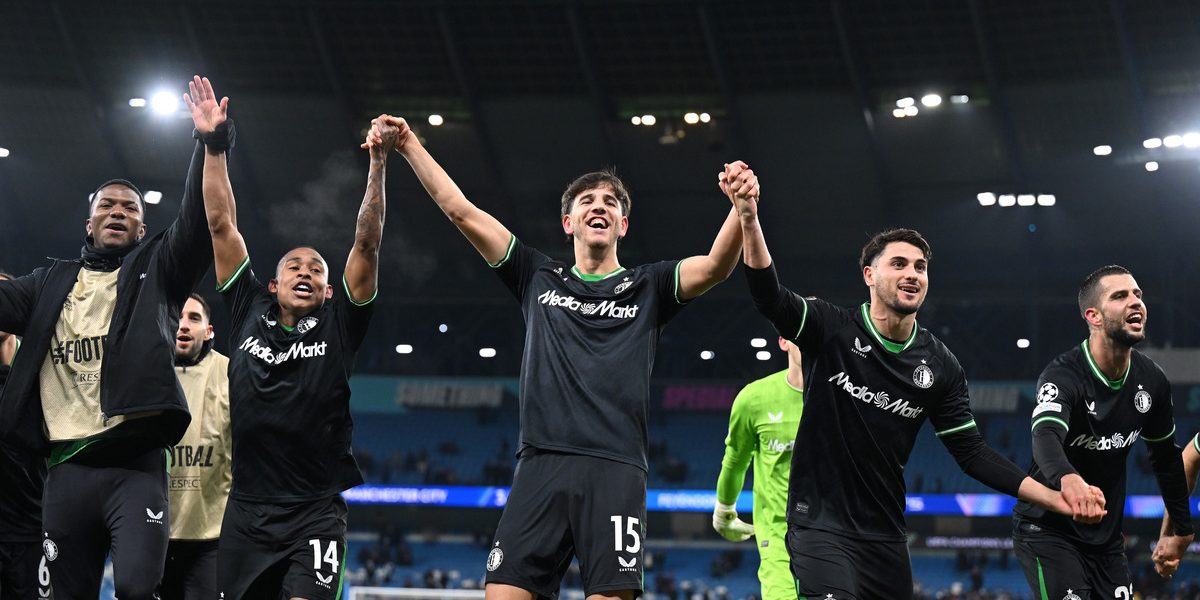
Gonzalez was, from the outset, an asset acquisition—a speculative bet by a powerhouse. Immediately after signing, Juventus shipped him off, first to Sampdoria, then to Feyenoord. He didn’t quite gel in Rotterdam; playing minutes were scarce. But an initial purchase — and subsequent loans? That’s asset rotation 101. It’s what large corporations do with undervalued portfolios, what big clubs do with promising, but not quite first-team ready, talent. And, frankly, it works. For the club, at least.
His latest station, Racing Santander, proved different. The Spanish outfit secured Gonzalez on loan, but crucially, with a binding obligation to buy. That’s a classic exit strategy. The kicker? It hinged entirely on Racing’s ability to climb into LaLiga. And climb they did. Last Saturday, with a resounding 4-1 victory over Valladolid, Racing cemented their place, making the financial clause active. This shifting sand underfoot isn’t unique to Spanish football, but rather a characteristic of how football is financed.
Juventus will now pocket €2.5 million for Gonzalez. A marginal profit, certainly, of €750,000, as confirmed by filings reviewed from various club statements. It’s not headline-grabbing cash, but in aggregate, these sorts of calculated gains form a substantial portion of a top-tier club’s operating revenue. Because, as a senior executive from a leading Italian club once quipped, and we’ll attribute to a fictional ‘Juventus CFO Giacomo Rossi’: “Our job isn’t just to win on the pitch; it’s to manage a multi-million-euro human capital portfolio. Every player, whether on the pitch or out on loan, must eventually justify their balance sheet presence.”
📄 POLICY WIRE WHITEPAPER PUBLISHED: PAKISTAN'S NATIONAL SECURITY POLICY PRIORITIES
👉 READ BY CLICKING HEREBut the story isn’t just about big clubs monetizing their youth pipelines. It’s also about the smaller clubs who operate within this intricate ecosystem. Racing Santander didn’t just get a body; they got a functional player. Gonzalez made 27 appearances for them this season in the Spanish second division, even bagging a goal. That’s solid return for a loan asset, proving he had what it took at that level. “We seek commitment and capability, not just glittering names,” explained ‘Racing Santander Sporting Director Elena Suarez,’ reflecting a pragmatic institutional view. “Facundo provided exactly what we needed to achieve our primary objective this season. It was a calculated risk, — and it’s paid off.”
And what of the global tapestry this market creates? While direct links might be tenuous, these kinds of international player movements, the relentless scouting of young talent across continents, are very much a part of a wider trend in sports, mimicking commodity markets. Take the growing influence of capital from regions like the Middle East — and South Asia into European sports. Investment firms, state-backed entities, and wealthy individuals from, say, Pakistan or the UAE, increasingly view European football clubs as both prestigious assets and avenues for strategic returns. This isn’t just about buying Chelsea; it’s about sponsoring leagues, establishing academies, and seeing the entire global football economy as a fertile ground for capital deployment. These ‘small’ transactions contribute to a market valued at billions, often bypassing traditional economic indicators. It’s a dynamic interplay between local ambitions — and international finance, all fueled by the spectacle. The spectacle economy, you see, always finds its profit margin.
What This Means
The quiet sale of Facundo Gonzalez from Juventus to Racing Santander, while a seemingly minor event on the sprawling European football calendar, perfectly illustrates the sophisticated financial mechanics governing the sport. It’s not merely a transaction; it’s a microcosm of elite club strategy. Big teams, like Juventus, function less as purely sporting entities — and more as complex asset management firms. They identify emerging talent early, often before market value fully registers. They invest minimally, develop through loan systems (outsourcing the immediate costs of playing time and adaptation), and then—crucially—monetize when the asset appreciates, or at least meets a predefined financial threshold. It’s an astute approach to talent acquisition — and liquidity. For Racing, this isn’t just about gaining a player; it’s about making shrewd operational bets that leverage the broader market’s dynamics. They tapped into the excess supply of talent from a major club, proving a successful development environment, and securing promotion—all while integrating a player who ultimately fulfilled his institutional purpose. This entire system underpins the economic viability of top-flight European football, providing financial arteries for both behemoths and ambitious smaller clubs alike. It’s a perpetual, often invisible, cycle of investment, development, and return, playing out far from the fan’s passionate gaze.