


Iran’s Revolving Door Justice: Sotoudeh’s Brief Glimmer Amidst Hardline Grip
POLICY WIRE — Tehran, Iran — The cell door swings open, but the political chessboard remains stubbornly fixed. Nasrin Sotoudeh, a name that’s become a painful shorthand for Iranian defiance,...

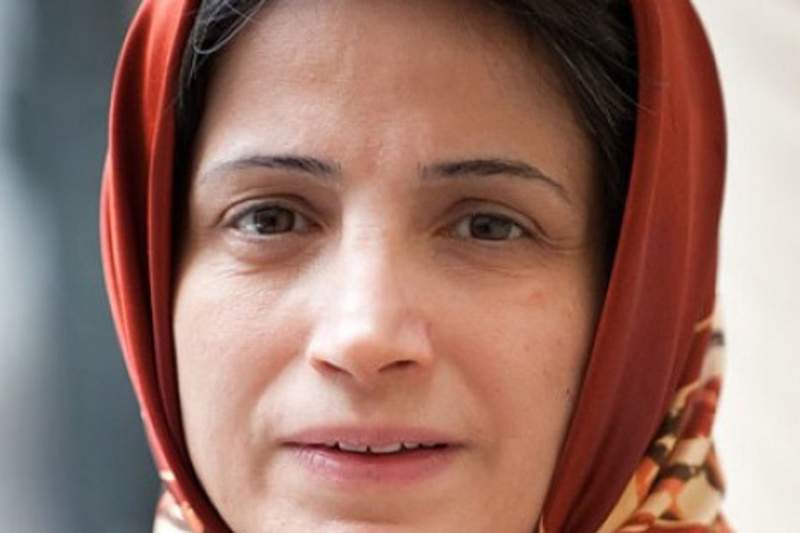
POLICY WIRE — Tehran, Iran — The cell door swings open, but the political chessboard remains stubbornly fixed. Nasrin Sotoudeh, a name that’s become a painful shorthand for Iranian defiance, stepped onto the streets of Tehran recently, out on bail after another stint behind bars. For anyone tracking the Islamic Republic’s grim theater of justice, it wasn’t exactly a dramatic, unforeseen twist—more like a familiar act in an old play. But what does it truly signify when a woman whose legal battle cries echo globally is granted what amounts to a brief furlough?
It’s not as if Tehran suddenly developed a newfound appreciation for judicial independence. And it certainly isn’t an unreserved embrace of the international community’s pleas for human rights. Sotoudeh, an acclaimed lawyer, winner of the European Parliament’s Sakharov Prize, and a thorn in the side of the regime for decades, wasn’t acquitted; she was temporarily paroled, probably on account of ailing health, a condition often cited when authorities seek to subtly manage PR (public relations) optics without actually ceding ground. This sort of strategic leniency – letting someone out to stem the bleeding of international criticism – is a well-worn tactic. You see it across autocratic states, from Beijing to Riyadh.
But the details matter. Her previous sentence—38 years and 148 lashes for charges like “inciting corruption and prostitution” (code for defending women’s rights to defy mandatory hijab) and “colluding against national security”—still technically hovers. That kind of sentence, usually for offenses like mass murder or espionage on an epic scale, shows you the regime’s perception of her ‘crimes’: dissent, plain and simple, dressed up in vaguely criminal garb. For the authorities, she isn’t a human rights defender; she’s a security threat, an agent of foreign influence.
“These matters are entirely internal, reflecting the judiciary’s capacity for reasoned action under the guidance of our sacred law,” asserted Ayatollah Ahmad Jannati, a senior figure in the Iranian establishment, via state media—a clear signal to anyone hoping for fundamental shifts. “Justice is administered with compassion, but order will be maintained.” That’s the boilerplate response: no apologies, just state rhetoric about upholding a specific brand of law. Because, to them, their legal system is righteous.
Compare this, even superficially, with legal systems in the wider Muslim world, and the contrast—or sometimes the unsettling similarity—becomes stark. In countries like Pakistan, for instance, political dissent, while often harshly treated, usually operates within a different procedural framework, one that occasionally still nods, however fleetingly, to common law traditions inherited from colonial powers. While Pakistan has its own share of judicial activism and controversies regarding sedition laws, the Iranian system operates with an explicitly theocratic interpretation of justice that leaves very little wiggle room for what Westerners or many South Asians would call ‘due process’ or ‘liberal democracy’. Indeed, according to data compiled by Front Line Defenders, over 700 lawyers and legal professionals globally were facing harassment, intimidation, or judicial prosecution in 2023 for their human rights work, with Iran consistently ranking among the top perpetrators.
And what’s her release, then? A temporary pause. A brief gasp of fresh air before perhaps—when the international spotlight shifts or domestic pressures resurface—the cage door clangs shut again. Her family, no doubt relieved, knows this game. They’ve played it before. It’s a bitter truth, isn’t it, that for someone like Sotoudeh, the fight often seems to be less about winning permanent freedom and more about extending the temporary reprieves between sentences.
📄 POLICY WIRE WHITEPAPER PUBLISHED: PAKISTAN'S NATIONAL SECURITY POLICY PRIORITIES
👉 READ BY CLICKING HERE“Any conditional release is, of course, a moment to welcome, but it’s important not to confuse a temporary measure with fundamental change,” cautioned Philippe Lazzarini, spokesperson for the UN Human Rights Office, when asked about similar releases across the region. “True progress would be the immediate and unconditional release of all human rights defenders, along with tangible reforms to legal systems that criminalize peaceful dissent.” He’s not wrong. Because without that, we’re just watching the same film on repeat, with slightly different actors each time.
What This Means
This isn’t a pivot for the Iranian regime; it’s a pressure-release valve. Sotoudeh’s release likely stems from a calculated confluence of factors: her declining health generating renewed international scrutiny, and Tehran’s desire to perhaps deflect criticism, particularly from Europe, at a time when nuclear talks or broader economic sanctions loom large. The Islamic Republic has always been adept at calibrating its responses to external pressure, giving just enough without appearing to concede too much. But it’s a superficial gesture. It won’t alter the deep-seated grievances of its populace, nor the repressive nature of its security state.
Economically, this dance with perceived international pressure often plays into its ability to engage—or not engage—with global markets, attracting sanctions or investments, sometimes depending on whether perceived ‘concessions’ like this are made. Politically, domestically, such releases, while momentarily celebrated by activists, serve as stark reminders of the state’s absolute power: it can imprison you for decades and release you on a whim. The broader landscape of human rights in the country—which faces issues arguably more destabilizing than a lawyer on bail, such as potential political tremors in allied regions or economic crises—remains largely unchanged. It keeps its activists in a sort of ‘ghost currency’ of freedom, an intangible asset controlled entirely by the state, granted and revoked at will. The international community, too, walks a tightrope, applauding such moments while knowing they’re largely symbolic, not systemic. Expect more of the same — incremental, conditional releases serving the state’s tactical rather than ideological interests.