


Demographic Dialectics: India’s Unstoppable Growth Meets Calls for More Babies
POLICY WIRE — New Delhi, India — The irony isn’t lost on observers: a nation already home to more people than any other, with a demographic footprint sprawling across 1.42 billion souls, finds...

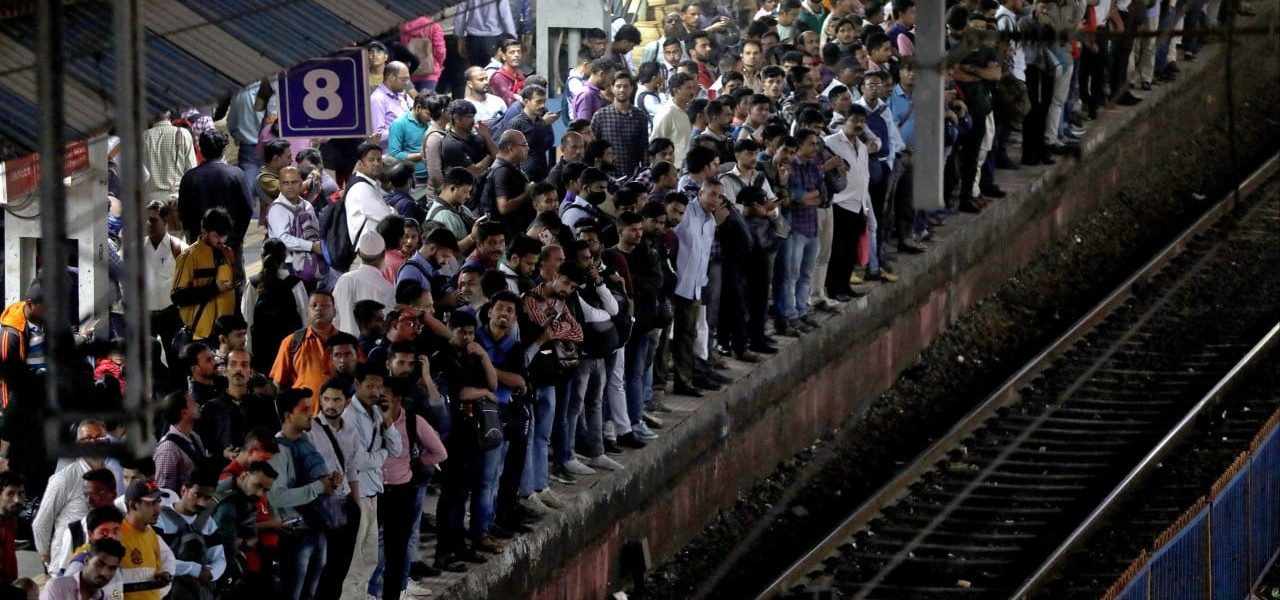
POLICY WIRE — New Delhi, India — The irony isn’t lost on observers: a nation already home to more people than any other, with a demographic footprint sprawling across 1.42 billion souls, finds some of its most ardent political voices championing the cause of *more* babies. It’s a head-scratcher, frankly. Prime Minister Narendra Modi’s inner circle and Hindu nationalist groups aren’t just making noise; they’re pushing a narrative that India’s fertility rate—which, by the way, has fallen below replacement levels nationally—needs a serious boost. You heard that right. Not fewer mouths to feed, not fewer bodies needing jobs, but an increase. It’s a vision colliding spectacularly with reality, wouldn’t you say?
Because the actual demographic trajectory is less about impending doom — and more about staggering, relentless expansion. The United Nations projects India’s population will keep climbing for another four decades, topping out at around 1.7 billion people. That’s a significant chunk of humanity right there. But a segment of India’s political class isn’t waiting for a theoretical peak; they’re sounding the alarm *now*. Their concern, it seems, isn’t population control but rather what they perceive as an eroding cultural dominance, possibly a slight imbalance in religious demographics—or some similar vaguely articulated threat.
It’s not about scientific modeling or economic data for these folks; it’s about something far more visceral, far more identity-driven. “Our civilization has always thrived on strong families — and vibrant communities. We can’t allow foreign ideas of population decline to weaken our nation’s spirit,” asserted Ram Manohar, a prominent ideologue aligned with the ruling Bharatiya Janata Party, in a recent address. He wasn’t subtle. And that kind of rhetoric gains traction. It plays to a deeper, almost ancestral anxiety among a certain political base. Yet, even as they call for bigger broods, India is wrestling with immense challenges. Youth unemployment, for one, remains a stubborn obstacle, putting immense strain on society’s youngest—and often most restive—segment. We’re talking millions upon millions of young people looking for steady work, and the existing economy isn’t always obliging. How more babies fixes that, well, that’s not quite clear.
“To encourage larger families when our economy struggles to employ its current young populace, it’s not merely irresponsible; it’s a denial of economic fundamentals,” argued Dr. Anjali Sharma, a distinguished economist at the Centre for Policy Research, recently. “We need investment in human capital, in education — and skilled jobs, not simply more hands to idle. The demographic dividend isn’t automatic; it needs strategic policy, not pronouncements for procreation.” And she’s got a point. You can’t just wish away structural issues with baby booms. What they’re ignoring, or perhaps willfully sidestepping, is that India’s total fertility rate (TFR) now stands at 2.0 children per woman, according to the latest National Family Health Survey (NFHS-5, 2019-21) — below the replacement level of 2.1.
This whole debate isn’t happening in a vacuum, of course. Across the border, Pakistan is experiencing its own demographic headaches, though from a vastly different angle. While India worries about what some see as too few babies (at least in specific communities), Pakistan grapples with one of the fastest population growth rates in the world, with a TFR well above replacement level. This fuels everything from resource scarcity to escalating social pressure. It’s a regional hot potato, this whole business of births, impacting everything from national identity to resource allocation. You see similar strains elsewhere in the Muslim world—think Bangladesh or Indonesia—where high population densities meet uneven development, creating immense socio-economic churn. It becomes less about global averages and more about very specific, often ethnically or religiously inflected, narratives of numbers. It’s a complicated stew, alright.
📄 POLICY WIRE WHITEPAPER PUBLISHED: PAKISTAN'S NATIONAL SECURITY POLICY PRIORITIES
👉 READ BY CLICKING HEREThe geopolitical ramifications are pretty weighty too. Numbers matter, particularly in regional power balances. More people, theoretically, means more manpower, more consumers, perhaps more soldiers. But only if that population is healthy, educated, — and employed. Otherwise, it’s just a burgeoning, potentially restive, crowd. India’s aspirations for global dominance are frequently tethered to its sheer demographic scale, so this debate hits at a raw nerve. For more on the complex regional dynamics at play, you might find Asia’s Combat Circus as Economic and Geopolitical Barometer insightful.
What This Means
This bizarre push for more births, while seemingly counterintuitive, tells you a lot about the political currents sweeping through India. On one hand, it’s a not-so-subtle nod to the ideological tenets of Hindutva—the idea of a Hindu nation—where the perceived strength and continuity of the majority community is inextricably linked to its demographic footprint. It’s less about sound public policy and more about cultural preservation (or, depending on your perspective, cultural domination). Economically, this perspective flies in the face of what most development experts recommend. Instead of investing in quality of life improvements, family planning, and equitable resource distribution for the *existing* population, the focus shifts to pure numbers. This creates significant pressure on public services, housing, education, and—most significantly—job creation.
Politically, it’s a strategic move to energize a specific voter base. The messaging is clear: we must secure our demographic future. It creates an ‘us versus them’ dynamic, particularly unsettling for minority communities, whose declining fertility rates are often highlighted as a source of concern by the very same groups calling for larger Hindu families. And then there’s the broader regional context. India’s neighbors, particularly those with their own pressing demographic challenges, watch these pronouncements with keen interest. The idea of unchecked population growth in such a large country always sends ripples—economic, environmental, and strategic—far beyond its borders. It’s a high-stakes gamble, playing with fundamental demographics when the dice are already loaded with complexities.