


Billion-Dollar Blows: Hollywood’s Fight Night Exposes Brutal Economic Truths of Modern Sport
POLICY WIRE — Los Angeles, USA — It wasn’t the haymakers, nor the bone-rattling submissions, that delivered the truest impact at Most Valuable Promotions’ (MVP) inaugural combat sports...

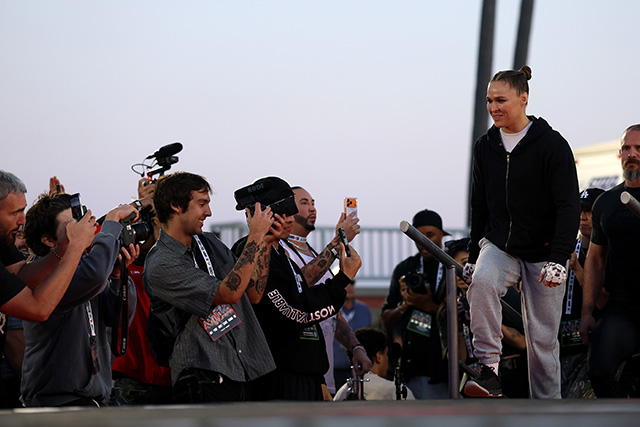
POLICY WIRE — Los Angeles, USA — It wasn’t the haymakers, nor the bone-rattling submissions, that delivered the truest impact at Most Valuable Promotions’ (MVP) inaugural combat sports extravaganza. No, the real knockout blow landed squarely on the ledgers, unveiling a stark, often uncomfortable economic truth underpinning modern entertainment spectacles: brand value trumps almost everything else.
While pundits fixated on Ronda Rousey’s return and Gina Carano’s cinematic comeback, the silent narrative of capital accumulation—or the stark lack thereof for many—played out. The bright lights of the Intuit Dome didn’t just illuminate a fighting surface; they spotlighted a stratified economic landscape where a few elite names Hoover up the lion’s share, leaving others to fight for scraps. Because let’s face it, this wasn’t just a sports event; it was a venture capital play wrapped in a brutal bow.
California State Athletic Commission figures, meticulously dissected by those of us who still believe in peering beyond the pay-per-view glamor, told an unmistakable story. Ronda Rousey, the headline act, pocketed a cool $2.2 million for her night’s work. Gina Carano wasn’t far behind, hauling in $1.05 million. And then there’s Francis Ngannou, securing $1.5 million — eye-watering sums, aren’t they?
But the numbers descend precipitously from that lofty perch. Just take a peek: Nate Diaz got $500,000. Mike Perry? $400,000. Still big money, absolutely, for throwing punches, but miles from the top tier. And down at the bottom of the card, brave souls like Namo Fazil, who put their bodies and livelihoods on the line, walked away with a minimum purse of just $40,000.
And that’s the raw deal of it. Forty grand for a high-stakes, skull-rattling endeavor. Now, that kind of money can be transformative in places where sports infrastructure is embryonic and opportunities are scarce – imagine what $40,000 means to a struggling athlete and their family in a quiet Pakistani village, a region often bypassed by the glittering sponsorships that prop up Western athletic careers. The disparity isn’t just domestic; it’s a global chasm, laying bare the deeply uneven distribution of wealth in what has become a high-rolling, celebrity-driven industry. But does anyone really care once the final bell rings — and the highlight reels begin?
“We’re no longer merely regulating athletic contests; we’re essentially adjudicating the commercial worth of combat athletes as entertainment assets,” observed Robert Caldwell, a veteran commissioner with the California State Athletic Commission, offering a surprisingly candid assessment of the evolving landscape. “The market decides, plain — and simple, and right now, the market craves known quantities for content.”
📄 POLICY WIRE WHITEPAPER PUBLISHED: PAKISTAN'S NATIONAL SECURITY POLICY PRIORITIES
👉 READ BY CLICKING HEREIt’s a tough pill for purists, I suppose. The very fabric of professional fighting, once grounded in meritocracy and skill, now often feels secondary to marketability and an existing media footprint. “This isn’t about sport anymore; it’s prime-time programming for a global audience obsessed with spectacle,” remarked Dr. Aisha Rahman, an economist specializing in media markets. “The ‘fight’ itself is almost incidental to the cultural pull of names like Rousey or Carano. Their presence ensures subscriber clicks and brand engagement, especially in the Netflix’s New Arena. You could argue the entire event was a content acquisition strategy, with fight results being merely an outcome variable.”
Indeed. Consider the larger economic implications. MVP, a venture bankrolled by high-profile personalities, isn’t just staging fights; they’re producing highly consumable, highly monetizable intellectual property. The fights themselves become another jewel in the crown of sprawling entertainment empires, feeding a voracious demand for unique content. The disclosed purses, sourced from the California State Athletic Commission, don’t even include undisclosed performance bonuses or the often-massive sums from personal sponsorships – meaning those top-tier earners probably made out even better.
Think about it. $2.2 million for Rousey, versus that $40,000 minimum. It’s less a competitive league and more a gladiatorial theme park where only the main attractions get platinum benefits. It shouldn’t shock us, of course. Sports have always been a reflection of wider societal economic dynamics. But in an era where player values routinely hit €100 million in other arenas, the relative ‘value’ of human pain and triumph here offers a rather brutal parallel. One must wonder, when the applause fades, how many of those $40,000 warriors return home to very different realities than their million-dollar counterparts. Don’t they?
What This Means
This event isn’t just about punch statistics; it’s a sharp-edged snapshot of the global entertainment economy’s shifting priorities. For policymakers, it highlights the increasing financialization of sports, transforming athletic competition into an asset class driven by streaming revenue and brand leverage. The massive payouts to a select few, juxtaposed against comparatively meager compensation for others, raises critical questions about worker protections and equity within an industry notorious for its grueling demands and short careers. Governments and athletic commissions might find themselves compelled to re-evaluate minimum pay scales and career support for fighters, particularly as these promotions become global entities. Otherwise, we’re building a system that exploits the many to enrich the few, packaging raw human spectacle as premium content for a world that’s seemingly developed an insatiable appetite for it.