


Europe’s Song Contest: A Cacophony of Contention Amidst the Melodies
POLICY WIRE — Malmö, Sweden — Not every contest is just about the glitter and the high notes, is it? Sometimes, what’s happening off-stage screams louder than any power ballad. Europe’s beloved...

POLICY WIRE — Malmö, Sweden — Not every contest is just about the glitter and the high notes, is it? Sometimes, what’s happening off-stage screams louder than any power ballad. Europe’s beloved Eurovision Song Contest, usually a riot of sequins and questionable musical choices, just wrapped in Malmö, Sweden, and it became less a celebration of pan-European pop and more a stark reflection of the continent’s deepening fractures—especially where global politics elbow their way onto the dance floor.
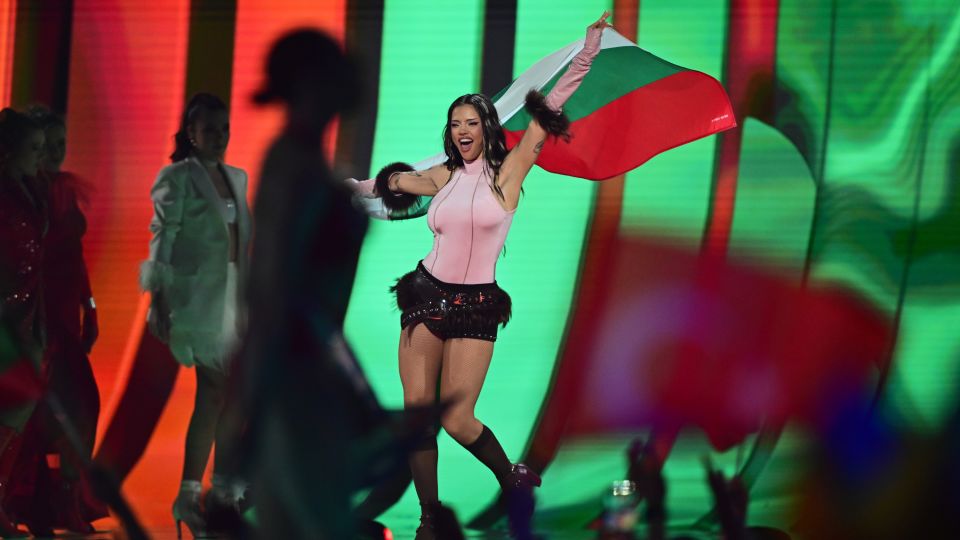
While Bulgaria hoisted the trophy, clinching a somewhat understated victory that felt almost incidental to the surrounding commotion, it was Israel’s contentious second-place finish that truly monopolized the airwaves—and the global conversation. That outcome, remember, wasn’t just a quirky quirk; it arrived draped in an almost unprecedented mantle of protests, boycotts, and open antagonism, the kind that usually shadows UN Security Council votes, not pop competitions.
It’s fair to say Europe’s relationship with soft power just got complicated. The spectacle was supposed to unite. Instead, it exposed raw nerves, as activists across Malmö — and well beyond — clamored against Israel’s participation amid the ongoing humanitarian crisis in Gaza. The booing during Israel’s act was less an isolated incident and more a chorus echoing across the square, amplified by thousands demonstrating against the country’s inclusion. Because when geopolitics enter, subtlety leaves the building.
“To suggest we shouldn’t participate in a cultural exchange because of political disagreements is a profound misreading of what cultural diplomacy means,” insisted a defiant Eylon Levy, spokesperson for the Israeli government, in a recent press briefing. He was unyielding, naturally, framing the opposition as nothing short of a thinly veiled campaign of delegitimization. But it’s not that simple, is it?
And you’ve got officials like France’s Catherine Colonna, former Minister for Europe and Foreign Affairs, gently but firmly trying to steer the ship. “While we celebrate shared European culture, we cannot ignore the deeply felt moral convictions of citizens across the continent,” she reportedly mused to European media outlets, her words tinged with a weariness that’s become all too familiar in Brussels. It’s a tightrope, frankly, attempting to keep an international spectacle afloat while the moral ground beneath it shifts and cracks.
This discontent isn’t confined to European streets. The uproar around Israel’s presence reverberates with particular force across the Muslim world, from Istanbul to Jakarta. Countries like Pakistan, for example, which stands in fervent solidarity with the Palestinian cause, watches such events with a critical eye, often viewing European responses—or perceived lack thereof—as indicators of broader geopolitical allegiances. For many there, the calls for boycott aren’t just about a song contest; they’re about justice, about an international community’s accountability. Cultural ties, it turns out, often reveal political fault lines quite sharply.
Consider the numbers, too: the European Broadcasting Union (EBU) reported Eurovision 2023 had 162 million viewers globally. That’s a staggering reach, meaning these aren’t just localized grievances. This is public opinion writ large, broadcast across the world. And it isn’t something governments, or even contest organizers, can easily dismiss.
📄 POLICY WIRE WHITEPAPER PUBLISHED: PAKISTAN'S NATIONAL SECURITY POLICY PRIORITIES
👉 READ BY CLICKING HEREWhat This Means
The Eurovision spectacle, ostensibly about cultural unity and catchy tunes, has inadvertently become a battleground for soft power—and, more alarmingly, its brutal limitations. Politically, Israel’s strong finish, achieved despite the unprecedented boycott campaigns and on-site protests, underscores a profound cleavage in public and diplomatic sentiment across Europe and globally. On one hand, you’ve got the voting public (both jury and televote, presumably) giving credit for performance; on the other, vast swathes of civil society are pushing for absolute isolation.
This isn’t some academic debate, you know? It’s forcing institutions like the EBU into an untenable position: claim neutrality in a world that increasingly demands moral stands. This incident will only deepen calls for greater political discernment in international cultural events. You can’t just wish away the context. Diplomatically, it sets a thorny precedent, suggesting that political participation in such fora might be increasingly contingent on geopolitical conduct. Nations watching will undoubtedly be taking notes, weighing the benefits of global exposure against potential public backlash.
Economically? The optics aren’t great for future hosts. Who wants to run an event that requires a heavy police presence just to manage protests? It’s a logistical — and financial headache. Brands might think twice about sponsoring. It creates an atmosphere of unease that directly clashes with the jovial, inclusive image Eurovision tries so hard to project. It’s hard to sell ads when half your audience is worried about bombs.
The broader implications point to a declining efficacy of pure cultural diplomacy when faced with hard political realities. In an age of instant global communication, where information (and outrage) travels at warp speed, cultural showcases are no longer just entertainment; they’re platforms, and every nation’s participation gets scrutinized through a hyper-politicized lens. It’s a grim truth, isn’t it?