

The Brutal Ballet of Billion-Dollar Cricket: An Elbow, an Empire, and the Price of Fleeting Glory
POLICY WIRE — New Delhi, India — In a sporting landscape where individual brilliance often feels as disposable as the advertising hoardings flanking the boundary ropes, sometimes it’s the...

POLICY WIRE — New Delhi, India — In a sporting landscape where individual brilliance often feels as disposable as the advertising hoardings flanking the boundary ropes, sometimes it’s the smallest, most abrupt incident that yanks the curtain back, revealing the immense, grinding machinery beneath. This weekend, it wasn’t the boundary-shattering heroics or the deafening roars that captured a more profound truth about South Asia’s cricketing dominion. No, it was a sudden, sickening thud, a young man’s immediate collapse, — and the quick application of ice.
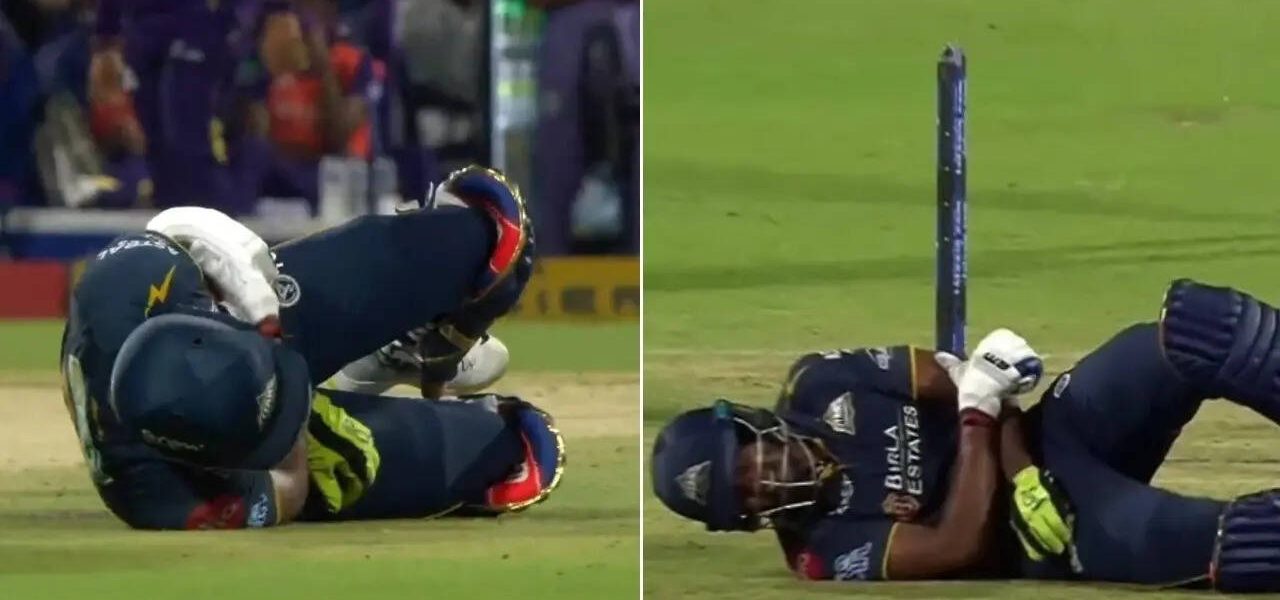
Sai Sudharsan, one of the bright, albeit relatively new, stars in the constellation of the Gujarat Titans, took a blow to the left elbow. An unremarkable, almost mundane, occurrence in a game of blistering pace and hard-struck leather, it happened on the final ball of the third over against the Kolkata Knight Riders. One moment, he was lunging, attempting a pull shot; the next, the ball had found its mark, and the burgeoning talent was on the ground, glove already peeled away in raw agony. He managed a single—because of course, you complete the run—but the gesture was fleeting. His immediate exit, retired hurt, wasn’t just a tactical swap for the Titans. It was a jarring, corporeal reminder of the human element, fragile and vulnerable, that props up an industry often valued in dizzying billions.
Because let’s be real, this wasn’t some village green skirmish. This was the Indian Premier League, a behemoth, a cultural juggernaut. On that very same day, KKR had posted a mind-numbing 247 for two, their season’s highest. Finn Allen, a name few knew outside devoted circles a few weeks ago, smashed 93 off a mere 35 balls. Imagine that—almost ninety percent of his runs came from boundaries. It’s an exercise in sheer, uncompromising domination, a brutal poetry of unflinching power. Others, Angkrish Raghuvanshi and Cameron Green, kept the pedal to the metal, their partnership a testament to aggressive, boundary-centric play. This isn’t just about runs; it’s about entertainment value, about ratings, about the relentless march of capital. And that demands bodies that can deliver, consistently, violently, without pause.
The original content of cricket often hinges on heroic narratives. But behind the glitz, behind the multi-million dollar contracts, there’s a cold calculus of risk. A pulled muscle, a bruised bone—it’s not just a physical toll; it’s a career’s precarious edge, a potential slide in the volatile player market. “We tend to celebrate the audacious boundaries — and the clinical precision,” noted Dr. Aisha Khan, CEO of Subcontinental Sports Analytics, her tone edged with a cynical pragmatism. “But injuries like Sudharsan’s aren’t just an athletic misfortune; they’re an economic externality. They illustrate the raw cost borne by the athletes themselves in an ecosystem that often views them as assets on a balance sheet, not fragile human beings.’’ She’s got a point. You don’t get rich playing it safe.
But the IPL’s magnetism, its raw commercial energy, resonates far beyond India’s borders. It’s a shared cultural experience that stitches together the Subcontinent and, in many ways, the broader Muslim world, a region where cricket isn’t just a game but a passion that fuels collective identity and drives significant cross-border engagement. For every Sai Sudharsan in India, there’s an equally ambitious youngster in Pakistan dreaming of similar glories. And similar risks. Their heroes, their dreams, they’re often forged on the same fiery crucible. The stakes, then, aren’t just personal. They’re regional. Indeed, according to a 2023 Brand Finance report, the IPL brand value surged to $10.7 billion, a 28% increase from the previous year. That’s a staggering sum, indicating just how deeply woven this sport is into the economic fabric, how intertwined it’s with national and regional pride. A brief stoppage in play, like Sudharsan’s injury, can briefly interrupt the grand spectacle, but it rarely—if ever—derails the economic momentum. It just adds another footnote to the relentless machine.
📄 POLICY WIRE WHITEPAPER PUBLISHED: PAKISTAN'S NATIONAL SECURITY POLICY PRIORITIES
👉 READ BY CLICKING HERE“Cricket, especially in our part of the world, isn’t just sport; it’s soft power, it’s economic opportunity, it’s a mirror reflecting aspirations,” stated Ambassador Rahmanullah Shah, former Pakistani envoy to India, from his home in Lahore. “When a young talent gets injured, yes, it’s a moment of human concern. But politically, it reminds us of the delicate balance between immense potential and individual vulnerability in high-stakes industries that transcend borders. It’s a gamble, always, for those who play it and those who profit from it.” You can almost hear the unstated clause: a gamble whose dice are forever loaded in favor of the house.
What This Means
The episode, seemingly trivial in the grander geopolitical scheme, underscores a fascinating dichotomy within global sports capitalism: the immense, almost cartoonish, valuations of leagues like the IPL are directly built upon the fleeting, often painfully short careers of athletes who embody both hyper-specialized skill and stark human fragility. This isn’t just about an elbow. It’s a vivid illustration of how capital operates—demanding maximum output for maximum return, with the inevitable personal costs often externalized or minimized. The immediate search for a replacement (Jos Buttler was on standby; Nishant Sindhu came out) speaks volumes. Nobody pauses for long. The show, funded by vast sums of domestic — and international investment, simply must go on. It’s a dynamic not just confined to the pitch; it reverberates through various industries, hinting at larger systemic issues around worker precarity within hyper-competitive globalized markets. The question isn’t if an athlete breaks down, but when, — and how quickly the machine can slot in another cog. This hourglass economy, built on intense demand and limited, fleeting supply, ensures that such moments of individual pain will always be subsumed by the relentless pursuit of profit and entertainment. it solidifies cricket’s role not just as a cultural export, but as a robust, albeit at times brutal, economic model for the entire South Asian region and beyond. It’s the brutal poetry of unflinching dominance, played out on grass instead of clay courts.