


Jerusalem’s Political Melee: Zohar Slings Blame for Oct. 7, Igniting Fresh Fissures
POLICY WIRE — Jerusalem, Israel — The dust hasn’t settled on the charred landscapes of southern Israel, but the political knives? They’re already out, glinting. In a country...

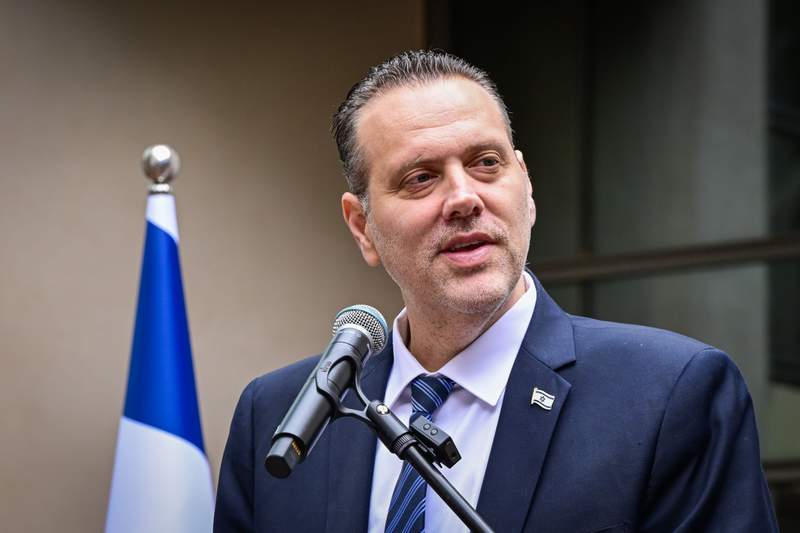
POLICY WIRE — Jerusalem, Israel — The dust hasn’t settled on the charred landscapes of southern Israel, but the political knives? They’re already out, glinting. In a country reeling from its most devastating single day, one might expect a degree of unity. Think again. Israel’s Culture Minister, Miki Zohar, just tossed a hand grenade into that fragile notion, publicly accusing the previous Bennett-Lapid government of paving the way for Hamas’s October 7 onslaught.
It’s a brutal claim, — and one that doesn’t just sit on the opposition. No, it skewers their tenure, alleging Hamas wasn’t merely opportunist but calculatedly plotting their rampage during a period of perceived Israeli weakness — or, more acutely, internal political division. Zohar’s implication? That the former government’s policies, or perhaps their very existence, somehow greased the wheels for catastrophe.
And what’s the meat of his assertion? He claims that the architects of the October 7 massacre — Hamas, let’s be clear — were actively sketching out their bloody designs under the two-year stewardship of Naftali Bennett and Yair Lapid. You see, the argument goes, when Israel was busy wrestling with its own unprecedented political disarray and parliamentary deadlock, its enemies noticed. They paid attention. They decided to act. It’s the ultimate ‘I told you so’ moment for some, dressed up in the grimmest of possible realities.
Minister Zohar, a Likud stalwart, hasn’t softened his posture since. “Look, they weren’t operating in a vacuum,” he reportedly asserted in a recent closed-door meeting, his voice cutting through the parliamentary din. “Our predecessors — Lapid — and Bennett — they ripped the country apart. And what’d Hamas do? They took notes. They built their terror machine while our own leadership was preoccupied with endless, internecine squabbles.” He insists the intelligence failure goes deeper than just an October surprise; it speaks to a systemic erosion of deterrence under a ‘change’ government perceived as ideologically disparate and domestically weakened.
But political memory is a tricky thing, especially here. And you bet the former regime has hit back hard. Yair Lapid, who served as Prime Minister during part of that period, didn’t hold back. “This isn’t journalism; it’s a political circus built on the bones of our dead,” Lapid reportedly snapped to an aide. “Trying to blame a prior government for what happened on October 7? It’s repulsive. It’s the lowest kind of opportunism when a government should be focused on healing the nation, not tearing it open with this absurd blame game.” He, like others in his camp, point to the very security apparatus that failed on October 7 as being under the watch of the current — not the previous — administration.
Such accusations resonate far beyond the Knesset walls. In capitals like Islamabad, where narratives often intertwine political posturing with broader regional power plays, these sorts of internal Israeli spats are closely watched. They sometimes get presented as symptomatic of deep-seated issues that affect the wider Muslim world’s view of Jerusalem’s stability and strength. Political fragility in Israel, whether perceived or real, fuels myriad interpretations and often confirms long-held ideological convictions in the streets of Karachi or Cairo about the state’s viability. The idea that a government’s internal strife could lead to such a massive external failure only reinforces certain cynical viewpoints, doesn’t it?
A survey conducted in late 2023 by the Israel Democracy Institute found that only 28% of Jewish Israelis believed the current government adequately protected the nation prior to Oct. 7, a figure that’s bound to provoke retrospective scrutiny on *all* recent administrations. It certainly adds fuel to Zohar’s claim, even if his motives are transparently political.
What This Means
Zohar’s bombastic declarations aren’t just empty political theatrics; they’re designed to reshape the narrative surrounding the catastrophic events of October 7. The political implication here is clear: it’s an attempt to deflect accountability from the current government and its security establishment, and instead, to pin at least some of the strategic failure on its predecessors. This isn’t just about winning an argument; it’s about control over history, over legacy, and — let’s face it — over future elections.
Economically, such political instability, intensified by accusations of governmental ineptitude preceding a national disaster, often erodes investor confidence. It projects an image of a nation embroiled in constant internal strife, diverting resources and attention from genuine reforms and stability-building measures. The damage to national unity from this kind of open accusation is almost incalculable. When leaders choose to air such grave historical accusations during an active war, it breeds deeper societal distrust and political fragmentation. The real casualty, beyond the tragic loss of life, could well be Israel’s capacity to unify when it most desperately needs to.
This episode exposes the deep, often unforgiving, fault lines running through Israeli society, proving that even a shared trauma doesn’t always guarantee solidarity. Instead, for some, it’s just another front in an ongoing, brutal political battle.