


Shadow of Privilege: The 2026 Eclipse, Reserved for Earth’s Ultra-Rich
POLICY WIRE — London, UK — For a fleeting moment in August 2026, the moon will blot out the sun, casting an ethereal shadow across parts of Europe, Iceland, and Greenland. But don’t imagine a...

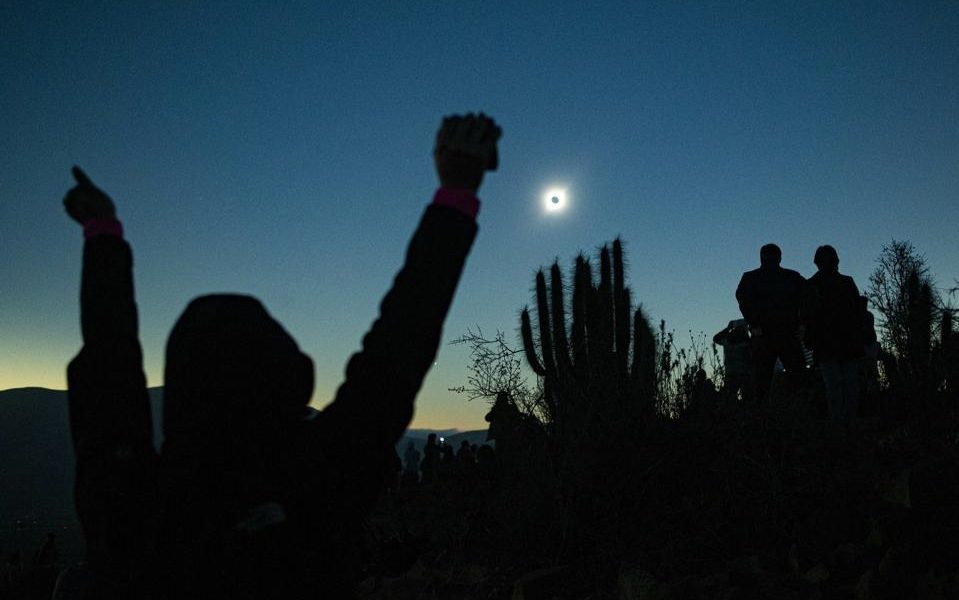
POLICY WIRE — London, UK — For a fleeting moment in August 2026, the moon will blot out the sun, casting an ethereal shadow across parts of Europe, Iceland, and Greenland. But don’t imagine a democratic viewing experience. Because if you haven’t booked your spot—perhaps a five-figure suite on a specially charted yacht or a seat aboard a private jet flying directly into the path of totality—you’re probably already out of luck. This isn’t just astronomy; it’s a meticulously crafted commodity, accessible almost exclusively to a global elite with budgets that defy gravity itself. And it’s another stark reminder of the planet’s ever-widening economic chasm.
The original buzz around the 2026 eclipse was purely scientific, an astral ballet to captivate millions. Now, however, it’s evolved. It’s become a full-blown economic phenomenon, a high-stakes scavenger hunt for exclusivity. Tour operators, once focused on mass market appeals, have pivoted hard. They’re now hawking bespoke packages: private estates in Spain’s Castile y León, lavish coastal cruises off Iceland, even polar expeditions to the Arctic for a more solitary celestial experience. Prices? They’re eye-watering. A luxury travel agent recently quoted Policy Wire figures exceeding $100,000 for a curated week-long package for two, not including airfare to Europe. It’s the cost of a down payment on a modest home, for a few minutes of twilight.
“We’re witnessing the ultimate commodification of natural wonder,” commented Dr. Evelyn Reed, an economic sociologist at the London School of Economics, during a recent Policy Wire roundtable. “It’s not enough to experience something extraordinary; for some, it has to be extraordinary and exclusive. It’s a performative act of wealth, showcasing not just your ability to travel, but your access to experiences beyond the reach of 99% of humanity.” Her words hang in the air like exhaust from a Gulfstream G650, trailing across the very sky these elites pay millions to occupy.
But governments on the eclipse path aren’t complaining too loudly. After all, every super-yacht docked in a regional port, every private helicopter transfer, every Michelin-starred meal, pumps serious cash into local coffers. Maria Santos, Director of Tourism for Spain’s Galicia region—partially within the eclipse’s path—acknowledged the economic benefits, albeit with a practical edge. “Of course, we welcome all visitors,” she stated, diplomatically. “But the high-net-worth individuals arriving for such events, they truly inject significant revenue into our hotels, restaurants, and ancillary services. It’s a boost that supports jobs, don’t forget.” It’s hard to argue with a tangible economic shot in the arm, even if it does taste of champagne and caviar, while most of the country is left staring at generic livestream feeds.
And what about those who don’t even have a generic livestream? The spectacle of western indulgence in celestial tourism casts a long shadow, figuratively speaking, over nations striving for basic economic stability. Consider places like Bangladesh or Pakistan. While some Gulf states boast their own burgeoning luxury travel sectors, mirroring these European escapades, the average citizen in much of South Asia is preoccupied with more terrestrial concerns: food security, clean water, consistent electricity. A recent World Bank report noted that 75% of global luxury tourism spending occurs within high-income countries, largely ignoring the vast untapped, though underserved, potential elsewhere. That’s a stark division. Even observing a heavenly phenomenon requires earthbound infrastructure, something countries in the developing world are often scrambling just to provide for basic living. The financial prowess required to whisk away a select few to an Icelandic glacier for an eclipse highlights the colossal disparities that make meaningful global cooperation on matters like climate change—or even shared cosmic experiences—a tricky business.
What This Means
The market for a vanishingly rare phenomenon like a total solar eclipse crystallizes several profound truths about our current global order. It’s not just about privilege; it’s about access, — and who controls it. When every experience, even one delivered by the universe, becomes an exclusive product, it corrodes the notion of a shared human experience. This shift represents more than just a rich person’s hobby; it reflects a broader trend of atomization, where communities form not around shared natural wonders but around shared purchasing power. For policy makers, it presents an ethical dilemma: how do you regulate or benefit from this hyper-luxury without deepening the perception of systemic inequity? And more philosophically, when the wealthy can literally buy a better view of the cosmos, what does that say about the earthly reality for everyone else? It certainly doesn’t bode well for collective action, which, let’s face it, is going to be increasingly essential as the world grapples with other global challenges, like economic fault lines that feel every bit as dramatic as a celestial alignment. It’s a sobering thought, tucked away in the back of a Learjet, cruising toward a fleeting shadow. Perhaps the truest reflection isn’t the eclipse at all, but the human hierarchy beneath it. It’s a peculiar mirror. Maybe Dhaka’s own economic maneuvers, documented here, offer a stark, if related, contrast.