


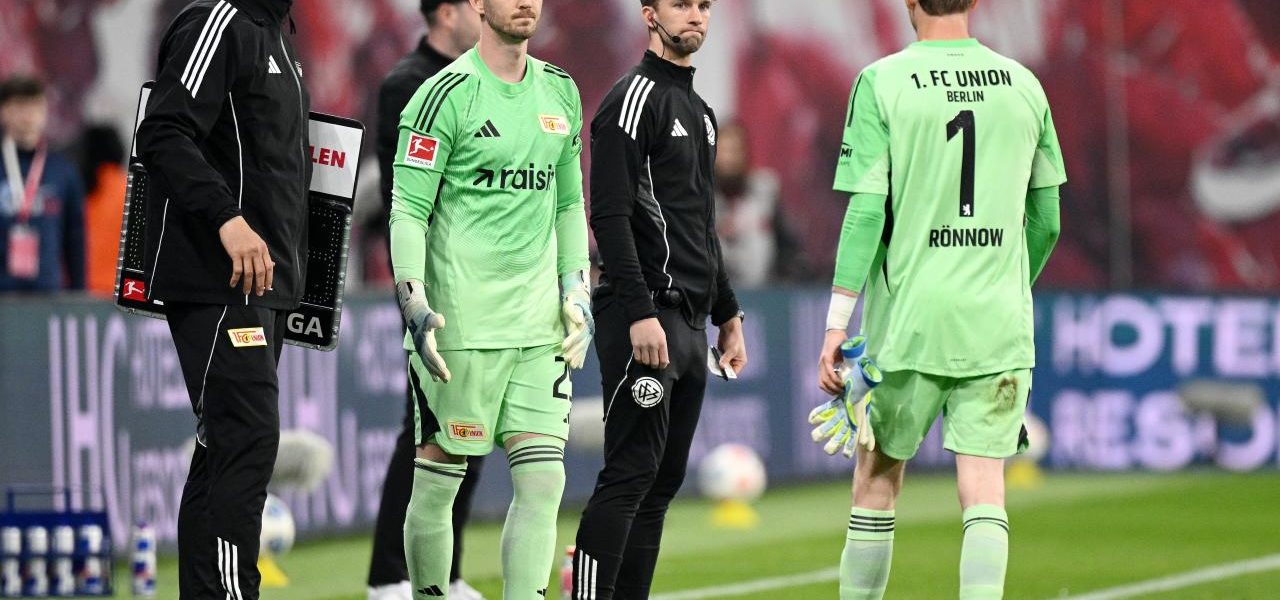
Beyond the Big Names: How Union Berlin’s Understudy Keeper Became an Unlikely Fiscal Stabilizer
POLICY WIRE — Berlin, Germany — Germany’s sprawling football apparatus, often touted as a global benchmark for player development and fiscal prudence, occasionally serves up a narrative entirely at...

POLICY WIRE — Berlin, Germany — Germany’s sprawling football apparatus, often touted as a global benchmark for player development and fiscal prudence, occasionally serves up a narrative entirely at odds with its high-gloss, academy-churning reputation. It’s not always about the prodigious 18-year-old or the multi-million-euro transfer. Sometimes, it’s about a seasoned understudy, a thirty-something goalkeeper, plucked from obscurity on a free transfer, who inadvertently anchors a club’s financial strategy and its aspirations when bigger bets falter.
Carl Klaus, 32, a name few outside of 1. FC Union Berlin’s most devoted, steel-willed faithful likely recognized just months ago, has abruptly — and quite decisively — shifted the conversation from star acquisitions to the quiet efficacy of a meticulously planned contingency. His recent contract extension isn’t just a feel-good story for the sporting tabloids; it’s a stark reminder of resource optimization in a league where financial dexterity is increasingly proving just as potent as on-pitch theatrics.
But how does a former third-choice goalkeeper, sidelined until a top-string injury forced his hand, suddenly become an emblem of institutional foresight? And why should a wire service usually tracking geopolitical shifts bother with the nuances of a German club’s staffing choices? Because it’s precisely in these seemingly small, bureaucratic victories that we find reflections of larger economic trends, of policies, of risks and rewards.
Klaus wasn’t supposed to be Union’s everyday guy between the sticks. He came over from 1. FC Nürnberg in 2024 without a transfer fee – a move often interpreted as a low-cost, low-risk depth addition, barely making a ripple in the sports sections. Yet, when first-choice Frederik Rønnow went down, Klaus stepped up. He played three matches. Three straight. Enough to prompt a contract extension announcement, proving his worth — and then some. Horst Heldt, Union’s director of men’s professional football, didn’t mince words; he couldn’t afford to, frankly. “That we were able to confidently place our actual number three in goal is by no means a given and speaks to his quality,” Heldt observed, sounding less like a football executive and more like a CEO discussing business continuity plans. “We’re genuinely looking forward to going into the new season with him,” he added, a statement laced with a pragmatic satisfaction that likely goes beyond raw sporting ability.
This isn’t an anomaly, either. The global football market, now valued at over $55 billion annually according to FIFA’s Global Transfer Report 2023, often overlooks the immense value derived from shrewd free transfers. The vast sums poured into headline-grabbing players mean clubs, even financially stable Bundesliga outfits like Union, must squeeze efficiency from every corner. Klaus’s extension saves them from diving back into a frenetic, inflated transfer market, securing a reliable hand without further outlay. That, my friends, is pure financial sense.
📄 POLICY WIRE WHITEPAPER PUBLISHED: PAKISTAN'S NATIONAL SECURITY POLICY PRIORITIES
👉 READ BY CLICKING HEREAnd what about Klaus himself? He’s spent years in various capacities across German clubs, experiencing the sharp edges of football’s often-unforgiving ecosystem. “For me personally, achieving something historic here and fulfilling a lifelong dream means a lot,” Klaus offered, his sincerity almost disarming in this hyper-commercialized era. “I am grateful to the club, the coaching team, and everyone responsible for their trust.” He probably isn’t just talking about playing time; he’s talking about stability, about a tangible acknowledgement of professional commitment that, for many, is the holy grail. But he’s earned it, make no mistake. Since his first day, he’s reportedly felt “incredibly comfortable” at Union. It just makes you think, doesn’t it?
Stories like Klaus’s also resonate far beyond Europe’s well-manicured pitches. In places like Pakistan, where a love for football rivals the national sport of cricket, narratives of perseverance against long odds hold a particular power. Young athletes there, navigating far less structured and funded pathways, watch players like Klaus and understand that the route to stability—even for a professional—can be circuitous. It isn’t always about immediate superstardom; sometimes, it’s about plugging away, being ready, and grabbing that singular chance when it finally, perhaps belatedly, arrives. Because, let’s be honest, those moments of quiet vindication speak volumes, regardless of geography or indeed, sport.
What This Means
Klaus’s extended tenure isn’t simply good news for Union Berlin’s goal line. It’s a testament to the evolving, often economically driven, calculus within modern sports management. The German club’s decision to commit to a relatively unheralded 32-year-old reflects a growing sophistication in how football entities manage their talent pipelines and financial exposure. This isn’t the flashy policy of acquiring a ‘Galactico’; instead, it’s about intelligent allocation of resources, particularly for crucial positions like goalkeeping, where a sudden vacancy can destabilize an entire season’s efforts. They’ve locked in a known quantity, a proven performer, thus mitigating the costs and uncertainties associated with new player acquisition. This move signals an internal valuation of reliability over glamour, an often-overlooked ‘return on investment’ in an industry fixated on immediate gratification and outsized transfer fees. It hints at a mature organizational policy, emphasizing depth — and loyalty rather than perpetual churn.