


Palestinian Gambit: Abbas Renews UN Push as Gaza Burns
POLICY WIRE — New York, United States — The ghost of resolutions past, stale as old parchment, continues to haunt the United Nations halls. President Mahmoud Abbas, an octogenarian leader clinging to...

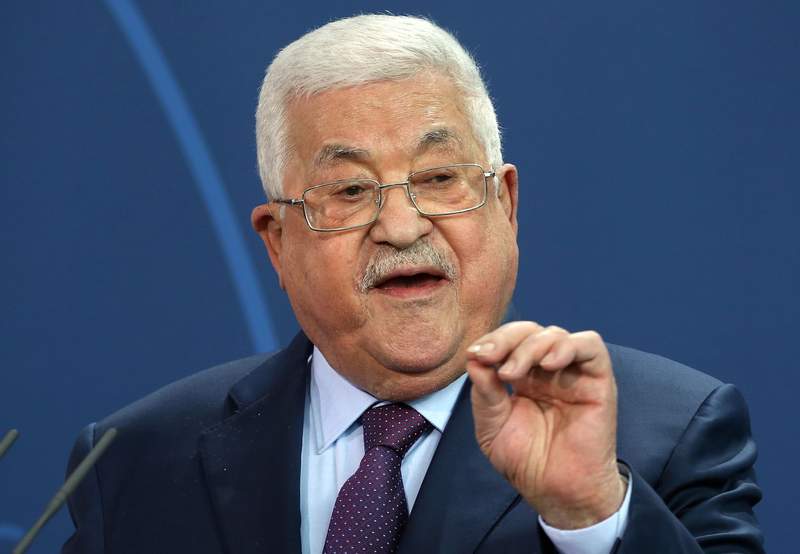
POLICY WIRE — New York, United States — The ghost of resolutions past, stale as old parchment, continues to haunt the United Nations halls. President Mahmoud Abbas, an octogenarian leader clinging to dwindling relevance, recently dispatched another missive to the Security Council. Not with a bang, but with the quiet thud of an official document landing on already overburdened desks, he laid out the Palestinian Authority’s age-old demands: Israeli withdrawal from Gaza and the West Bank, and, you guessed it, a fully sovereign Palestinian state.
It’s a familiar script, certainly. A desperate plea against a backdrop of escalating despair—Gaza a fractured, bloodied canvas, the West Bank simmering under renewed occupation pressures. But this wasn’t just a formality. This was a renewed attempt to prod a world seemingly adrift in the quicksand of regional conflict, to drag the international community back to an uncomfortable truth they’ve largely managed to ignore or simply tire of.
Abbas isn’t new to this particular dance, isn’t he? For decades, he’s articulated the same aspirations, often to deaf ears or polite nods that led nowhere. The letter, delivered by Permanent Observer Riyad Mansour, outlined a demand for a ‘timeframe’ for Israeli withdrawal from all Palestinian territories occupied since 1967. And here’s the rub: he wants protection for civilians and, crucially, a complete recognition of Palestine as a full UN member state. He believes in the system, even when it’s spectacularly failing his people.
But the timing? It couldn’t be starker. While the Palestinian Authority (PA) pushes paperwork in New York, the humanitarian catastrophe in Gaza deepens, becoming—to many global observers—a stark indictment of international inaction. According to the UN Office for the Coordination of Humanitarian Affairs (OCHA), over 1.7 million people—more than 75% of Gaza’s population—have been internally displaced since October. They’re running on fumes, or just not running at all.
And you see the dichotomy there, don’t you? Diplomatic maneuverings clashing head-on with street-level annihilation. It makes you wonder how many times the same words can be uttered before they lose all meaning. It makes you feel for the folks on the ground, but what can you do?
Israeli officials, predictably, scoffed at the PA’s latest diplomatic push. Their response, swift — and unapologetic, came from an unnamed spokesperson close to the Prime Minister’s office. “President Abbas, bless his heart, often lives in a different reality,” they conveyed to this wire service, speaking on condition of anonymity due to the sensitive nature of international relations. “Israel will never compromise on its security, not when terror strongholds threaten our children. These fantastical demands solve nothing.” It’s a sentiment heard a thousand times over, really. Their position remains as rigid as ever, focused singularly on security, framing the Palestinian plight often through that lens alone.
For his part, President Abbas seems undeterred, or at least, maintains the outward appearance of conviction. “We cannot—we won’t—accept a future dictated by occupation and despair,” a spokesperson quoted him as saying last week from Ramallah, trying to lend gravitas to a figure increasingly viewed as an anachronism. “Our people deserve their sovereign land, free from this crushing burden. We demand justice, not just aid parcels.” Strong words. Whether they carry any weight beyond Palestinian enclaves is a different question entirely.
📄 POLICY WIRE WHITEPAPER PUBLISHED: PAKISTAN'S NATIONAL SECURITY POLICY PRIORITIES
👉 READ BY CLICKING HEREBeyond the immediate antagonists, the echoes of this conflict reverberate far — and wide. In capitals like Islamabad, where solidarity with the Palestinian cause runs deep, Abbas’s appeal resonates not just as a political demand but as a deeply spiritual one for many citizens. From Dhaka to Jakarta, the Muslim world views the Gaza conflict not merely as a localized struggle, but as a deep wound on the global body politic, prompting public outcries and governmental statements of condemnation. It’s a rallying point, connecting seemingly disparate regions under a shared narrative of perceived injustice—a geopolitical powder keg. And because these nations often align with a more pro-Palestinian stance, Abbas’s letter provides diplomatic ammunition, however symbolic.
What This Means
Politically, Abbas’s latest UN overture is less about immediate breakthroughs — and more about planting flags. It’s an assertion of a rapidly eroding international legal framework concerning the Israeli-Palestinian conflict, trying to keep the two-state solution on life support even as ground realities make it seem fantastical. It underscores the PA’s desperate search for relevance and legitimacy, particularly with Hamas enjoying a surge in popularity among many Palestinians due to its perceived resistance—a harsh truth for a leadership often seen as collaborating with the very occupation it claims to fight.
Economically, the implications are similarly bleak. Persistent instability torpedoes any long-term development prospects in the West Bank — and Gaza. Aid dependency deepens. Investment shies away. Reconstructing Gaza, should a ceasefire ever hold, would demand gargantuan sums, a challenge few global donors seem eager to fully commit to without genuine political guarantees—guarantees that feel further away than ever. But really, who’s going to invest when the digital dynamites are still exploding?
This isn’t just about a letter, it’s about the erosion of trust in international institutions, the quiet acceptance of an intractable conflict, and the enduring tragedy of a people whose demands, however eloquently articulated, seem destined to hit walls of cynicism and indifference. It’s a harsh reckoning, — and Abbas, for all his efforts, can’t magic up the will where it plainly doesn’t exist.