


Himalayan Deluge: India’s Monsoon Havoc Unmasks Regional Climate Catastrophe, Testing Governance
POLICY WIRE — New Delhi, India — The mountain roads, once scenic arteries of tourism and local commerce, now lie shattered, twisted rebar jutting from mud-choked ravines. It’s not just a seasonal...

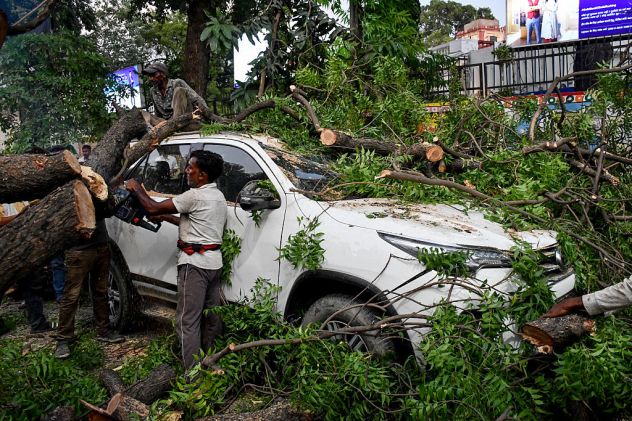
POLICY WIRE — New Delhi, India — The mountain roads, once scenic arteries of tourism and local commerce, now lie shattered, twisted rebar jutting from mud-choked ravines. It’s not just a seasonal inconvenience anymore; it’s a terrifying reset. For decades, the monsoon’s predictable rhythms have shaped life, death, — and politics across the Indian subcontinent. But this year, in the foothills of the Himalayas, nature isn’t merely performing its annual hydrological ritual—it’s conducting an autopsy of inadequate infrastructure and an increasingly volatile climate, with nearly a hundred souls already lost in the deluge. Nobody saw the actual, localized intensity coming, despite all the warnings about a changing planet. That’s the bitter truth of it, isn’t it?
While the immediate reports from Himachal Pradesh and Uttarakhand focused—understandably, you know—on the tragic toll, the true narrative stretches beyond the latest death count. It’s a recurring nightmare for the region. These aren’t just “heavy rains.” We’re talking about relentless, torrential downpours that have turned rivers into unnavigable torrents and hillsides into liquid mud. You see footage of bridges vanishing, entire villages swallowed. It’s brutal. And it speaks volumes about the slow-motion crisis unfolding across a densely populated region ill-equipped for such extremes. They’ve been building — and building, without really planning for the wrath of an enraged natural world.
“Our immediate priority is rescue — and relief, obviously. Every life lost is a profound tragedy for the nation,” stated Nitin Gadkari, India’s Minister of Road Transport and Highways, acknowledging the scale of the destruction with a tone reflecting official concern, perhaps a shade of exasperation over the persistent challenges. “But we must also face the uncomfortable truth: our infrastructure, our very way of life, needs urgent adaptation. The mountains aren’t as forgiving as they once were.” His statement, however carefully worded, can’t obscure the questions hanging heavy over state and federal preparedness. You’d think, given the yearly monsoon cycle, they’d have a better handle on things. They don’t.
Because, for all the national pride in India’s rapid development, much of that growth often bulldozes over basic environmental considerations. Unchecked construction, particularly in ecologically sensitive zones like the Himalayan belt, creates a perfect storm—literally. When the heavens open, the ground, stripped bare by ill-advised development, has nothing left to hold it together. It’s a cycle of human ambition — and natural retribution. And these aren’t isolated incidents, mind you; these extreme weather events are intensifying. For instance, according to data from the India Meteorological Department (IMD), heavy rainfall events (over 64.5 mm in 24 hours) in India’s hilly regions have increased by approximately 15% in the last two decades. That’s a trend, not a fluke.
But the monsoon doesn’t care for international borders, either. While the headlines scream about Indian devastation, the same atmospheric rivers responsible for this fury often sweep across to Pakistan, Nepal, and Bangladesh. “Our hearts go out to our Indian neighbors,” said Pakistan’s Federal Minister for Climate Change, Sherry Rehman, in a cautiously diplomatic release. “This tragedy serves as a grim reminder that climate change knows no boundaries. We’re all facing similar, devastating impacts, and collective regional action is not merely a policy preference—it’s an existential necessity.” It’s a sobering observation from a nation still reeling from its own catastrophic floods, only last year, that displaced millions and caused billions in damages. Their collective vulnerability in South Asia is plain for all to see.
📄 POLICY WIRE WHITEPAPER PUBLISHED: PAKISTAN'S NATIONAL SECURITY POLICY PRIORITIES
👉 READ BY CLICKING HEREWhat This Means
The political ramifications of these increasingly violent weather patterns are starting to weigh heavily. For India’s ruling Bharatiya Janata Party (BJP), led by Prime Minister Narendra Modi, these repeated climate-induced disasters present a persistent challenge to its narrative of development and stability. How do you maintain an aura of strength when nature keeps tearing down your foundations? It tests governance capabilities at every level—from swift rescue operations to long-term rebuilding and climate resilience strategies. Funding for reconstruction will undoubtedly siphon resources away from other development projects, putting strain on state budgets already stretched thin. This isn’t just about managing a crisis; it’s about navigating a permanent state of climate precarity, which can, over time, erode public trust and reshape electoral landscapes. Nations like India, navigating the complex geopolitical chess game, are also constantly playing defense against an accelerating environmental clock. Consider how nations grapple with even seemingly localized issues that have global ramifications, much like the global powers’ interest in the Solomon Islands’ unexpected geopolitical turn; this climate crisis in South Asia presents another complicated layer of vulnerability in global supply chains and regional stability.
Economically, the impact is layered — and deep. Agriculture, a cornerstone of both local economies — and national food security, takes a direct hit. Tourists, hesitant to brave landslide-prone roads and submerged destinations, stay away—wreaking havoc on the critical tourism sector in states like Himachal Pradesh. Property damage, infrastructure repair, and lost livelihoods will cost untold billions. These aren’t just immediate costs; they represent a drag on long-term growth and increase societal inequality, hitting the most vulnerable first and hardest. Because ultimately, the cycle of devastation and recovery is unsustainable, demanding a seismic shift in planning and investment that most regional governments are just beginning to—slowly, reluctantly—grapple with.