


Ashes of Discipline: Albuquerque Dojo Fire Sparks Community Reflection on Resilience, Urban Strain
POLICY WIRE — Albuquerque, New Mexico — It wasn’t the fiery clash of sparring students, but rather the unforgiving heat of an early morning blaze that brought a venerable institution in...

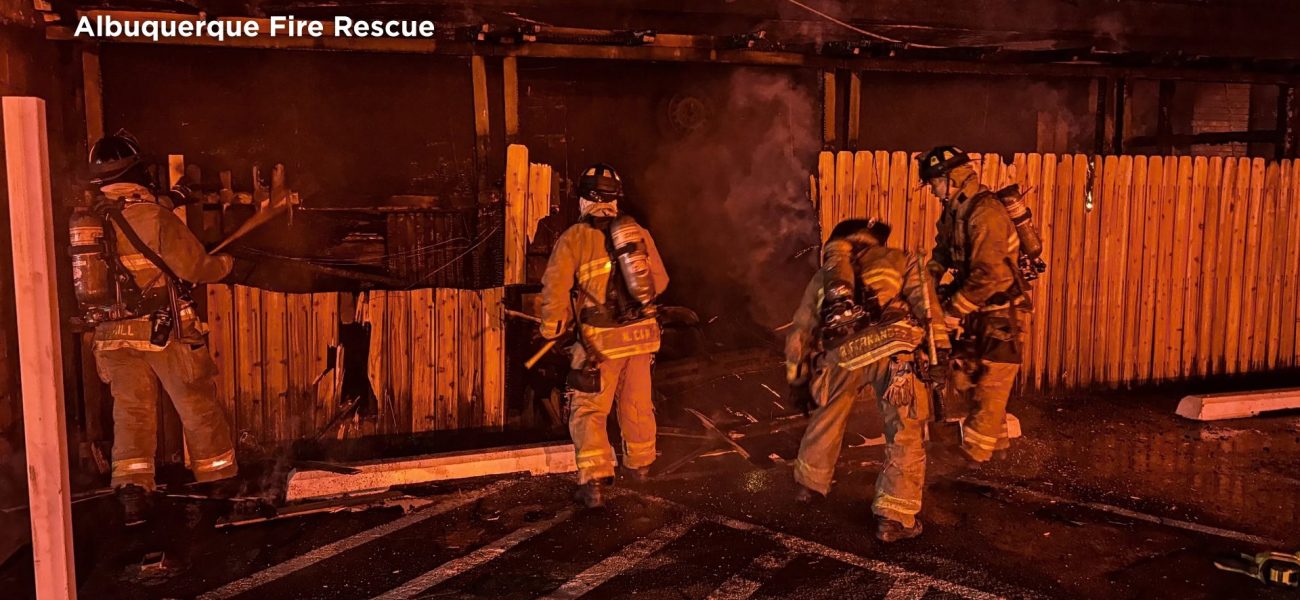
POLICY WIRE — Albuquerque, New Mexico — It wasn’t the fiery clash of sparring students, but rather the unforgiving heat of an early morning blaze that brought a venerable institution in Albuquerque to its knees. For decades, Ed Erler’s Shorin Ryu Dojo had been more than just a training hall for martial arts; it was a cornerstone, a quiet anchor in a bustling—and sometimes beleaguered—section of the city near Louisiana Avenue and Zuni Road. Its accidental burning on Friday morning, while quickly contained, has sparked a low rumble of conversation about urban resilience, immigrant integration, and the quiet struggle of community infrastructure.
Fire Rescue crews rolled up a little after 3 a.m., responding to calls about a fire licking up a fence line. What they found, though, was a building already consumed by flames, its structure belching smoke into the pre-dawn dark. They’re good, these folks; they brought the inferno under control within a blistering 16 minutes. But because fire, as we all know, doesn’t discriminate, the damage, while largely contained to the front, had already sent its tendrils of heat and soot throughout the interior. No one got hurt, thank goodness, neither civilian nor firefighter. It was, officially, an accident.
But the raw facts—an accidental fire, quickly doused—don’t tell the full story. And they rarely do. This wasn’t some anonymous warehouse catching fire; it was a place where generations learned focus, respect, and self-defense. For many in the surrounding neighborhoods, particularly the city’s diverse and growing immigrant communities, a dojo like Erler’s wasn’t just physical training; it offered a disciplined outlet, a sense of belonging in a city that often feels fragmented. Consider that Albuquerque’s foreign-born population increased by nearly 30% between 2000 and 2020, reaching over 40,000 residents, according to the city’s own data, many of whom seek out such spaces for their families. But what happens when those anchors flicker — and fade?
“It’s more than just a building to many of us. It’s where my kids learned respect, where I saw community elders sharing their wisdom,” commented Maria Garcia, a City Council member for the district, her voice tight with concern. “These small businesses, these cultural centers, they’re the glue. We can’t afford to lose them, especially when our budget talks consistently squeeze resources for neighborhood programming.” She’s got a point. You don’t realize how much you rely on these local spots until they’re gone.
But this incident echoes far beyond just a burned-out dojo. The martial arts, while often associated with East Asia, have rich and often overlooked lineages across the wider Asian and Muslim worlds, evolving into diverse forms reflecting regional philosophies and defense needs. Think of various forms of `Pencak Silat` across Southeast Asia, or the historical traditions of wrestling and self-defense found from Central Asia to the Levant. The discipline, the spiritual pursuit of perfection—it resonates globally. When a local dojo is scarred by fire, it’s not just American culture losing a gym; it’s a piece of a global mosaic, albeit an indirect one, feeling the heat.
And so, a sense of collective vulnerability hovers. Police Chief Raymond Hayes, whose department works closely with community organizations, echoed this sentiment. “While the fire was accidental, it serves as a stark reminder of the fragility of our urban fabric. Every time a local establishment, especially one that fosters youth development, takes a hit, it reverberates. We don’t just lose a business; we lose a piece of preventative social infrastructure,” he said during an impromptu press availability Friday afternoon, shaking his head. He’s not wrong. It takes very little to tip the scales in a neighborhood already stretched thin.
📄 POLICY WIRE WHITEPAPER PUBLISHED: PAKISTAN'S NATIONAL SECURITY POLICY PRIORITIES
👉 READ BY CLICKING HEREWhat This Means
The accidental fire at Ed Erler’s Dojo, mundane as it might seem on the surface, spotlights several simmering policy discussions within Albuquerque and across similar mid-sized American cities. Economically, it underscores the precarious existence of independent small businesses, often operating on razor-thin margins and disproportionately affected by unforeseen disruptions—like a catastrophic fire. Will the owner rebuild? Can he afford to? What city assistance, if any, is available for a situation deemed ‘accidental’?
Politically, the incident reopens conversations about urban planning, specifically how cities support and retain these non-chain community hubs. These spaces often act as de facto social service providers, offering structured environments that engage youth, instill discipline, and bridge cultural divides. Lose enough of them, — and you’re suddenly staring at gaps in neighborhood services that public funds simply can’t fill. Because you don’t rebuild a community, a culture of respect, overnight.
Then there’s the broader issue of cultural preservation and integration, particularly relevant in cities with dynamic immigrant populations. A dojo, or any similar cultural training ground, often serves as a low-cost, accessible point of entry for newcomers to establish roots and feel a sense of belonging—an “Embers and Enlightenment” moment for a city that, frankly, could use more of them. Its destruction, even accidental, removes one such avenue. It forces a pause, making everyone consider just how much they rely on these seemingly small establishments to hold everything together. This isn’t just about a burned building; it’s about the smoldering question marks hanging over community resilience itself. It’s a question for Albuquerque, sure, but it’s really a question for every growing American city.