


Tokyo’s Quiet Reckoning: Japan Seeks Emergency Funds as Global Energy Crunch Bites
POLICY WIRE — Tokyo, Japan — Forget the cherry blossoms. Japan’s latest seasonal anxiety concerns crude barrels — and cubic meters of gas. The government, perpetually attuned to the nuanced...

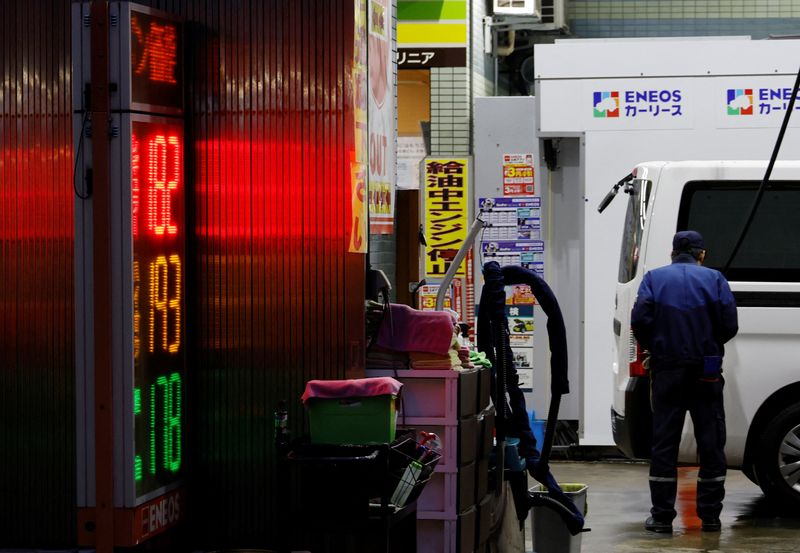
POLICY WIRE — Tokyo, Japan — Forget the cherry blossoms. Japan’s latest seasonal anxiety concerns crude barrels — and cubic meters of gas. The government, perpetually attuned to the nuanced tremors of its populace and global markets, is quietly cobbling together an emergency budget—a significant financial balm intended to ease the bite of relentlessly rising fuel prices. This isn’t just about utility bills, mind you; it’s a symptom of a deeper, far less stable global economic fever.
Sources familiar with internal deliberations, relayed by Kyodo, confirm the Finance Ministry’s grim calculations. Households and industries alike have been weathering a storm, its squalls ranging from inflationary surges on everything from foodstuffs to plastics, to manufacturers struggling to keep their production lines humming without prohibitive costs. And this isn’t some fleeting hiccup. We’re talking systemic pressure.
The average Japanese household, known for its meticulous budgeting, is now seeing its disposable income erode. The cost of running a vehicle, heating a home, or even just keeping the lights on—it’s become a noticeable drag. “Of course, fiscal discipline remains our bedrock,” remarked former Finance Minister Taro Aso, his voice carrying the gravitas of decades in the political trenches. “But one can’t ignore the realities confronting ordinary households. It’s a delicate balancing act, isn’t it? To ignore the people’s struggle would be political negligence.” A sentiment few in the Diet would dare publicly contradict.
Because let’s be honest: while Japan boasts some of the most advanced public infrastructure and service delivery on the planet, its resource vulnerability is an open secret. This island nation imports nearly 90% of its energy, leaving it acutely exposed to the geopolitical vagaries and cartel pricing of the world’s energy producers. So when crude oil prices tick up, or LNG futures spike, Japan feels it directly, viscerally.
The proposed supplementary budget, while the details are still under wraps, would likely involve subsidies, tax breaks, and other direct relief measures aimed squarely at consumers and small to medium-sized enterprises. But these are temporary fixes, like patching a leak on a perpetually listing ship. What’s the long-term play?
“We’re not merely extinguishing spot fires,” asserted Economy, Trade and Industry Minister Ken Saito during an off-the-record chat recently. “This is about ensuring our supply chains remain competitive, our industries resilient. Energy security, you know, it’s the hidden currency of modern geopolitics. We must invest, we must adapt, or we fall behind.” His point was clear: this emergency spending isn’t just about making people feel better now; it’s a critical strategic expenditure in disguise.
It’s a predicament mirroring the fiscal stress in distant corners of the world, like Pakistan, where soaring imported energy costs have continually destabilized an already fragile economy, pushing millions into poverty and precipitating currency crises. These interconnected global price surges illustrate how decisions made in Riyadh or Moscow can directly translate into discomfort—or outright crisis—in both Tokyo’s metropolitan bustle and Karachi’s sprawling urban fabric. That’s the cold hard truth of a globally interdependent energy market.
📄 POLICY WIRE WHITEPAPER PUBLISHED: PAKISTAN'S NATIONAL SECURITY POLICY PRIORITIES
👉 READ BY CLICKING HEREThe International Energy Agency, in a sobering report last quarter, projected that global energy consumption could jump by as much as 1.8% this year alone, primarily driven by post-pandemic recovery and geopolitical tensions. Japan’s own Ministry of Finance noted a stark 34% increase in energy import costs in the last fiscal quarter, relative to the same period last year. It’s a staggering figure—one that sends chills down the spines of finance bureaucrats.
What This Means
This push for an emergency budget isn’t just about fiscal adjustments; it’s a political barometer reading. Prime Minister Kishida’s administration is already grappling with fluctuating public approval ratings, and failing to address tangible kitchen-table issues like utility costs would be political suicide. The stakes are high for social stability — and the Liberal Democratic Party’s continued hegemony. the necessity of this spending reignites difficult conversations about Japan’s energy mix, including the controversial future of nuclear power—an option that remains deeply unpopular post-Fukushima but might become unavoidable as an energy independence strategy.
Economically, the intervention aims to prevent a deeper dip in consumer spending — and business investment. But pumping more money into the economy to offset inflation could, ironically, contribute to it. It’s a tightrope walk. Japan’s moves could set a precedent for other resource-dependent nations wrestling with similar pressures. Look at the ripple effects in areas like air travel: Turbulence Tax: Budget Airlines Bet Big on Brawn Amid Fuel Price Fury captures just one sector feeling the squeeze globally.
And there’s the international dimension. Japan, often a quiet giant on the global stage, has increasingly used economic diplomacy to shore up its alliances and secure resource access. Expect renewed efforts to diversify energy sources, deepen ties with LNG exporters, and perhaps even accelerate investments in green technologies—a strategic necessity masked by an immediate budgetary crisis. This isn’t just a budget consideration; it’s a reflection of deeper economic fragility, the world over. A reminder that sometimes, the most mundane administrative action reveals the starkest geopolitical truths, leaving leaders—and the populace they serve—to simply hold on and hope for calmer seas. It isn’t going to be easy. No, it isn’t.