


Punjab’s Recurring Nightmare: Mumbai’s Maverick Captaincy Deals Another Blow in High-Stakes IPL Drama
POLICY WIRE — Dharamshala, India — In a landscape where high-stakes cricket often masquerades as pure sporting entertainment, sometimes the true spectacle isn’t the dazzling heroics but the...

POLICY WIRE — Dharamshala, India — In a landscape where high-stakes cricket often masquerades as pure sporting entertainment, sometimes the true spectacle isn’t the dazzling heroics but the slow-motion psychological unraveling of an entire franchise. For the Punjab Kings, the curtains closed on another night of tantalizing possibility and crushing reality, as they conceded a fifth consecutive Indian Premier League defeat, this time to a Mumbai Indians outfit experimenting boldly with leadership. It wasn’t just a loss; it felt like a reenactment, a hauntingly familiar tragedy unfolding under the glare of stadium lights.
While the scorecards will simply tell you Mumbai chased down a formidable 201-run target with six wickets and an over to spare—a testament to their deep batting arsenal—that bald fact utterly belies the emotional whiplash this game delivered. What transpired felt less like a contest — and more like a fever dream for Punjab’s beleaguered squad. They’d constructed a robust total, seen their bowlers make critical inroads, and even held Mumbai in a tight leash when the required run rate seemed to be biting hard. And then, it happened. Again.
The chase began like a thunderclap. Ryan Rickelton, showing little regard for bowlers’ feelings, unleashed a flurry of boundaries, his 48 runs off a mere 23 deliveries catapulting Mumbai to an astonishing 59 without loss during the Powerplay. He wasn’t just hitting; he was announcing intentions, setting a breakneck pace that—for a good chunk of the innings—Mumbai’s middle order struggled to maintain. Punjab, in turn, clawed their way back, finding a surprising bite on a pitch that initially seemed docile. Wickets tumbled, — and the crowd, thick with anticipation, dared to dream that this might finally be Punjab’s night.
But heroes—or villains, depending on your allegiance—emerged from the narrative’s shadow. Tilak Varma took center stage, not with a sudden blast, but with a calculated, surgical acceleration. His unbeaten 75 runs came from just 33 balls, an innings built on exquisite timing rather than brute force. He understood the pulse of the chase, waited for his moment, — and then pounced. His partnership, first steadying the ship and then driving it toward victory, ensured Punjab’s momentary reprieve was just that: momentary. But the biggest narrative flicker belonged to the man calling the shots on the field.
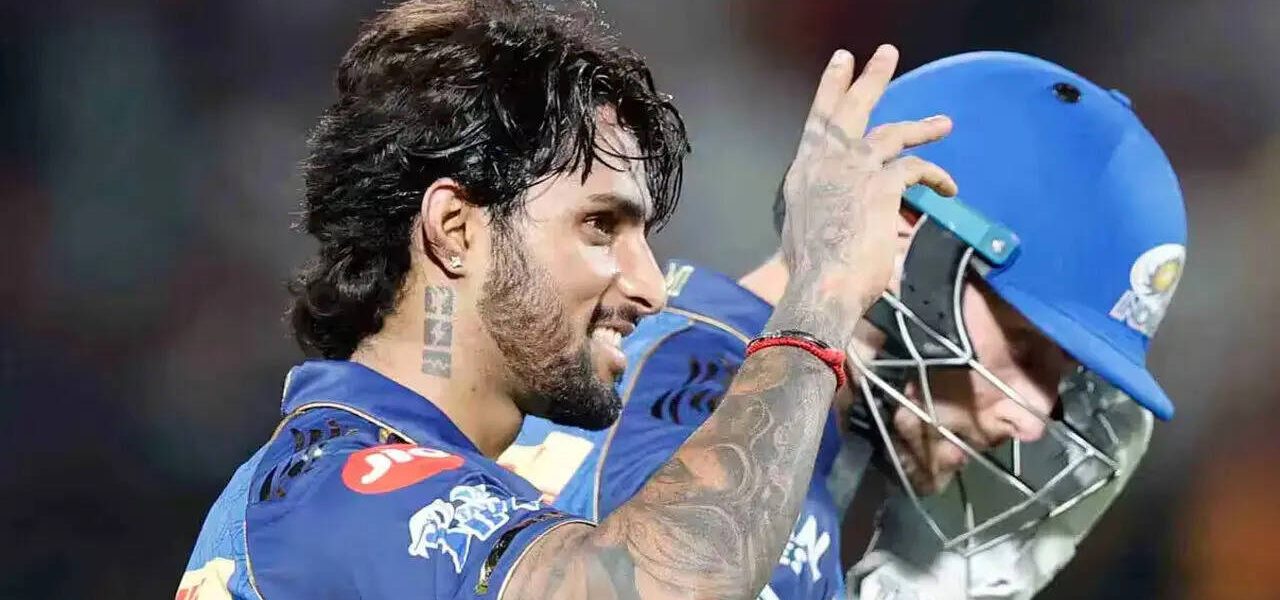
Jasprit Bumrah, a bowler known for precision and intimidation, stood in for regular skipper Hardik Pandya, adding another layer to Mumbai’s already complex captaincy merry-go-round this season. They’ve now rotated three Indian captains—a historical anomaly for any franchise in a single IPL campaign. “We don’t do easy,” quipped Mahela Jayawardene, Mumbai’s global head of performance, his voice a picture of casual confidence after the win. “This team thrives on high-stakes drama. But tonight, it felt like the grit came from a different, perhaps unexpected, place. It speaks to our depth of leadership.” Indeed. But at what cost to established order?
📄 POLICY WIRE WHITEPAPER PUBLISHED: PAKISTAN'S NATIONAL SECURITY POLICY PRIORITIES
👉 READ BY CLICKING HEREBecause while Mumbai’s unorthodox leadership worked out, Punjab’s spiraling form prompts uncomfortable questions. According to detailed statistical analysis from ESPNcricinfo, Punjab Kings have now lost an astonishing 62% of their matches in the last three IPL seasons where they’ve posted a total over 200 runs – a statistical aberration that highlights not a lack of batting power, but a glaring absence of death-bowling execution and perhaps, collective psychological resilience. “It’s beyond tactics now, isn’t it?” Punjab’s Head Coach, Trevor Bayliss, mused, his voice tight, post-match. “We see flashes, real brilliance. Then it just… evaporates. The locker room’s hurting. But we’ve got to find a way, haven’t we?” That question hangs heavy over the franchise, stretching beyond the boundaries of this specific loss.
What This Means
The Punjab Kings’ ongoing capitulation isn’t merely a tale of a few poor performances; it reflects a deeper organizational malaise. In the cutthroat world of the IPL, where corporate sponsorships flow like champagne and player values soar, consistent underperformance, particularly in crunch moments, translates directly into eroded brand equity and fan disillusionment. Teams like Mumbai, with their shifting leadership — and a surprisingly successful Bumrah at the helm this game — demonstrate a flexibility that suggests a broader, adaptive strategy, hinting at resilience and strategic depth often found in more politically astute organizations. It isn’t just about the current standings; it’s about signaling to stakeholders, global viewership, and the millions who follow from across the Muslim world and South Asia (where cricket is more than just a game; it’s a religion, an identity). The persistent disappointment for a Punjab-based team, in a region with such a rich sporting heritage and deep cultural ties to the game, touches a raw nerve. For fans, this isn’t just about winning prize money; it’s about local pride, provincial honor, and a shared passion that binds communities. For many, the IPL is a projection of a new India – competitive, global, — and economically powerful. The brutal calculus of cricket, much like global geopolitics, leaves little room for sustained weakness, forcing a hard reevaluation of everything from player selection to coaching philosophy. Another team that understands this ruthless equation implicitly is Kolkata Knight Riders. For Mumbai, this win, however dramatic, buys them time. For Punjab, however, time’s running out on a narrative that’s growing tiresomely predictable.